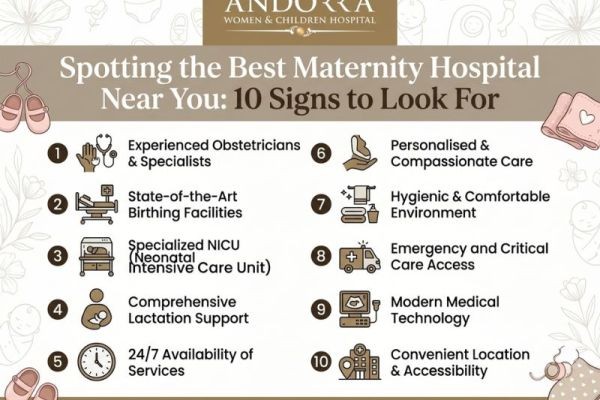
A great maternity care facility will have a separate maternity ward, specialist obstetricians and gynaecologists, 24 hours of emergency obstetrics and gynaecology, a Neonatal Intensive Care Unit (NICU) and customized prenatal care plans. It should also have well-defined maternity packages, lactation support and a team that sees you as a patient and a partner on your birth journey.
As a first time parent, one of the most crucial choices you'll have to make is where you're going to give birth. It is not about close distance, it's about trust, safety and care beyond the ward's gates. Here are ten signs you've selected the best hospital for pregnancy near me [https://www.andorracare.com/].
1. It Has a Dedicated Maternity Unit - Not Just a General Ward
A hospital that takes maternity seriously will have a standalone maternity wing. This means labour rooms, delivery suites, and postnatal wards designed specifically for mothers and newborns - not repurposed general beds. Dedicated spaces reduce cross-infection risks and give your care team a focused, specialist environment to work in.
2. Experienced O&G Specialists Are Available - Not Just On Call
Look for a hospital where obstetricians and gynaecologists are present in the facility, not just reachable by phone. First-time pregnancies can move quickly, and having a senior specialist physically available - especially during labour - makes a measurable difference in outcomes.
Ask directly: "Who will deliver my baby if my doctor is unavailable?" The answer tells you a lot about how the hospital is structured.
3. There Is a Functional NICU On-Site
No one expects complications. But a hospital without a Neonatal Intensive Care Unit (NICU) is a hospital that transfers your newborn elsewhere if something goes wrong. That transfer costs precious time. A well-equipped NICU — with trained neonatologists and modern incubators — is one of the clearest signs of a serious pregnancy hospital.
If you are carrying multiples, have a high-risk pregnancy, or have been told there may be complications, an on-site NICU is non-negotiable.
4. 24/7 Emergency Obstetric Care Is Available
Labour doesn't follow a schedule. Neither do emergencies like placental abruption, pre-eclampsia, or sudden foetal distress. The right maternity hospital offers round-the-clock emergency obstetric services — staffed by trained nurses, midwives, and doctors at every hour, not just during business hours.
When you visit a hospital, ask specifically about their emergency obstetric protocol after midnight and on public holidays. Vague answers are a warning sign.
5. Structured Prenatal Care Begins Early
Good maternity services don't start at the delivery room door. They begin from your first trimester with structured prenatal appointments, routine scans, blood work, and nutritional guidance. A hospital that invests in early prenatal care is one that tracks your pregnancy closely and catches risks before they become emergencies.
Look for a hospital that offers first-trimester screenings, glucose tolerance tests, Group B Streptococcus (GBS) screening, and anomaly scans as standard — not as add-ons.
6. Transparent Maternity Packages Are Offered
Surprise billing after delivery is stressful and avoidable. A trustworthy pregnancy hospital offers clear, itemised maternity packages that cover prenatal consultations, delivery fees, anaesthesia, postnatal room stays, and newborn assessments. Ask for a full breakdown before you commit.
Some hospitals also offer packages that include lactation consultant visits and baby hearing screening — these small details reflect how holistically a hospital thinks about maternity care.
7. The Hospital Respects Your Birth Plan
First-time parents often have preferences — whether it's a birth partner present, delayed cord clamping, skin-to-skin contact immediately after birth, or opting for a water birth. The right hospital will listen. They won't dismiss your plan, but they'll also be honest about what's medically feasible.
This balance — respecting your choices while prioritising safety — is a sign of a mature, patient-centred maternity team.
8. Postnatal Support Is Built Into the Care Model
Delivery is not the finish line. A high-quality maternity hospital provides postnatal support that includes breastfeeding guidance, wound care monitoring, baby care education, and mental health check-ins for new mothers. Postnatal depression affects approximately 1 in 5 new mothers, and hospitals that screen for it proactively are ahead of the curve.
Check whether their postnatal ward stay includes access to a lactation consultant. For first-time mothers especially, this support can be transformative.
9. The Facility Is Well-Equipped for High-Risk Pregnancies
Not every pregnancy is straightforward. Conditions like gestational diabetes, preeclampsia, or advanced maternal age require a higher level of monitoring and intervention readiness. The best hospitals for pregnancy will have access to maternal-foetal medicine specialists, advanced ultrasound technology, and obstetric anaesthesia on standby.
Even if your pregnancy is low-risk today, you want a hospital that can manage complexity if it develops tomorrow.
10. Other Parents Trust It — And the Numbers Show It
Word of mouth still matters. Ask in local parenting communities, check verified patient reviews, and look at how long the hospital's maternity unit has been operating. Experience creates institutional knowledge that no new facility can replicate overnight.
Also look for accreditations, specialist certifications, or recognitions from medical bodies — these signal that the hospital meets independently verified standards of care, not just self-reported ones.
A Quick Checklist Before You Decide
|
What to Check |
What to Ask the Hospital
|
|---|---|
|
NICU availability |
Is the NICU on-site and staffed 24/7? |
|
O&G specialist access |
Who covers deliveries when my doctor is unavailable? |
|
Emergency care |
What is the emergency obstetric protocol after hours? |
|
Maternity packages |
Is the full package itemised and inclusive of postnatal care? |
|
Prenatal care structure |
Which screenings are included from the first trimester? |
|
Postnatal support |
Is lactation consultation and mental health screening included? |
Making the Final Call
The birth experience will be affected by the hospital you select. First time parents will experience the difference in a hospital that delivers babies and one that really helps families in every appointment, conversation and moment of doubt. Use your gut instinct and substantiate it with the correct questions.
Andorra Care [https://www.andorracare.com/] provides expert O&G care, organised ante-pregnancy courses and caring maternity care from the first scan until your first day at home. For those seeking a care team that will go the entire distance, it's definitely worth a look into what they have to offer.
Frequently Asked Questions
What should I look for in a pregnancy hospital as a first-time mother?
Look for hospitals with experienced O&G specialists, dedicated maternity unit, on-site NICU, 24/7 emergency obstetric care and structured prenatal programs. First-time mothers are going through a new process, and require clear maternity packages and strong postnatal support, including advice on lactation.
Why is a NICU important when choosing a maternity hospital?
A NICU is where your newborn receives immediate specialist care on site, in the event of complications after birth, so there are no emergency transfers. This is especially the case for premature births, low birth weight babies or deliveries with known foetal complications – where every minute of delay is a clinical risk.
What is typically included in a maternity package?
A good maternity package should cover prenatal consultations, delivery charges, anaesthesia charges, postnatal room charges, newborn screening and sometimes lactation support. Always ask for the full itemised breakdown before you commit so there are no surprise charges after delivery.
When should I start looking for a pregnancy hospital?
If possible, research and register with a maternity hospital in your first trimester (around 8 to 12 weeks). Registering early means you’ll have access to the full prenatal care schedule the hospital offers, including time-sensitive screenings in the first trimester and appointments with specialists.
How do I know if a hospital's maternity care is high quality?
Look for verified patient reviews , years of operation experience , accreditations from medical bodies and clear protocols for emergencies and high risk pregnancies. Hospitals that are clear about their operations and staff are usually more open – and more trusted – than hospitals that give vague answers.






