
Introduction
The Animal Feed Additives market is evolving from a conventional nutrition-support industry into a technology-driven segment focused on animal health, feed efficiency, productivity, food safety, and sustainability. Feed additives are increasingly used to address specific nutritional deficiencies, improve digestion, strengthen immunity, preserve feed quality, and support consistent animal performance.
The market landscape is highly diverse, encompassing amino acids, vitamins, minerals, enzymes, probiotics, prebiotics, acidifiers, antioxidants, mycotoxin detoxifiers, phytogenics, preservatives, and other specialized formulations. Demand varies considerably by animal species, production system, geography, feed composition, and regulatory environment.
At the same time, livestock producers are becoming more focused on measurable returns from feed inputs. Rising feed costs, pressure to improve feed conversion, concerns surrounding antimicrobial resistance, and growing demand for responsibly produced animal protein are encouraging manufacturers to develop more targeted additive solutions.
Diverse and Competitive Product Landscape
One of the defining characteristics of the Animal Feed Additives market is its broad product portfolio. Amino acids such as lysine, methionine, threonine, and tryptophan remain important because they enable precise protein nutrition while supporting efficient feed utilization.
Feed enzymes represent another important category. Phytase, protease, xylanase, and other enzymes help improve nutrient availability and digestion. Their value proposition is particularly strong when feed manufacturers seek to optimize the nutritional contribution of raw materials and reduce nutrient losses.
Probiotics, prebiotics, and yeast-based products occupy a growing functional nutrition segment. These products are increasingly positioned around gut health, microbial balance, immune support, and animal resilience.
Phytogenics, organic acids, antioxidants, and mycotoxin management products are also expanding the competitive landscape. Recent developments increasingly combine several functional ingredients into integrated formulations rather than relying on a single active component.
Shift Toward Functional and Natural Additives
The competitive environment is gradually moving beyond basic nutritional supplementation. Producers increasingly want additives that provide multiple benefits, such as improved digestive performance alongside immune support or pathogen management.
This transition is strengthening demand for phytogenic compounds, botanical extracts, essential oils, probiotics, prebiotics, organic acids, and other bioactive ingredients. Such products are particularly relevant where producers seek alternatives to antibiotic growth promoters.
Natural formulations also benefit from changing expectations around food production. Consumers and food companies are placing greater emphasis on residue management, responsible antimicrobial use, animal welfare, and sustainable production practices.
However, natural ingredients are not automatically successful. Manufacturers must demonstrate consistency, stability, appropriate dosage, compatibility with feed processing, and reliable biological performance. Variability in plant-derived ingredients and differences in animal response remain important commercial considerations.
Regional Structure of the Market
Asia Pacific represents a major center of activity because of its large livestock, poultry, and aquaculture industries. Expanding commercial farming, rising demand for animal protein, increasing feed manufacturing capacity, and greater adoption of modern nutrition practices are supporting the region's importance.
China has a particularly influential position because of its extensive compound feed and livestock production ecosystem. India is also becoming increasingly significant as commercial poultry, dairy, and aquaculture production expands. The country's market is characterized by strong demand for amino acids, enzymes, vitamins, minerals, probiotics, and other functional products.
North America and Europe remain technologically advanced markets where product development is strongly influenced by feed efficiency, animal health, sustainability, regulatory compliance, and reduced dependence on antibiotics.
Latin America presents attractive opportunities because of its strong poultry, swine, cattle, and aquaculture industries. Meanwhile, emerging markets in the Middle East, Africa, and Southeast Asia offer opportunities associated with modernization of livestock production and improving feed manufacturing infrastructure.
Animal-Specific Demand Patterns
Market competition is also shaped by differences among animal species.
Poultry producers generally prioritize rapid growth, feed conversion, intestinal health, and flock uniformity. Consequently, enzymes, amino acids, acidifiers, probiotics, phytogenics, and toxin-management products are important components of modern poultry nutrition.
Swine producers similarly emphasize gut health, feed efficiency, and disease management. Functional additives are becoming increasingly important in production systems seeking to reduce reliance on antibiotic-based approaches.
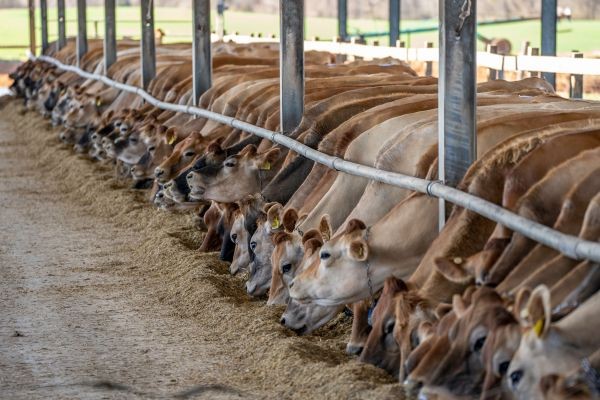
In dairy and beef production, additives are frequently selected to support rumen function, milk production, mineral balance, reproductive performance, and overall productivity. Specialized products such as rumen modifiers, yeast-based additives, protected amino acids, and mineral formulations serve these requirements.
Aquaculture represents another dynamic application area. Feed additives are used to improve digestibility, growth, immunity, water-quality outcomes, and resistance to production-related stress. As aquaculture expands, specialized additives designed for species-specific diets are likely to become increasingly important.
Innovation and Technology Reshaping Competition
Research and development is becoming a major differentiator among manufacturers. Companies are investing in improved delivery systems, enzyme engineering, microbial technologies, fermentation, encapsulation, and combination formulations.
Microencapsulation and stabilization technologies can help protect sensitive active ingredients during feed processing and storage. This is particularly relevant for probiotics, essential oils, and other temperature-sensitive compounds.
Another emerging direction is precision nutrition. Instead of applying identical additive programs across all production systems, manufacturers are developing solutions based on animal age, genetics, feed composition, environmental conditions, disease pressure, and production objectives.
Digital monitoring can further support this transition. Data from feeding systems, environmental sensors, farm-management platforms, and animal-performance records can help producers identify nutritional gaps and adjust additive programs more precisely.
Competitive Strategies of Market Participants
Competition extends beyond product performance. Companies increasingly compete through technical support, formulation expertise, distribution networks, regulatory capabilities, and long-term relationships with feed mills and livestock producers.
Large multinational participants benefit from extensive research capabilities, broad product portfolios, established distribution networks, and strong technical resources. At the same time, regional manufacturers can compete effectively through localized formulations, cost advantages, faster customer service, and familiarity with local feed ingredients and production conditions.
Strategic partnerships are also becoming important. Ingredient suppliers, biotechnology companies, feed manufacturers, research institutions, and animal producers can collaborate to validate products under commercial conditions.
Product differentiation is particularly important as several additive categories contain numerous competing formulations. Demonstrating a clear return on investment through measurable improvements in feed conversion, growth, health, mortality, milk yield, egg production, or other production indicators can provide a significant competitive advantage.
Regulatory and Quality Considerations
Regulation plays a major role in shaping the market landscape. Feed additives must satisfy requirements concerning safety, permitted uses, labeling, manufacturing quality, efficacy, and, in some jurisdictions, residue or environmental considerations.
Regulatory differences between countries can increase development costs and lengthen commercialization timelines. Companies introducing innovative microorganisms, botanical compounds, enzymes, or multifunctional formulations must therefore maintain strong technical documentation and compliance capabilities.
Quality assurance is equally important. Variations in active concentration, contamination, storage conditions, and manufacturing consistency can affect product performance. Reliable testing and traceability are becoming essential for protecting brand reputation and maintaining customer confidence.
Key Challenges Affecting the Landscape
Despite strong opportunities, the market faces several obstacles. Raw-material price volatility can affect additive costs and manufacturer margins. Feed producers operating under tight budgets may prioritize lower-cost products even when premium formulations offer better technical performance.
Another challenge is inconsistent efficacy. The performance of probiotics, phytogenics, enzymes, and other functional additives can vary according to animal species, diet composition, dosage, farm conditions, and environmental stress. Recent scientific assessments also highlight differences in responses and the need for stronger long-term evidence for some emerging bioactive solutions.
Storage and distribution can create additional difficulties, especially for biological products that require careful handling. Counterfeit or substandard products can further undermine trust and make it difficult for legitimate manufacturers to compete on quality alone.
Future Direction of the Market Landscape
The future Animal Feed Additives landscape is likely to be defined by greater specialization, multifunctional products, stronger evidence-based formulation, and increased integration of biotechnology.
Amino acids and conventional nutritional additives will remain fundamental, while functional categories such as probiotics, phytogenics, enzymes, organic acids, yeast derivatives, and mycotoxin-management solutions are expected to gain greater strategic importance.
The market is also likely to move toward customized additive programs designed around specific production challenges. Instead of selling isolated ingredients, suppliers may increasingly provide complete nutritional solutions supported by diagnostics, formulation services, farm data, and performance monitoring.
Sustainability will remain another important competitive factor. Additives that improve nutrient utilization, reduce nutrient excretion, enhance feed efficiency, extend the usability of alternative feed ingredients, or support animal resilience can provide both economic and environmental value.
Conclusion
The Animal Feed Additives market landscape is becoming more sophisticated, competitive, and science-oriented. Its future will depend not only on expanding livestock production but also on the industry's ability to deliver reliable improvements in animal performance, health, feed utilization, food safety, and sustainability.
Companies that combine strong research capabilities with dependable manufacturing, regulatory expertise, customer support, and species-specific solutions are positioned to strengthen their market presence. Meanwhile, innovation in biological ingredients, enzymes, phytogenics, delivery technologies, and precision nutrition will continue to reshape competitive boundaries.
As producers increasingly demand measurable outcomes from every feed input, the strongest market participants will be those capable of converting nutritional science into practical, scalable, and economically attractive solutions. This evolution will make Animal Feed Additives an increasingly strategic component of modern animal production systems.






