
Introduction
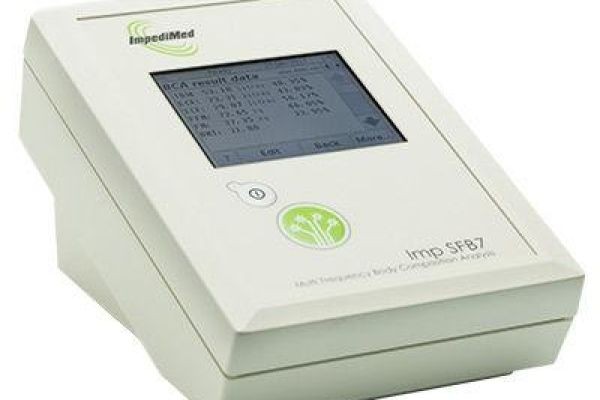
The Bioimpedance Analyzer Market is evolving from a specialized body-composition assessment segment into a broader healthcare, wellness, sports, and research technology market. Bioimpedance analysis (BIA) measures the body's electrical response to a low-intensity alternating current and uses impedance-related parameters to estimate characteristics such as body water, fat mass, fat-free mass, and skeletal muscle. More advanced systems can also assess resistance, reactance, and phase angle, creating opportunities for applications that extend beyond conventional weight and body-fat measurement.
The market outlook is increasingly influenced by the demand for non-invasive, rapid, repeatable, and relatively accessible physiological assessment. Healthcare providers, nutrition professionals, fitness centers, sports organizations, research institutions, and consumers are showing greater interest in tools that provide more information than body weight or body mass index alone.
Expanding Role in Preventive and Personalized Healthcare
One of the strongest long-term opportunities for the Bioimpedance Analyzer Market is the shift toward preventive and personalized healthcare. Healthcare systems are increasingly emphasizing early identification of nutritional risks, changes in muscle mass, hydration status, and metabolic health rather than relying exclusively on conventional measurements.
Bioimpedance analyzers can support repeated assessments without radiation exposure, making them suitable for monitoring changes over time. This is particularly valuable when clinicians or nutrition professionals need to evaluate whether an intervention is producing meaningful changes in body composition.
The growing interest in phase angle is also expanding the potential clinical role of BIA. Phase angle is derived from resistance and reactance measurements and has been investigated as an indicator associated with cellular and nutritional status. However, interpretation depends on measurement conditions, patient characteristics, device methodology, and appropriate reference values.
Technological Development Will Shape Market Competition
Technology is expected to remain a central factor shaping the Bioimpedance Analyzer Market. Earlier systems often focused on relatively simple body-composition estimates, while modern platforms increasingly incorporate multifrequency measurement, segmental analysis, improved sensors, digital interfaces, and software-based interpretation.
Multifrequency systems can provide information about extracellular and intracellular water by assessing the body's response across different electrical frequencies. Segmental analyzers, meanwhile, measure different areas of the body separately, potentially providing more detailed information about regional muscle and fat distribution.
Phase-sensitive devices represent another important technology direction. Rather than relying solely on impedance magnitude, these systems can measure the relationship between resistance and reactance, enabling additional parameters such as phase angle to be calculated.
Integration With Digital Health Ecosystems
Connectivity will become increasingly important as bioimpedance analyzers move into digitally enabled healthcare environments. Bluetooth, Wi-Fi, cloud platforms, mobile applications, electronic health records, and remote monitoring systems can transform a single measurement into a longitudinal health dataset.
For healthcare professionals, digital integration can simplify patient monitoring and trend analysis. Fitness professionals can use connected platforms to follow changes in muscle mass and body fat during training programs. Consumers may also benefit from applications that translate measurements into understandable progress indicators.
The future competitive advantage may therefore depend not only on sensor accuracy but also on software usability, data visualization, interoperability, cybersecurity, and the ability to generate meaningful insights from repeated measurements.
Rising Demand From Fitness and Sports Performance
The fitness and sports sectors represent another promising growth avenue. Athletes and active consumers increasingly seek detailed information about muscle development, fat reduction, hydration, and changes associated with training.
Professional sports organizations may use advanced body-composition assessment to support training and nutrition strategies. Fitness centers can incorporate analyzers into membership programs, personal training services, and wellness assessments.
This creates opportunities for manufacturers to develop systems that combine measurement speed with easy operation. Compact devices can address smaller gyms, clinics, nutrition practices, and sports facilities, while advanced laboratory or clinical systems can target organizations requiring more comprehensive analytical capabilities.
Opportunities in Nutrition and Weight Management
Weight-management programs are becoming more focused on body composition rather than weight alone. A reduction in body weight does not necessarily indicate whether an individual has primarily lost fat, water, or lean tissue. Consequently, body-composition monitoring can help professionals evaluate changes more comprehensively.
Nutrition clinics, obesity-management programs, wellness centers, and metabolic health services can use bioimpedance analyzers as part of assessment and follow-up workflows. This creates recurring demand because users may require multiple measurements during a structured intervention.
The opportunity is particularly relevant to personalized nutrition, where dietary recommendations can be adjusted according to changes in body composition and other physiological indicators.
Healthcare Applications Offer Long-Term Potential
The clinical outlook is broader than conventional body-fat measurement. Bioimpedance technology has applications in nutritional assessment, hydration monitoring, renal care, chronic disease management, oncology-related nutritional evaluation, rehabilitation, and other healthcare settings.
However, clinical adoption will depend on appropriate validation and standardized measurement practices. Hydration status, body position, recent food or fluid intake, exercise, skin temperature, electrode placement, and other factors can affect measurements. Consequently, healthcare institutions require clear protocols to ensure that results are interpreted appropriately.
As methodological standards become more harmonized, confidence in clinically oriented BIA applications could improve.
Asia-Pacific Presents Significant Expansion Potential
The Asia-Pacific region is positioned as an important opportunity area because of expanding healthcare infrastructure, increasing fitness participation, rising awareness of preventive health, and growing adoption of digital medical technologies.
Developing healthcare markets may favor compact and cost-conscious analyzers that can be deployed in clinics, diagnostic centers, wellness facilities, and fitness establishments. More mature markets, meanwhile, can support premium systems featuring multifrequency analysis, segmental measurements, cloud connectivity, and advanced software.
Manufacturers that can balance affordability, reliability, ease of operation, and localized service capabilities may find particularly attractive opportunities across diverse Asian markets.
Consumer Devices Will Increase Market Awareness
Consumer-facing body-composition devices are helping familiarize the public with bioimpedance technology. Smart scales and connected health devices have introduced BIA-based measurements to households, although consumer products and clinical-grade analyzers should not be treated as interchangeable.
The expanding consumer ecosystem can nevertheless increase awareness of metrics such as body-fat percentage, muscle mass, and body water. This awareness may encourage consumers to seek professional assessments and create a broader market for higher-performance systems.
Future consumer products are likely to emphasize simpler interfaces, improved repeatability, personalized dashboards, and integration with broader health applications.
Key Challenges in the Market Outlook
Despite favorable prospects, the Bioimpedance Analyzer Market faces several challenges. Measurement results can vary between devices because manufacturers may use different frequencies, electrode configurations, algorithms, prediction equations, and reference populations.
This makes cross-device comparison difficult. A result from one analyzer may not be directly equivalent to a result generated by another system.
Another challenge is consumer interpretation. Body-composition values are estimates, and users may place excessive importance on small changes that fall within normal measurement variability. Education and appropriate clinical guidance will therefore remain important.
Manufacturers also face pressure to demonstrate accuracy, reproducibility, usability, and clinical relevance while maintaining competitive pricing.
Future Product Development Priorities
Future products are likely to focus on greater automation and more actionable interpretation. Artificial intelligence and advanced analytics could help identify meaningful longitudinal patterns, although such systems will need robust validation before being relied upon for clinical decisions.
Manufacturers are also likely to prioritize smaller footprints, faster measurements, improved electrode designs, multilingual software, remote data management, and compatibility with digital health platforms.
Another potential direction is the combination of bioimpedance with complementary measurements. Integrating BIA with anthropometric data, activity information, metabolic indicators, or other physiological measurements could provide a more comprehensive view of health.
Competitive Outlook
Competition is expected to increasingly center on technological differentiation rather than basic measurement capability. Companies that offer accurate measurement, strong software ecosystems, reliable customer support, and application-specific solutions can strengthen their market position.
Clinical users may prioritize validation and reproducibility, whereas fitness and wellness operators may place greater emphasis on speed, simplicity, presentation, and affordability. Consumer-oriented products will compete heavily on convenience and digital engagement.
This segmentation creates room for multiple product tiers rather than a single standardized analyzer category.
Conclusion
The Bioimpedance Analyzer Market [https://www.pristinemarketinsights.com/bioimpedance-analyzer-market-report]has a favorable long-term outlook as healthcare and wellness industries place greater emphasis on measurable, personalized, and repeatable health assessments. Technological improvements in multifrequency analysis, segmental measurement, phase-sensitive systems, connectivity, and data analytics are broadening the technology's potential applications.
The strongest opportunities are likely to emerge where bioimpedance analysis becomes part of a broader monitoring workflow rather than a standalone measurement. Healthcare providers, nutrition professionals, sports organizations, fitness businesses, researchers, and consumers can all contribute to demand.
Going forward, market success will depend on the ability to combine measurement quality with practical usability, transparent interpretation, digital integration, and application-specific value. As these capabilities mature, bioimpedance technology is positioned to become an increasingly important component of modern body-composition assessment and personalized health management.






