
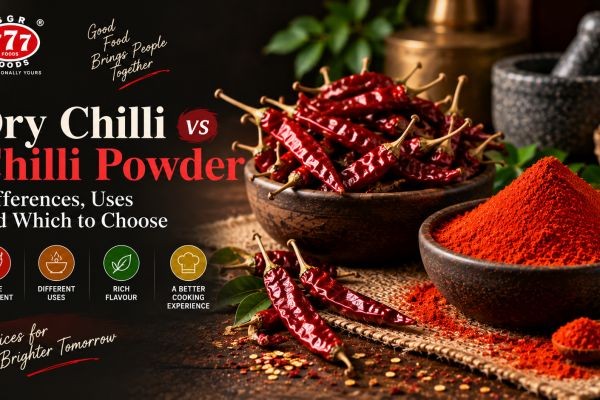
Dry chilli and chilli powder come from the same basic ingredient, but they are used differently in Indian cooking. Dry chilli is used whole, crushed, or ground when needed, while chilli powder is already processed and ready to mix into recipes. The choice depends on the dish, desired heat, aroma, colour, and convenience.
What Is Dry Chilli?
Dry chilli is a fresh chilli that has been dehydrated to remove most of its moisture. Once dried, the chilli becomes suitable for longer storage and can be used in several ways.
Whole dry chillies are commonly used for tempering in hot oil or ghee. They can also be crushed into flakes, soaked and blended into pastes, or ground into chilli powder.
Different varieties of dry chilli provide different levels of heat and colour. Some are preferred for their vibrant colour, while others are selected for stronger pungency.
For a detailed look at how dried chillies are selected, dried, graded, stored, and prepared for cooking, see this guide to dry chilli.
What Is Chilli Powder?
Chilli powder is made by drying chilli pods and grinding them into a fine or coarse powder. It is one of the most convenient forms of chilli for everyday cooking.
Because the powder is already processed, it can be measured directly and added to curries, gravies, marinades, masalas, chutneys, and other dishes.
The final characteristics of chilli powder depend on the variety used, the drying process, grinding method, and desired heat and colour.
Dry Chilli vs Chilli Powder: Key Differences
Feature Dry Chilli Chilli Powder
Form Whole dried pod Ground powder
Preparation Can be used whole or processed Ready to use
Main use Tempering, roasting, grinding Curries, gravies, masalas
Aroma Strong when tempered Mixes evenly into dishes
Texture Whole or crushed Fine or coarse
Convenience Requires additional preparation Quick and easy
Storage Easy to store whole Needs airtight storage
Control Can control grinding and quantity Easy to measure
Neither form is automatically better. The right choice depends on how you cook.
When Should You Use Dry Chilli?
Whole dry chilli is especially useful when you want to build flavour through tempering.
Tempering
Adding dry chilli to hot oil along with mustard seeds, curry leaves, cumin, or other ingredients can release its aroma into the cooking fat.
This technique is common in many South Indian preparations.
Chutneys
Dry chilli can be roasted and ground with ingredients such as coconut, lentils, garlic, onion, or tamarind to make different types of chutneys.
Pickles
Many Indian pickle recipes use dried chilli as part of their spice base. It contributes heat, colour, and flavour.
Homemade Spice Blends
If you prepare masala powders at home, whole dry chilli gives you more control over the final texture and proportion of chilli in the blend.
When Should You Use Chilli Powder?
Chilli powder is particularly useful when convenience and consistent distribution are important.
Curries and Gravies
Powdered chilli mixes easily with liquid and spice bases, making it suitable for everyday curries and gravies.
Marinades
It can be mixed with curd, ginger, garlic, oil, lemon, and other spices to create marinades for vegetables and other preparations.
Dry Vegetable Dishes
Chilli powder can coat vegetables evenly without adding whole chilli pieces to the finished dish.
Everyday Masala Cooking
For regular home cooking, ready-to-use chilli powder reduces preparation time and makes measuring easier.
For everyday recipes that need a convenient powdered spice, premium red chilli powder can be used in curries, gravies, marinades, and other Indian preparations.
Does Dry Chilli Have More Heat Than Chilli Powder?
Not necessarily.
The heat level depends primarily on the chilli variety and how much of it is used. Chilli powder may sometimes seem hotter because it distributes evenly throughout the dish, while a whole dry chilli may provide concentrated heat in certain bites.
The processing method can also influence the final flavour and intensity.
This is why comparing only the form—whole or powdered—is not enough. The variety and quantity matter as well.
Which Is Better for Colour?
The answer depends on the chilli variety.
Some dry chilli varieties are naturally rich in colour and are selected specifically for making visually vibrant chilli powder.
For example, colour-focused varieties can be dried and ground to produce powder that gives curries and marinades a deeper red appearance without necessarily making them extremely hot.
Therefore, when buying chilli powder, do not judge quality only by how bright the colour looks. Aroma, texture, variety, and product quality are also important.
Dry Chilli vs Chilli Powder for South Indian Cooking
Both forms have an important place in South Indian kitchens.
Dry chilli is frequently used in:
Tempering
Chutneys
Pickles
Spice blends
Rasam preparations
Sambar variations
Roasted masalas
Chilli powder is commonly used in:
Vegetable curries
Gravies
Marinades
Masala preparations
Rice dishes
Pickles
Dry vegetable recipes
The two forms can sometimes be used in the same recipe, but they produce different textures and flavour distribution.
What About Idli and Dosa?
Chilli is also commonly paired with South Indian breakfast foods.
Instead of using plain chilli powder, some preparations use a dedicated spice blend designed to accompany foods such as idli and dosa.
For a ready-to-use option, idly chilli powder can be served with idli, dosa, and other South Indian breakfast dishes.
How to Store Dry Chilli
Keep whole dry chillies in an airtight container away from moisture and direct sunlight.
The chilli should remain dry and free from visible mould or unusual odours. Moisture is one of the biggest storage concerns because it can affect dried spices and reduce their shelf stability.
Buying smaller quantities can also be practical if you do not use dry chilli frequently.
How to Store Chilli Powder
Chilli powder should also be kept in a clean, dry, airtight container.
Always use a completely dry spoon when taking out the powder. Avoid keeping the container near steam, water, or excessive heat from the cooking area.
Good storage helps preserve the powder's aroma, texture, and overall quality.
Which One Should You Choose?
Choose dry chilli when:
You want to temper whole chilli.
You make homemade spice blends.
You want to roast or grind chilli yourself.
You need whole chilli for chutneys or pickles.
You prefer more control over processing.
Choose chilli powder when:
You want faster everyday cooking.
You need evenly distributed spice.
You regularly prepare curries and gravies.
You want easy measurement.
You prefer a ready-to-use spice.
Many Indian kitchens benefit from keeping both forms available because they serve different culinary purposes.
Frequently Asked Questions
Is dry chilli the same as chilli powder?
No. Dry chilli is a whole dehydrated chilli pod, while chilli powder is produced by grinding dried chilli into a powder.
Which is easier to use, dry chilli or chilli powder?
Chilli powder is generally more convenient because it can be measured and added directly to a recipe without additional grinding.
Can dry chilli be made into chilli powder?
Yes. Whole dried chillies can be cleaned and ground into powder. The variety and processing method influence the resulting colour, aroma, and heat.
Is dry chilli hotter than chilli powder?
Not automatically. Heat depends on the chilli variety, quantity, and preparation rather than simply whether it is whole or powdered.
Which chilli is better for tempering?
Whole dry chilli is commonly used for tempering because it can release its aroma and flavour into hot oil or ghee.
Which is better for curries?
Chilli powder is usually more convenient for curries because it distributes evenly throughout the gravy and can be measured easily.
How should dry chilli be stored?
Store whole dry chilli in an airtight container in a cool, dry place away from moisture and direct sunlight.
Conclusion
Dry chilli and chilli powder are two useful forms of the same versatile spice, but they serve different purposes in the kitchen. Dry chilli works particularly well for tempering, roasting, chutneys, pickles, and homemade spice blends, while chilli powder is convenient for curries, gravies, marinades, and everyday cooking.
The best choice depends on the recipe, desired heat, colour, aroma, preparation time, and level of control you want. Keeping both forms in the kitchen gives you greater flexibility when preparing Indian food.






