
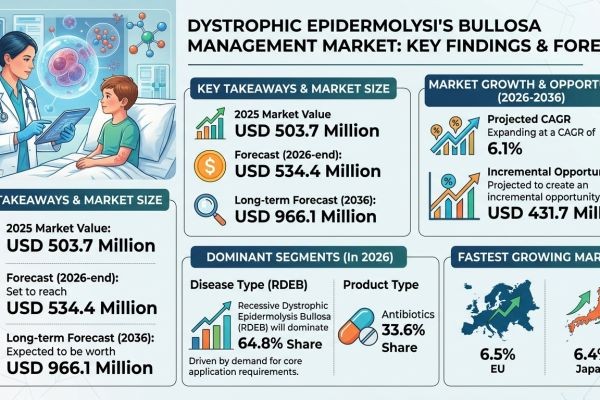
The global dystrophic epidermolysis bullosa (DEB) management market is projected to witness steady expansion over the next decade, driven by growing awareness of rare genetic skin disorders, increasing investment in advanced wound care therapies, and the emergence of innovative gene and cell-based treatments. According to the latest insights by Future Market Insights, the market is expected to grow from USD 534.4 million in 2026 to approximately USD 966.1 million by 2036, registering a CAGR of 6.1% during the forecast period.
Market growth is being shaped by rising diagnosis rates, expanding access to specialized dermatological care, and increasing research focused on improving the quality of life for patients suffering from dystrophic epidermolysis bullosa. Healthcare providers and pharmaceutical companies are intensifying efforts to develop targeted therapies that address chronic wounds, infection management, pain relief, and long-term skin regeneration.
Dystrophic Epidermolysis Bullosa Management Market Snapshot (2026–2036)
- Market size in 2026: USD 534.4 million
- Forecast market value by 2036: USD 966.1 million
- Forecast CAGR (2026–2036): 6.1%
- Dominant disease type: Recessive Dystrophic Epidermolysis Bullosa (RDEB)
- Leading drug category: Antibiotics
- Fastest-growing regional markets: European Union and Japan
- Key treatment focus: Advanced wound care and genetic therapies
- Primary healthcare channel: Hospital-based specialty treatment centers
Momentum in the Market
Beginning from a relatively niche therapeutic landscape, the dystrophic epidermolysis bullosa management market is transitioning into a more structured and innovation-driven healthcare segment. Between 2026 and 2036, rising clinical research activity and increased rare disease funding are expected to significantly strengthen market expansion.
Growing collaboration between biotechnology firms, research institutions, and healthcare organizations is accelerating the development of regenerative medicine approaches for DEB management. Advanced biologics, topical therapies, and gene-corrective technologies are gaining momentum as healthcare systems increasingly prioritize personalized rare disease treatment solutions.
From 2030 onward, the integration of precision medicine and next-generation gene therapies is anticipated to redefine treatment standards for dystrophic epidermolysis bullosa patients worldwide.
The Reasons Behind the Market’s Growth
Rising Awareness of Rare Genetic Disorders
Improved awareness campaigns and rare disease advocacy initiatives are contributing to earlier diagnosis and stronger demand for specialized treatment options.
Advancements in Gene and Cell Therapy
Biotechnology companies are heavily investing in regenerative medicine, stem-cell therapies, and gene-editing technologies designed to address the underlying causes of dystrophic epidermolysis bullosa.
Increasing Demand for Advanced Wound Care
Chronic skin blistering and wounds associated with DEB require continuous management, boosting demand for antibiotics, dressings, pain management drugs, and specialized skincare therapies.
Expansion of Specialty Healthcare Infrastructure
Healthcare systems worldwide are strengthening rare disease treatment capabilities through dedicated dermatology centers and hospital-based care programs.
Growth in Research and Clinical Trials
Ongoing clinical trials focused on collagen restoration, tissue repair, and genetic correction are creating new therapeutic opportunities and improving long-term market outlook.
Top Segment Analysis
Disease Type Analysis
Recessive Dystrophic Epidermolysis Bullosa (RDEB) Leads the Market
RDEB is expected to dominate the global market with approximately 64.8% share during the forecast period due to its severe disease burden and higher treatment dependency.
Dominant Dystrophic Epidermolysis Bullosa (DDEB)
DDEB continues to represent an important treatment segment supported by growing awareness and improved disease management approaches.
Drug Class Analysis
- Antibiotics: ~33.6% market share driven by infection management needs
- Corticosteroids: Widely used for inflammation control
- Opioid analgesics: Increasing use for chronic pain management
- Anticonvulsants: Supporting neuropathic pain treatment strategies
Regional Development: Innovation and Healthcare Investment Drive Global Expansion
The dystrophic epidermolysis bullosa management market is expanding globally as healthcare systems strengthen rare disease treatment infrastructure and pharmaceutical innovation accelerates.
European Union
The EU is projected to be one of the fastest-growing markets with a CAGR of 6.5%, supported by advanced healthcare systems, rare disease funding programs, and strong clinical research networks.
Japan
Japan is anticipated to grow at 6.4% CAGR due to increasing investment in regenerative medicine and favorable biotechnology innovation policies.
United States
The U.S. remains a major market owing to strong biotechnology presence, expanding orphan drug development, and increasing patient access to advanced therapies.
South Korea and United Kingdom
Both countries are witnessing increasing adoption of rare disease treatment programs supported by modern healthcare infrastructure and innovation-focused pharmaceutical initiatives.
Challenges, Trends, Opportunities, and Drivers
Drivers
- Growing prevalence awareness of epidermolysis bullosa
- Rising investment in orphan drug development
- Expansion of specialized wound care treatment
- Increasing clinical research activities
Opportunities
- Gene-editing and regenerative medicine therapies
- Personalized treatment approaches
- Expansion of telemedicine support for rare disease patients
- Advanced biologics and tissue-engineering technologies
Trends
- Shift toward precision medicine
- Rising adoption of regenerative wound healing therapies
- Increased partnerships between biotech firms and healthcare institutions
- Expansion of rare disease clinical trials globally
Challenges
- High treatment costs for advanced therapies
- Limited patient population size
- Complex regulatory approval pathways
- Accessibility barriers in developing regions
Country Growth Outlook
The market’s future trajectory is closely linked to healthcare innovation, rare disease policy support, and biotechnology advancement across major economies:
- European Union: Strongest growth outlook through rare disease funding
- Japan: Expanding regenerative medicine leadership
- United States: Advanced clinical trial ecosystem
- South Korea: Rapid biotechnology development
- United Kingdom: Growing orphan drug support initiatives
The Competitive Environment
The dystrophic epidermolysis bullosa management market remains moderately consolidated, with leading biotechnology and pharmaceutical companies focusing on innovative therapy development and strategic collaborations.
Key Companies Include:
- Krystal Biotech
- Abeona Therapeutics
- Castle Creek Biosciences
- Amryt Pharma
- Novartis AG
- ProQR Therapeutics
- MediWound Ltd.
These organizations are actively investing in gene therapy platforms, regenerative skin technologies, advanced wound healing solutions, and orphan drug innovation to strengthen their market presence.
Future Outlook: Toward Regenerative and Personalized Rare Disease Care
The dystrophic epidermolysis bullosa management market is entering a transformative phase driven by precision medicine, regenerative healthcare innovation, and expanding global rare disease awareness. Future therapies are expected to move beyond symptom management toward long-term genetic correction and tissue regeneration.
As biotechnology advances continue to reshape rare disease treatment paradigms, the market is likely to witness stronger commercialization of advanced therapies capable of significantly improving patient outcomes and quality of life.
For a comprehensive strategic outlook and detailed analysis of technological developments shaping the industry, readers can explore the full report on the official Future Market Insights website:
https://www.futuremarketinsights.com/reports/dystrophic-epidermolysis-bullosa-management-market






