
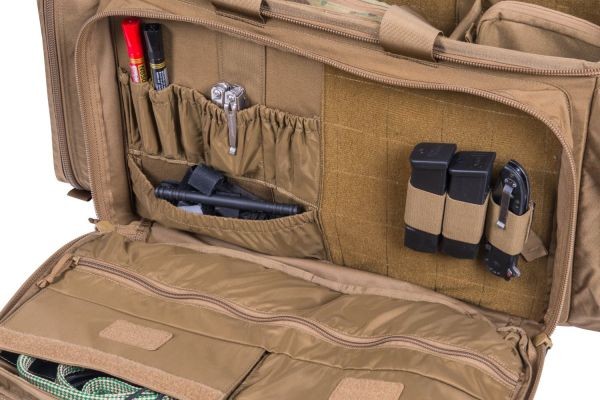
According to the latest market analysis by Future Market Insights, the global professional gear bags market, valued at USD 21.5 billion in 2026 and projected to reach USD 33.0 billion by 2036, is undergoing a structural shift—from traditional utility luggage into intelligent, sustainable mobility infrastructure. What was once considered a passive storage category is now evolving into an integrated component of daily professional workflows, driven by smart tracking technologies, modular ecosystems, and circular material innovation.
Quick Stats Snapshot
- Market size (2026): USD 21.5 billion
- Forecast (2036): USD 33.0 billion
- CAGR (2026–2036): 5.5%
- Top growth market: China (7.4% CAGR)
- Leading product segment: Laptop & work backpacks (52% share)
- Dominant sales channel: Specialty stores (44% share)
- Key consumer group: Adult professionals (92% share)
Get detailed market forecasts, competitive benchmarking, and pricing trends: https://www.futuremarketinsights.com/reports/sample/rep-gb-6858
Market Size and Growth Outlook
The global professional gear bags market is projected to grow steadily from USD 21.5 billion in 2026 to USD 33.0 billion by 2036. While a 5.5% CAGR reflects moderate expansion, the underlying transformation is significant: growth is increasingly driven by premiumization, smart functionality, and ecosystem integration rather than simple volume increases.
Demand is being fueled by hybrid work environments, rising field-based professions, and the need for secure, ergonomic, and connected mobility solutions. Emerging markets, particularly across Asia-Pacific, are expected to lead growth due to expanding professional workforces and rapid adoption of tech-enabled gear systems.
Growth Drivers: Smart Mobility Meets Professional Demand
Three structural forces are reshaping the market:
- Shift to Intelligent Carry Systems
Professional gear bags are evolving into smart infrastructure, incorporating GPS tracking, biometric locks, RFID shielding, and app-based monitoring. These features enhance asset security and operational efficiency for mobile professionals.
- Rise of Modular Ecosystems
Users increasingly prefer integrated systems—combining backpacks, tool pouches, and protective cases—over standalone products. Modular designs enable customization across professions such as technicians, photographers, and field engineers.
- Sustainability and Circular Design
Mono-material construction and recyclable components are gaining traction, particularly in Europe, where regulatory pressure is accelerating adoption. Sustainability is becoming a core purchase criterion alongside durability and performance.
Key Challenges: Complexity, Cost, and Adoption Barriers
Despite strong momentum, the market faces several constraints:
- High product costs associated with smart features and advanced materials
- Complex value communication, especially around smart and insurance-linked functionalities
- Longer replacement cycles due to improved durability and product longevity
Brands that fail to clearly demonstrate practical benefits—such as workflow efficiency and asset protection—may struggle to justify premium pricing.
Emerging Opportunities: Premiumization Through Functionality
Opportunities lie in enhancing usability and integration rather than expanding product variety:
- Smart-enabled platforms: Integration of tracking and security features to address theft and asset loss
- Mid-range professional solutions: Affordable yet durable gear for emerging markets like India
- Enterprise ecosystem sales: Standardized modular systems for corporate and institutional buyers
Segmentation Insights: Everyday Utility Drives Demand
By Product Type:
Laptop and work backpacks dominate with a 52% share, reflecting their role as essential daily carry solutions for mobile professionals.
By Material Type:
Nylon and synthetic fabrics lead with nearly 79% share, favored for durability, lightweight construction, and resistance to environmental stress.
By Sales Channel:
Specialty stores account for 44% of sales, as professionals prioritize in-person evaluation of ergonomics, fit, and functionality before purchase.
By End User:
Adult professionals represent over 92% of demand, highlighting the category’s strong alignment with occupational use cases.
Regional Analysis: Asia-Pacific Leads Global Growth
- China (7.4% CAGR): Rapid industrialization and expansion of field services drive demand for smart, durable gear
- India (6.8% CAGR): Growth supported by logistics, gig economy, and mobile workforce expansion
- United States (6.5% CAGR): Mature market with strong premiumization and replacement cycles
- Germany (6.4% CAGR): Demand driven by durability-focused purchasing and technical performance requirements
- United Kingdom (6.3% CAGR): Adoption fueled by creative professionals and mobile service sectors
Asia-Pacific remains the dominant region, supported by workforce scale, urbanization, and increasing adoption of advanced gear solutions.
Competitive Landscape: Performance and Integration Define Leadership
The market is competitive and evolving, with players focusing on durability, ergonomics, and smart integration:
- Global brands leverage scale, distribution, and product breadth
- Specialist manufacturers focus on niche segments such as photography and technical trades
- Innovation-driven entrants emphasize smart tracking, modularity, and sustainability
Competition is increasingly defined by how well products integrate into broader professional ecosystems rather than standalone performance.
Strategic Implications for Industry Leaders
- Functionality is the new differentiator: Smart features and modular design outweigh basic durability
- Ecosystem thinking is critical: Integrated product platforms drive higher lifetime value
- Sustainability is non-negotiable: Circular materials and compliance with regulations are becoming standard
- Channel strategy must balance experience and convenience: Specialty retail for discovery, online for replenishment
Companies treating gear bags as simple accessories risk losing relevance in a market transitioning toward infrastructure-grade solutions.
Future Outlook: From Storage to Smart Work Infrastructure
Looking ahead, the professional gear bags market is expected to evolve into a fully integrated mobility ecosystem, combining protection, connectivity, and sustainability.
Key trends to watch:
- Expansion of smart tracking and insurance-linked features
- Growth of modular, multi-product ecosystems
- Increased adoption of mono-material, recyclable designs
- Rising demand for ergonomic, long-duration carry solutions
Executive Takeaways
- The market is transitioning from passive storage to intelligent mobility infrastructure
- Asia-Pacific leads growth, with China and India as key strategic markets
- Laptop backpacks dominate, anchored in daily professional use
- Specialty retail remains critical for high-value purchase decisions
- Success depends on balancing technology, durability, and sustainability
In a category increasingly defined by performance, integration, and professional utility, long-term success will depend on how effectively companies align innovation with real-world workflow needs.






