A well-planned sign can change how people understand and experience a building. In busy commercial areas, wall signage Dubai businesses use helps visitors recognise locations, find departments, understand services, and identify brands without confusion. From a small office entrance to a large retail interior, wall-mounted signs provide useful information while contributing to the overall appearance of a space. Their effectiveness depends on more than attractive lettering; material selection, placement, readability, lighting, and the building's layout all play important roles.
1. Why Wall Signage Dubai Matters in Modern Buildings
Commercial buildings often contain several businesses, departments, meeting rooms, and service areas. Without clear signs, visitors may struggle to find the right entrance or understand where they need to go. Wall-mounted displays solve this problem by placing important information where people naturally look for it.
For example, a visitor entering a medical centre may need to identify reception, a pharmacy, a waiting area, or a particular doctor's room. Clearly positioned signs help them move through the building without repeatedly asking staff for directions. Similarly, in a shopping centre, wall signs can identify shops, facilities, lifts, and emergency exits.
Good signage also creates a consistent visual appearance. When signs use matching colours, lettering styles, and materials, the building feels more organised. This is particularly useful for businesses with multiple branches because a consistent design can make different locations easier to recognise.
2. Common Types of Wall Signage for Different Spaces
Different environments require different signage styles. A design suitable for a corporate reception may not work well in a restaurant kitchen or an outdoor retail entrance. Understanding the available options makes it easier to select signs that match their purpose.
Acrylic Wall Signs
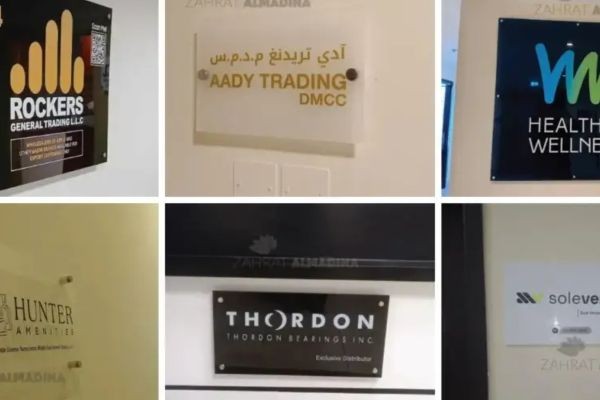
Acrylic is widely used because it has a smooth surface and a clean, modern appearance. It is available in transparent, coloured, frosted, and opaque finishes. Businesses can use acrylic panels to display logos, company names, department labels, and directional information.
For example, a reception area may feature raised acrylic letters mounted directly onto a painted wall. A transparent panel can also hold printed information while maintaining a simple appearance. Acrylic is lightweight compared with many metal alternatives, which makes it suitable for a variety of indoor applications.
3D Lettering and Raised Signs
Three-dimensional lettering creates depth by lifting individual letters or logos away from the wall. Depending on the material and thickness, the result can look subtle or prominent.
A hotel reception might use raised metal letters for its name, while a technology company may choose coloured acrylic lettering to match its brand identity. The distance between the letters and the wall can also create shadows, adding visual depth.
Illuminated Wall Signs
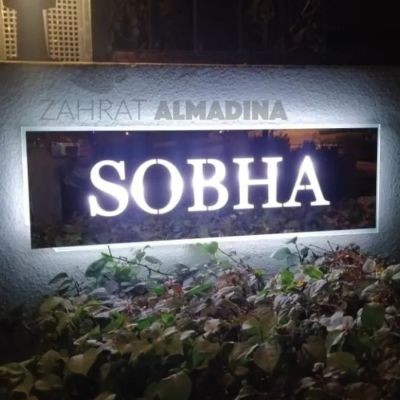
Lighting helps signs remain visible in areas with limited natural light. LED illumination can be installed behind letters, around their edges, or inside suitable sign panels.
Backlit letters create a soft glow on the wall behind the design, while front-lit signs illuminate the visible face. Restaurants, entertainment venues, and retail stores often use illuminated displays to make their names easier to notice in the evening.
Metal Wall Signs
Metal signs are commonly made from stainless steel, aluminium, or brass. They can provide a clean, refined appearance and are suitable for offices, hotels, clinics, and commercial buildings.
Brushed stainless steel, polished finishes, and painted aluminium offer different visual effects. The right finish depends on the surrounding interior, expected exposure, and maintenance requirements.
3. Choosing the Right Material for Wall Signs
Material selection affects a sign's appearance, lifespan, weight, installation method, and maintenance needs. A material that works well indoors may not be suitable for an exposed exterior wall.
Acrylic is often selected for indoor displays because it offers a smooth finish and flexible design options. Aluminium provides a lightweight option for many indoor and outdoor applications, while stainless steel is valued for its strength and distinctive metallic appearance. PVC and other suitable rigid boards may be considered for temporary displays or projects where a simpler construction is required.
Before choosing a material, businesses should consider the following points:
-
Location: Indoor signs usually face fewer weather-related challenges than exterior signs.
-
Exposure: Direct sunlight, rain, dust, and humidity can affect the performance of some materials and finishes.
-
Weight: Heavy signs may require stronger wall supports and suitable fixings.
-
Maintenance: Smooth surfaces are generally easier to clean than designs with many narrow gaps or complex details.
-
Appearance: The finish should complement the building's interior or exterior design.
-
Budget: Material, thickness, fabrication, lighting, and installation all influence the total cost.
For instance, a small indoor department sign may only need a printed acrylic panel. A large exterior company name may require a stronger structure, weather-resistant materials, and a carefully planned mounting system.
4. How Placement and Readability Affect Sign Performance
Even a well-made sign can become ineffective when it is installed in the wrong position. People should be able to notice and read information without stopping in an inconvenient place or searching across several walls.
The height of a sign should suit the way people approach it. A reception logo may be positioned above or behind the reception desk, while a room identification sign is usually placed near the relevant door. Directional information should appear before visitors reach a turning point, not after they have already passed it.
Letter size also matters. Small lettering may look attractive in a design preview but become difficult to read from a distance. The viewing distance, available wall space, lighting conditions, and amount of information should guide the size of the text.
Contrast and Typography
Strong contrast between the letters and background improves readability. Dark lettering on a light wall or light lettering on a darker surface can make information easier to understand.
Simple fonts are generally more suitable for directional and informational signs. Decorative lettering may work for a restaurant logo or a reception feature, but it should not reduce the readability of important information.
Avoiding Too Much Information
A sign should communicate its main message quickly. Adding too many words, icons, colours, or decorative details can make it difficult to understand.
For example, a room sign displaying a department name and room number is often more useful than a panel containing a long description. Additional details can be displayed separately when necessary.
5. Using Wall Signage Across Different Industries
The purpose of a sign changes depending on the type of business. A consistent design approach can help different industries communicate information more effectively.
Offices: Corporate workplaces use wall signs to identify reception areas, meeting rooms, departments, employee zones, and shared facilities. Matching signs can create a more organised environment for staff and visitors.
Retail stores: Shops use wall displays to identify product sections, promotional areas, fitting rooms, payment counters, and customer services. Clear signs can help shoppers move through the store more comfortably.
Restaurants and cafés: Wall-mounted menus, brand logos, counter signs, and directional displays help customers understand the layout. In kitchens and staff-only areas, signs can also communicate safety instructions.
Hotels: Guest-facing signs identify reception, lifts, restaurants, conference rooms, and other facilities. Consistent materials and typography help maintain a coordinated interior design.
Healthcare facilities: Clinics and hospitals require clear signs for reception, consultation rooms, laboratories, waiting areas, and emergency routes. Readability is particularly important because visitors may be unfamiliar with the building.
Educational institutions: Schools, colleges, and training centres use signs to identify classrooms, offices, laboratories, libraries, and administrative departments.
6. Combining Wall Signs with Other Identification Displays
A building often needs more than one type of sign to communicate effectively. Wall displays can work alongside door labels, directional signs, desk signs, and external identification boards.
For example, a company may display its logo behind the reception desk, use directional signs along corridors, and install department names beside office entrances. This creates a connected identification system rather than a collection of unrelated signs.
Personal identification also plays a role in many workplaces. A custom name plate can identify an employee's desk, office door, or reception position. When its material, colour, and lettering match the wider signage system, it helps maintain a consistent appearance throughout the building.
Residential properties can benefit from the same approach. A house entrance may feature a wall-mounted family name, while a smaller number sign helps delivery drivers and visitors identify the correct property. The design can be simple or decorative, depending on the architecture.
Businesses researching different fabrication methods may compare examples from suppliers such as Zahrat Al Madina Printing with other providers to understand available materials, finishes, and construction options.
7. Design and Installation Considerations
Planning should begin before the sign is manufactured. Measuring the wall, checking the surface, and confirming the final design can prevent avoidable installation problems.
The first step is to identify the sign's purpose. A company logo, room label, safety notice, and directional panel each require a different layout. Once the purpose is clear, the designer can decide on the size, material, colours, lettering, and mounting method.
A design proof should be checked carefully before production. Spelling, logo proportions, colour choices, alignment, and measurements should all be confirmed. This is especially important when the sign includes several departments or multiple lines of information.
Wall Surface and Fixings
Different walls require different installation methods. Concrete, brick, plasterboard, glass, and tiled surfaces do not all support the same fixings. The installer should select suitable anchors, screws, adhesives, or mounting hardware according to the sign's weight and the wall condition.
Heavy signs may require mechanical fixings rather than adhesive alone. On delicate or uneven surfaces, additional preparation may be necessary to ensure the sign sits securely and evenly.
Electrical and Lighting Requirements
Illuminated signs need suitable electrical planning. Wiring, power access, ventilation, and maintenance access should be considered before installation. Outdoor illuminated displays also need appropriate protection against moisture and environmental exposure.
8. Maintenance and Long-Term Performance
Regular maintenance helps preserve the appearance and readability of wall signs. Dust, fingerprints, moisture, and other marks can make even a high-quality display look neglected.
Acrylic and glass surfaces can usually be cleaned with a soft cloth and a suitable non-abrasive cleaner. Metal signs should be maintained according to their finish because harsh chemicals may damage polished or coated surfaces. Printed panels should be cleaned carefully to avoid scratching or affecting the printed layer.
Illuminated signs need occasional checks to identify faulty LED modules, loose connections, or uneven lighting. Outdoor signs should also be inspected for corrosion, damaged fixings, fading, and water entry.
A simple maintenance schedule can help building managers identify problems early. Signs that contain outdated department names, incorrect directions, or old contact information should be updated promptly. Keeping information accurate is just as important as keeping the physical sign in good condition.
Conclusion
Effective wall signage combines clear communication with suitable materials, thoughtful design, and correct installation. Whether it is used in an office, shop, hotel, clinic, restaurant, or residential building, a well-positioned sign helps people identify places and move through spaces with greater confidence. By considering readability, material performance, lighting, placement, and maintenance, businesses can create signage that remains useful and visually consistent over time.


