
Healthy, beautiful hair begins with a well-nourished scalp. While shampoos, conditioners, and hair masks often receive the most attention, scalp care plays an equally important role in maintaining stronger, healthier-looking hair. A balanced scalp environment supports healthy hair growth, improves comfort, and helps create the ideal foundation for your daily hair care routine. This is where Dual Peptide Scalp Serum can make a valuable difference.
Peptide serums have gained attention in modern hair care because they contain specialized ingredients designed to support the scalp and improve the appearance of hair. Whether you struggle with dryness, breakage, thinning-looking hair, or an unbalanced scalp, adding a peptide-based formula to your routine may offer useful benefits. Understanding how these serums work, how to choose the right formula, and how to apply them correctly can help you make more informed hair care decisions.
What Is a Peptide Serum for Scalp Health?
A peptide serum is a lightweight hair and scalp treatment formulated with peptides, which are short chains of amino acids. Amino acids serve as building blocks for proteins, including keratin, an essential structural component of hair. In cosmetic formulations, different peptides can help condition the scalp, support the appearance of healthier hair, and improve the overall feel of hair strands.
Unlike traditional hair oils that mainly focus on lubrication and softness, peptide serums often contain targeted ingredients designed for scalp care. Depending on the formulation, they may also include hydrating agents, botanical extracts, vitamins, and other conditioning ingredients.
Their lightweight texture makes them convenient for regular use without necessarily leaving the scalp feeling greasy. However, results depend on the specific ingredients, formulation, and consistency of application.
Why Scalp Health Matters for Beautiful Hair
Your scalp is the foundation of every hair strand. It contains hair follicles, sebaceous glands, and skin cells that work together to maintain a healthy environment for hair growth. When the scalp becomes excessively dry, irritated, or oily, it can affect comfort and make hair care more challenging.
A healthy scalp also helps maintain the skin barrier, which protects against moisture loss and external irritants. Therefore, an effective hair care routine should address both the hair itself and the skin underneath it.
Maintaining a Balanced Scalp Environment
Excessive oil production, product buildup, and environmental pollutants can leave the scalp feeling uncomfortable. On the other hand, insufficient moisture may contribute to dryness, tightness, and flaking.
A well-formulated peptide scalp serum can complement your cleansing and moisturizing routine. Ingredients such as glycerin, panthenol, and hyaluronic acid may help attract and retain moisture, while suitable conditioning agents can improve scalp comfort.
Supporting Stronger-Looking Hair
Hair strength depends on several factors, including genetics, nutrition, overall health, and hair care habits. Although a cosmetic serum cannot guarantee faster hair growth or reverse every type of hair loss, certain formulations may improve the appearance and feel of hair.
Peptide-based products can be part of a broader approach to maintaining healthy-looking hair, especially when combined with gentle cleansing, adequate conditioning, and reduced heat styling.
Key Benefits of Adding Peptide Serum to Your Hair Care Routine
Peptide serums offer several potential cosmetic benefits, depending on their ingredients and formulation. Incorporating one into your routine can help make scalp care more targeted and consistent.
1. Helps Condition and Nourish the Scalp
A comfortable scalp needs an appropriate balance of moisture and conditioning. Many peptide serums combine amino-acid-based ingredients with humectants and soothing components to support skin hydration.
For example, glycerin attracts moisture, while panthenol helps condition the skin and hair. When these ingredients appear in a thoughtfully formulated serum, they can contribute to a softer, more comfortable scalp.
2. Improves the Appearance of Hair Density
Thinning-looking hair can affect confidence, particularly when strands appear weak or lack volume. Some cosmetic peptide formulations are marketed to support fuller-looking hair by conditioning the scalp and improving the appearance of hair over time.
However, it is important to distinguish cosmetic benefits from clinically proven hair regrowth. Not all peptides have demonstrated the ability to stimulate human hair follicles, and results vary considerably between products.
3. Supports Hair and Scalp Hydration
Dryness can make hair feel rough and difficult to manage. It may also leave the scalp feeling tight or uncomfortable. Peptide serums containing moisturizing ingredients can help address these concerns.
Look for supporting ingredients such as hyaluronic acid, glycerin, aloe vera, and panthenol. Together, these ingredients can help maintain hydration and improve the overall feel of your scalp and hair.
4. Complements a Healthy Hair Care Routine
One of the biggest advantages of a scalp serum is its convenience. Most lightweight formulas fit easily into existing routines without requiring several additional products.
Regular application also encourages greater attention to scalp health. When you combine a suitable serum with gentle brushing, proper cleansing, and protective styling, you create a more balanced approach to everyday hair care.
Important Ingredients to Look for in a Peptide Scalp Serum
Not every peptide serum contains the same ingredients. Understanding the product label can help you select a formula that addresses your specific scalp concerns.
Here are several ingredients worth considering:
-
Peptides: Short amino acid chains used in cosmetic formulations to support conditioning and improve the appearance of hair and scalp.
-
Panthenol: Also known as provitamin B5, this ingredient helps condition hair and support moisture retention.
-
Hyaluronic Acid: A humectant that attracts water and helps maintain skin hydration.
-
Glycerin: A widely used moisturizing ingredient that helps reduce moisture loss.
-
Niacinamide: A form of vitamin B3 that supports the skin barrier and helps maintain comfortable-looking skin.
-
Aloe Vera: Commonly included for its soothing and moisturizing properties.
-
Botanical Extracts: Depending on the extract, these ingredients may provide conditioning or antioxidant benefits.
Rather than choosing a serum based on an impressive ingredient list alone, consider the overall formulation. A well-balanced product should suit your scalp type and avoid ingredients that trigger irritation.
How to Use Peptide Serum for the Best Results
Even a well-formulated product may disappoint when applied incorrectly. Fortunately, incorporating a peptide scalp serum into your daily routine is relatively simple.
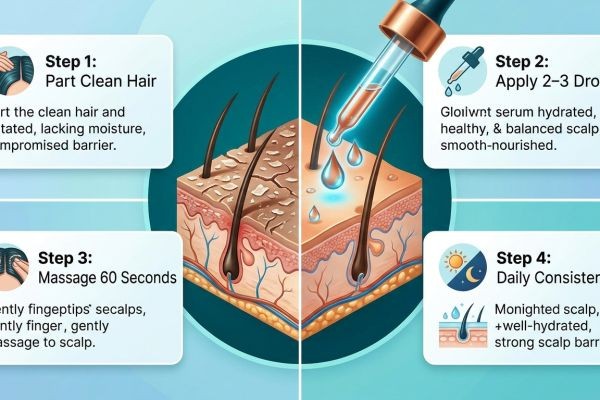
Step 1: Start with a Clean Scalp
Begin by washing your hair with a gentle shampoo that suits your scalp type. Cleansing removes excess oil, sweat, and styling product residue that may interfere with comfortable application.
After washing, gently towel-dry your hair. Many leave-in scalp serums work well on a clean, slightly damp scalp, although you should always follow the manufacturer's instructions.
Step 2: Apply the Serum Directly to Your Scalp
Create small sections in your hair to expose the scalp. Apply the recommended amount of serum directly to the roots rather than spreading it excessively over the hair lengths.
Focus on the areas identified in the product instructions. Avoid applying more than necessary because excessive product use does not automatically produce better results.
Step 3: Massage Gently
Use your fingertips to distribute the serum across your scalp. Gentle circular movements can help spread the product evenly and make application more relaxing.
Avoid scratching or applying excessive pressure, particularly if your scalp feels sensitive. A comfortable massage is enough to incorporate the serum into your routine.
Step 4: Allow the Formula to Absorb
Most leave-in scalp serums do not require rinsing. Allow the formula to settle before applying other styling products.
Check the packaging for specific instructions regarding application frequency, layering, and whether the product works best on damp or dry hair.
Step 5: Stay Consistent
Consistency matters when evaluating any new hair care product. Use the serum according to its directions and monitor changes in scalp comfort, hydration, and hair appearance.
Take occasional progress photographs under similar lighting conditions. This approach can help you assess visible changes without relying entirely on memory.
How to Choose the Right Peptide Serum for Your Scalp Type
The best Dual Peptide Scalp Serum is not necessarily the most expensive or popular option. Instead, choose a formulation that matches your scalp's needs.
For dry scalps: Look for hydrating ingredients such as glycerin, hyaluronic acid, panthenol, and aloe vera. These components can help improve moisture levels and reduce feelings of tightness.
For oily scalps: Choose a lightweight, non-greasy serum that absorbs comfortably. Avoid unnecessarily heavy formulations if they leave your roots feeling coated.
For sensitive scalps: Prioritize gentle formulas with minimal fragrance and fewer potential irritants. Patch-test the product before applying it across your entire scalp.
For thinning-looking hair: Consider products specifically formulated for scalp and hair-density concerns. Review the ingredients carefully and look for credible evidence supporting the product's claims.
Remember that persistent shedding, sudden hair loss, or visible scalp changes may indicate an underlying condition. A dermatologist can help identify the cause and recommend appropriate treatment.
Common Mistakes to Avoid When Using Scalp Peptide Serum
Although scalp serums are generally easy to incorporate into hair care routines, certain habits can reduce comfort and interfere with your experience.
-
Applying too much product: Excessive serum may leave the roots feeling sticky or weighed down.
-
Ignoring product instructions: Different formulas have different application requirements and recommended frequencies.
-
Expecting overnight results: Hair-related changes take time, and cosmetic products cannot guarantee specific growth outcomes.
-
Skipping patch testing: Testing a small area first can help identify potential irritation or sensitivity.
-
Neglecting basic scalp hygiene: A serum should complement regular cleansing rather than replace shampooing.
-
Using multiple active products without checking compatibility: Combining several treatments may increase irritation, especially on sensitive skin.
Avoiding these mistakes helps create a more comfortable and manageable scalp care experience.
Can You Use Peptide Serum with Other Hair Care Products?
Yes, many peptide scalp serums can fit into a routine that includes shampoo, conditioner, leave-in treatments, and hair oils. However, application order and product compatibility matter.
Start with shampoo to cleanse your scalp, followed by conditioner on your hair lengths. Afterward, apply your peptide serum according to its directions. If you use a hair oil, apply it separately to the lengths and ends when appropriate.
Additionally, avoid introducing several new products simultaneously. Adding one product at a time makes it easier to identify which ingredients work well for your scalp and which may cause irritation.
Conclusion: Make Scalp Nourishment a Priority with Peptide Serum
Beautiful hair starts with thoughtful scalp care. Adding a peptide serum to your routine can provide a convenient way to support scalp hydration, improve comfort, and complement your efforts to maintain healthier-looking hair. When combined with gentle cleansing, suitable conditioning, and consistent application, it can become a valuable part of your overall hair care approach.
Choose a formula that matches your scalp type, pay attention to its ingredients, and maintain realistic expectations about results. Most importantly, remember that healthy hair requires more than one product. A balanced routine, good daily habits, and appropriate professional guidance when needed can help you build a stronger foundation for long-term hair care.
Frequently Asked Questions About Peptide Serum
1. Can peptide serum help with hair growth?
Some peptide-based scalp products are marketed to support fuller-looking hair. However, evidence varies by peptide and formulation. Cosmetic serums should not be considered proven treatments for hair loss unless supported by appropriate clinical research.
2. How often should I apply peptide scalp serum?
Application frequency depends on the specific product. Some formulas are designed for daily use, while others recommend less frequent application. Always follow the manufacturer's instructions.
3. Can I apply peptide serum to an oily scalp?
Yes, provided the formula suits your scalp type. Choose a lightweight, non-greasy product and avoid applying excessive amounts to prevent unwanted buildup.
4. Is peptide serum suitable for sensitive scalps?
Some formulations may suit sensitive skin, but individual reactions vary. Choose a gentle, preferably fragrance-free product and perform a patch test before regular use.
5. Can peptide serum replace hair oil?
No. Peptide serums and hair oils serve different purposes. A serum generally targets scalp care, while hair oils primarily condition the hair and help improve softness and manageability.


