
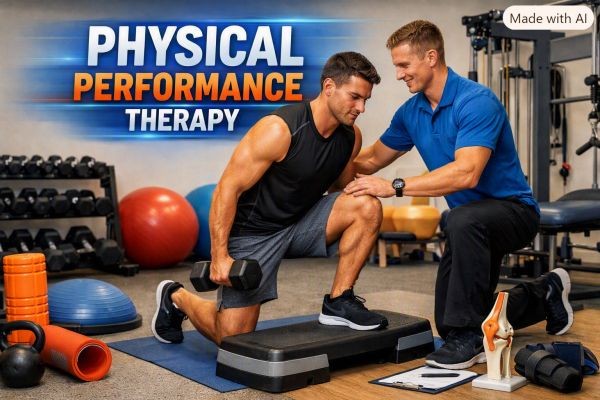
Whether you are an athlete, an active adult, or someone recovering from an injury, the ability to move comfortably and confidently plays an important role in everyday life. Pain, weakness, limited flexibility, or an old injury can make normal activities more challenging and may affect physical performance.
Physical Performance Therapy focuses on helping people improve movement, strength, flexibility, balance, coordination, and overall physical function. While it can be especially useful for athletes, performance-focused therapy can also benefit people who simply want to move better and return to their normal activities.
What Is Physical Performance Therapy?
Physical Performance Therapy combines therapeutic techniques with targeted exercises designed around an individual's movement and performance goals.
Traditional physical therapy often focuses on recovering from an injury or managing a medical condition. Performance therapy can take that foundation a step further by emphasizing movement quality, strength, endurance, coordination, and functional performance.
A personalized program may address areas such as:
- Strength and muscle control
- Flexibility and mobility
- Balance and coordination
- Movement mechanics
- Endurance
- Agility
- Stability
- Functional movement
- Injury prevention
The specific exercises and techniques depend on a person's condition, fitness level, goals, and physical capabilities.
Who Can Benefit From Physical Performance Therapy?
You do not have to be a professional athlete to benefit from performance-focused therapy.
It may be appropriate for:
- Athletes returning after an injury
- Recreational sports participants
- People recovering from surgery
- Active adults
- Individuals with movement limitations
- People experiencing weakness or reduced mobility
- Individuals preparing to return to exercise
- People interested in improving functional movement
For an athlete, the goal may be returning to a particular sport. For another person, it could simply be walking comfortably, lifting objects safely, or becoming more confident with everyday movement.
Physical Performance Therapy After an Injury
An injury can affect more than the area that initially hurts. For example, an ankle injury may change the way someone walks, while a knee injury may affect strength and movement throughout the leg.
Returning to activity too quickly can sometimes place additional stress on an injured or recovering area.
Physical performance therapy can help guide a gradual return to activity by addressing strength, mobility, balance, coordination, and movement patterns.
A therapist may progress exercises as the individual becomes stronger and more comfortable with movement.
Common Areas Addressed in Performance Therapy
Strength and Conditioning
Building appropriate strength can help improve physical function and support a return to activities. Exercises may target specific muscles or movement patterns based on individual needs.
Mobility and Flexibility
Limited mobility can affect how efficiently a person moves. Therapy may include stretching, mobility exercises, and controlled movements designed to improve range of motion.
Balance and Stability
Balance is important for sports as well as everyday activities. Exercises may challenge stability and coordination while gradually increasing difficulty.
Movement Mechanics
A therapist may observe how a person walks, runs, jumps, lifts, or performs sport-specific movements. Identifying inefficient movement patterns can help guide an individualized exercise program.
Endurance and Conditioning
Depending on the person's goals, therapy may incorporate activities designed to gradually improve cardiovascular endurance and physical tolerance.
What Happens During a Physical Performance Therapy Session?
The process usually begins with an evaluation. The therapist may discuss your goals, medical history, previous injuries, activity level, and current limitations.
A physical assessment may include looking at:
- Range of motion
- Muscle strength
- Balance
- Flexibility
- Coordination
- Movement patterns
- Functional abilities
Based on the findings, the therapist can develop a customized program.
Sessions may include supervised exercises, mobility work, balance activities, strengthening, movement training, and other therapeutic techniques.
How Performance Therapy Can Support Athletes
Athletes place repeated demands on their bodies. Training, competition, and repetitive movements can contribute to fatigue and injuries.
Performance-focused therapy may help athletes work on areas such as:
- Sport-specific movement
- Strength and power
- Agility
- Balance
- Flexibility
- Coordination
- Conditioning
- Return-to-sport progression
The objective is not simply to return to activity but to build appropriate physical capacity for the demands of that activity.
Physical Performance Therapy and Injury Prevention
No therapy program can guarantee that an injury will never occur. However, improving strength, mobility, balance, and movement control can be an important part of an overall approach to physical health.
A therapist can identify certain weaknesses or movement limitations and develop exercises that address those areas.
Proper warm-ups, recovery, training progression, technique, rest, and appropriate equipment can also contribute to safer physical activity.
How to Get the Most From Therapy
Consistency is an important part of rehabilitation and performance training.
To get the most from your program:
- Follow the exercise plan provided by your therapist.
- Communicate if an exercise causes unusual or worsening symptoms.
- Give your body adequate time to recover.
- Progress activities gradually.
- Follow recommendations regarding activity and exercise.
- Keep your therapist informed about changes in your symptoms or goals.
Your program may change over time as your strength, mobility, and functional abilities improve.
Choosing a Physical Performance Therapy Provider
When looking for a provider, consider whether the therapist has experience with your specific goals and needs.
You may want to ask about:
- Experience treating your type of injury
- Sports or performance rehabilitation experience
- Treatment philosophy
- Types of exercises and techniques used
- Communication and progress tracking
- Availability and location
- Whether the program can be customized to your goals
A good therapy program should be based on an individual's evaluation rather than a one-size-fits-all routine.
Frequently Asked Questions
What is Physical Performance Therapy?
Physical Performance Therapy is a movement and exercise-focused approach that can help individuals improve strength, mobility, balance, coordination, endurance, and functional performance.
Is Physical Performance Therapy only for athletes?
No. Athletes can benefit from performance therapy, but it may also help active adults and people recovering from injuries who want to improve their movement and physical abilities.
Can performance therapy help after an injury?
It can be part of a rehabilitation program after an injury. A qualified therapist can assess your condition and develop exercises appropriate for your stage of recovery.
How long does Physical Performance Therapy take?
The duration varies depending on the person's condition, goals, fitness level, and progress. Some people may need short-term rehabilitation, while others may benefit from longer-term performance training.
Does Physical Performance Therapy involve exercise?
Exercise is commonly an important component. Depending on the individual's needs, a program may include strengthening, mobility, balance, conditioning, coordination, and functional movement exercises.
Can physical performance therapy help prevent injuries?
It may support injury-risk reduction by addressing factors such as weakness, limited mobility, poor movement control, or inadequate conditioning. However, no program can completely eliminate the possibility of injury.
Final Thoughts
Physical Performance Therapy is about more than simply recovering from an injury. It can help people develop better strength, mobility, balance, coordination, and movement skills while working toward their individual physical goals.
For athletes, this may mean preparing to return to competition. For active adults, it may mean getting back to exercise or improving everyday movement. A personalized approach allows therapy to be adjusted according to a person's abilities, progress, and goals.
If pain, weakness, limited mobility, or an old injury is affecting your physical performance, a qualified physical therapy professional can evaluate your needs and help determine an appropriate path forward.






