
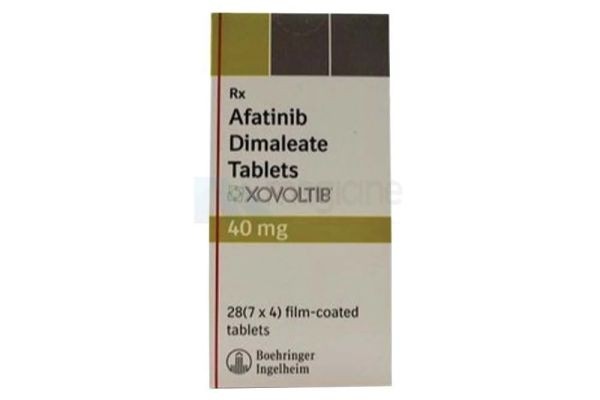
NSCLC is not a uniform disease characterized by similar biological properties among all patients. There is a situation where mutations of the EGFR gene become essential factors for driving the growth of cancer cells. Detection of these mutations can lead to the development of therapy options, and afatinib is one of the drugs that act on EGFR-mediated signals in certain patients.
What Is Afatinib?
The medicine is a TKI inhibitor administered orally. While regular chemotherapy acts on all fast-growing cells, afatinib 140mg targets signaling pathways responsible for the development of cancer tumors. It has the effect of irreversibly inhibiting members of the ErbB receptor family, such as EGFR, HER2, and HER4.
Which EGFR-Mutated NSCLC Can Treat By The Medicine?
The medication is indicated for the treatment of metastatic NSCLC patients who have tumors harboring EGFR mutations that are sensitive to the therapy. These mutations are:
-
Mutations in EGFR exon 19.
-
Mutations in EGFR exon 21 L858R.
-
Other specific non-resistant EGFR mutations.
Testing of the tumor tissue becomes an essential aspect of therapy.
Why Is EGFR Testing Important Before Treatment?
Testing for EGFR allows identification of a genetic mutation in the tumor that may be responsive to treatment with drugs that target EGFR. Treatment is selected based not on the site or stage of the cancer, but on its molecular signature, which will help to determine a more targeted form of treatment.
How Does The Medicine Work Against EGFR-Driven Cancer?
EGFR can serve as a growth signal switch for cancer cells. Once these mutations persistently activate the growth signaling pathway through overactivity of these mutations, cancer cells continuously receive growth signals. It is capable of binding itself to EGFR and its homologs ErbB and blocking these signals.
What Benefits Can The Medicine Provide?
Potential advantages that the tablet may bring to eligible patients with EGFR-positive NSCLC include the following:
-
May be used to help slow the progression of the disease in patients with susceptible EGFR mutations.
-
Delivers systemic control of metastatic disease.
-
Targets therapy as opposed to regular chemotherapy.
-
Side effect profile is distinct from regular chemotherapy.
The efficacy of the therapy depends on the mutation type, disease characteristics, and individual reaction.
Conclusion
It has a clearly established place in precision medicine treatment of carefully chosen individuals with NSCLC who have mutations in EGFR genes. The action of Afatinib in non small cell lung cancer is aimed at irreversible blockage of the EGFR signal transduction pathways and those from the whole ErbB-family. Mutation testing, dosage personalization, and management of side effects are crucial in this treatment process.
FAQs
1. What is the typical dosage of the medication?
The initial dosing regimen may vary according to clinical circumstances. There is an option to use a 40 mg tablet; however, the physician might choose to modify the dosing regimen.
2. Does the tablet cause diarrhea?
Yes, diarrhea is one of the most frequent adverse reactions. It is important for patients to notify their physician if diarrhea is severe and persistent.






