
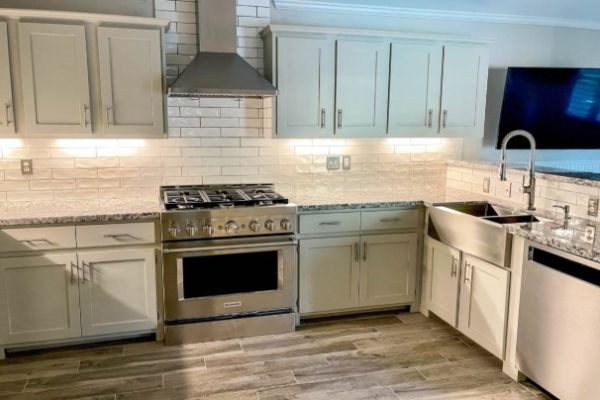
Smaller kitchens require smart appliance choices that improve functionality without taking up too much space. Proper ventilation is one of the biggest challenges in compact cooking areas because installing traditional duct systems can be difficult or impossible. Many homeowners and apartment dwellers look for solutions that maintain air quality while fitting into limited layouts. In many cases, ductless wall-mounted range hoods [https://prolinerangehoods.com/collections/recirculating-ductless-wall-mounted-range-hoods] provide a practical solution because they operate without external ductwork and can be installed where conventional venting is not feasible. Their design makes them suitable for apartments, condos, and compact homes where efficiency and flexibility are essential for everyday cooking.
Space-Efficient Design for Compact Kitchens
In smaller kitchens, every inch of space matters, and appliances must be chosen carefully to maintain both usability and visual balance. Unlike bulky ventilation systems that require large duct installations, ductless wall-mount range hoods are designed to sit neatly above the cooktop without needing additional ceiling or wall ducting. This streamlined configuration helps homeowners maintain open wall space and avoid complex structural modifications.
Their wall-mounted style also contributes to a cleaner kitchen layout. By mounting directly above the cooking surface, the unit remains centralized and efficient while leaving surrounding cabinets and storage areas untouched. This design works particularly well in studio apartments or galley kitchens where maximizing storage and workspace is a priority. Another advantage is that these systems can often be installed in areas where external venting is not permitted, such as rental units or high-rise buildings. The flexibility allows homeowners to maintain proper ventilation without sacrificing valuable kitchen space.
Simple Installation Without Structural Changes
Traditional ducted range hoods require extensive planning, including cutting through walls, ceilings, or roofs to route ventilation ducts. For smaller homes or apartments, such structural work may not be possible or financially practical. In contrast, ductless wall-mount range hoods simplify installation because they rely on internal filtration instead of exterior venting.
Most models use a combination of aluminum mesh filters and charcoal filters to trap grease particles, smoke, and odors before recirculating the cleaned air back into the kitchen. Because the system works internally, installation typically involves mounting the unit securely on the wall and connecting it to a standard electrical supply. This ease of installation makes the technology attractive for homeowners who want a quick upgrade without undergoing a major renovation. For landlords and property managers, it also provides a practical ventilation solution that avoids permanent building modifications.
Effective Air Filtration in Limited Cooking Spaces
Air quality becomes particularly important in smaller kitchens because smoke, grease, and cooking odors can accumulate quickly. When ventilation is inadequate, these elements can spread throughout nearby living areas. With built-in filtration technology, ductless wall-mount range hoods help address this issue by capturing airborne particles directly above the cooking surface.
Charcoal filters play a key role in this process by absorbing odor molecules before the air is recirculated. Meanwhile, grease filters trap oil particles produced during cooking. This two-stage filtration approach helps reduce lingering smells and prevents grease buildup on kitchen surfaces. In smaller kitchens where airflow circulation may already be limited, this type of filtration can significantly improve comfort and cleanliness. Regular maintenance, such as cleaning grease filters and replacing charcoal filters, ensures the system continues operating efficiently over time.
Conclusion
Small kitchens benefit most from appliances that combine efficiency, flexibility, and minimal installation requirements. Recirculating ventilation systems help maintain cleaner indoor air while adapting easily to compact layouts and building restrictions. Many homeowners also explore larger models, such as a 42-inch exhaust hood [https://prolinerangehoods.com/collections/42-inch-range-hoods], when planning kitchen upgrades that involve wider cooktops or expanded cooking areas. As cooking spaces continue to evolve in apartments and modern homes, choosing the right ventilation equipment becomes increasingly important for maintaining comfort and cleanliness.






