
Choosing the right development partner can make a big difference to the success of your mobile app. React Native is widely used for building applications for both Android and iOS, making it an attractive option for startups and growing businesses.
However, choosing the wrong react native app development services can lead to delays, unexpected costs, poor performance, and difficult maintenance. Many brands focus only on development price and forget to check the team's experience, testing process, security practices, and long-term support.
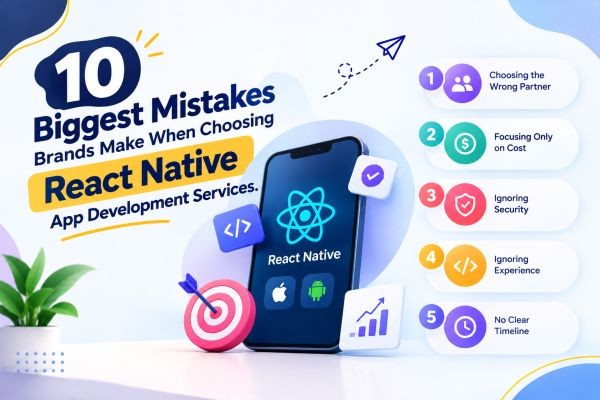
Here are the biggest mistakes businesses should avoid when choosing a React Native development company.
1. Choosing the Cheapest Service
Price matters, but it should not be the only factor. A very low quote may come with limited testing, weak communication, inexperienced developers, or little post-launch support.
Compare the complete service package instead of selecting a company only because it offers the lowest price.
2. Ignoring React Native Experience
React Native development requires practical technical knowledge. Developers should understand React Native, JavaScript or TypeScript, APIs, navigation, testing, performance, and native Android and iOS features.
Before hiring a company, review its React Native projects and ask about similar applications it has developed.
3. Not Checking the Portfolio
A portfolio gives you an idea of how a company handles real projects. Do not simply look at how attractive an app appears. Check whether the company has experience with applications similar to yours.
For example, an ecommerce business may benefit from a team that understands product catalogs, shopping carts, payments, customer accounts, and order management.
4. Adding Too Many Features
More features do not always mean a better app. Adding unnecessary functions can increase development time, cost, and complexity.
Start with the features that provide real value to users. Once the core application is successful, you can add new functions based on customer feedback.
This is especially useful for custom ecommerce app development, where simple navigation and an easy buying process can be more important than having too many features.
5. Forgetting About App Performance
Users expect mobile apps to open quickly and respond smoothly. Poor code, large files, inefficient API calls, and weak optimization can make an app slow.
Ask your development partner how they test and improve performance. Testing should cover loading speed, navigation, memory usage, API response time, and different devices.
6. Treating Security as an Afterthought
Security should be planned from the beginning. Mobile applications can handle personal details, account information, payments, and other sensitive data.
A development team should follow secure coding practices and use appropriate methods for authentication, API security, data storage, and access control.
7. Not Planning for Future Growth
Your app may start with a small number of users, but your business could grow quickly. A poorly planned application may become difficult to update when you need new features or more users.
Discuss your future plans with the development team before development starts. A scalable architecture can make future improvements easier.
8. Underestimating Testing
Testing should not be left until the final stage. A professional development process should include testing throughout the project.
The app should be checked on different devices, operating systems, screen sizes, and network conditions. Functional, usability, security, and performance testing can help identify issues before launch.
9. Poor Communication
Good communication keeps a development project on track. Problems can occur when businesses do not know who is responsible for the project or how progress will be reported.
Before signing a contract, discuss:
- Project milestones
- Development timeline
- Communication channels
- Feedback process
- Responsibilities
- Support after launch
Clear communication can reduce misunderstandings and keep everyone focused on the same goals.
10. Ignoring Post-Launch Support
App development does not stop after the application is published. Businesses may need bug fixes, security updates, performance improvements, and compatibility updates later.
When comparing mobile app development services, ask what type of maintenance and support the company provides after launch.
Businesses should also consider their platform requirements. For Android-focused projects, custom android app development services can provide solutions designed around specific business needs.
What Should You Look for in a React Native Development Company?
Before selecting a development partner, consider these important points:
- Strong React Native development experience
- Relevant project portfolio
- Clear pricing and development timeline
- Proper testing process
- Focus on security and performance
- Scalable development approach
- Clear communication
- Post-launch maintenance
- Understanding of your business goals
The right company should do more than write code. It should understand your users, business objectives, technical requirements, and plans for future growth.
Final Thoughts
React Native can be a useful technology for businesses looking to build mobile applications efficiently for multiple platforms. However, the success of a project depends on more than the technology itself.
Avoiding common mistakes such as choosing only by price, skipping portfolio checks, adding unnecessary features, ignoring security, and overlooking maintenance can help businesses make better development decisions.
A reliable react native app development services provider should offer technical expertise, clear communication, proper testing, and ongoing support. With the right planning and development partner, your app can provide a smoother experience for users and support your business goals.
FAQs
What are the downsides of React Native?
React Native may require native development for certain platform-specific functions. Some advanced applications may also need additional performance optimization and developers with strong native mobile knowledge.
What are the best practices for React Native development?
Use reusable components, keep the code organized, optimize app performance, secure APIs and user data, test on multiple devices, keep dependencies updated, and monitor the application after launch.
Is React Native a good choice?
React Native can be a suitable choice for businesses that want to build Android and iOS applications while sharing much of the same code. The right technology depends on the app's features, performance needs, budget, and business goals.
Which is better, TSX or JSX?
TSX is useful when a React Native project uses TypeScript because it provides type checking and can help identify certain coding errors. JSX works well for JavaScript-based projects. The choice depends on the project's requirements and development team's expertise.
Can Claude Code be used with React Native?
Yes. Claude Code can assist with React Native development tasks such as understanding code, creating files, making code changes, and troubleshooting issues. Developers should review and test AI-generated code before using it in a production application.






