
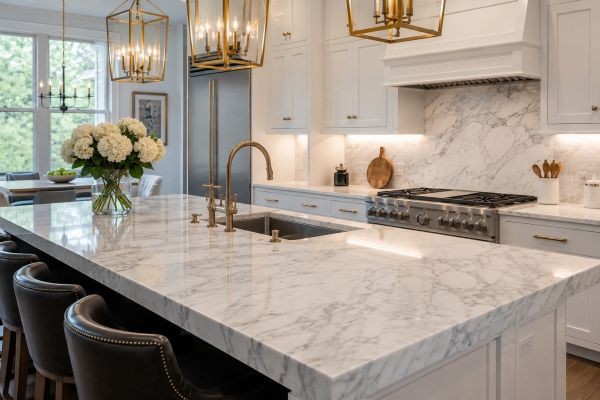
Choosing a quartz color is often the most enjoyable part of planning a kitchen or bathroom renovation. Homeowners can compare white backgrounds, warm neutral tones, dramatic Calacatta-inspired patterns, subtle Carrara-style veining, and darker contemporary surfaces. However, slab thickness is another important decision that can affect the countertop’s appearance, fabrication, support requirements, weight, and final cost.
Quartz slabs are commonly available in 2-centimeter and 3-centimeter thicknesses. A 2cm slab is approximately three-quarters of an inch thick, while a 3cm slab is approximately one and one-quarter inches thick. Although the numerical difference may appear small, the two options can create noticeably different results after installation. MSI currently offers quartz products in both 2cm and 3cm formats, depending on the selected design.
Homeowners considering MSI quartz countertops can choose from a wide variety of marble-inspired, solid, textured, and neutral designs. USA Marble & Granite/Quartz features options such as Calacatta Leon, Carrara Marmi, Mara Blanca, Shadow Gray, Sparkling White, and many other MSI surfaces for residential and commercial projects.
Understanding the practical differences between 2cm vs 3cm quartz countertops will help you choose a thickness that fits your cabinet construction, edge design, countertop layout, installation requirements, and preferred interior style.
What Do 2cm and 3cm Mean?
The measurements refer to the thickness of the quartz slab before additional edge treatments, substrates, or laminated build-ups are added.
A 2cm quartz slab measures about 0.79 inches, although it is commonly described as approximately three-quarters of an inch. Its slimmer profile creates a clean and lightweight appearance that works well in contemporary spaces.
A 3cm slab measures about 1.18 inches and is commonly described as approximately one and one-quarter inches. It creates a thicker, more substantial countertop profile and is widely used for kitchen work surfaces.
The stated thickness refers to the actual slab rather than the complete visual depth of a finished edge. A fabricator can sometimes create the appearance of a thicker countertop by joining an additional quartz strip to the exposed edge. Therefore, a countertop that appears two or three inches thick may still be fabricated from a standard 2cm or 3cm slab.
Quick Comparison of 2cm and 3cm Quartz
| Feature | 2cm Quartz | 3cm Quartz |
|---|---|---|
| Approximate thickness | ¾ inch | 1¼ inches |
| Visual appearance | Slim and contemporary | Substantial and traditional |
| Overall weight | Lighter | Heavier |
| Support needs | Often requires a subtop | Commonly installed without a full subtop |
| Edge options | Best with simple or built-up edges | Supports more edge-profile choices |
| Common applications | Vanities, backsplashes, walls, modern counters | Kitchens, islands, bars, heavy-use counters |
| Material cost | Usually lower | Usually higher |
| Handling | Lighter but more vulnerable during fabrication | Heavier but more rigid |
| Overhang capacity | Usually requires earlier support | May permit a larger unsupported span |
| Best design effect | Minimal and refined | Bold and substantial |
This comparison provides a general starting point. Final requirements depend on the quartz product, cabinet design, cutouts, overhangs, installation method, and manufacturer or fabricator guidance.
The Appearance of 2cm Quartz
A 2cm countertop has a slimmer edge that creates a modern and visually light appearance. It pairs naturally with flat-panel cabinets, minimalist hardware, floating vanities, compact spaces, and contemporary European-inspired interiors.
Because the edge is less visually dominant, the quartz pattern can remain the main design feature. This can be useful with dramatic MSI quartz designs that contain bold gray, gold, or charcoal veining.
The thinner profile may also suit small bathrooms or kitchens where a heavy countertop could make the cabinetry appear visually crowded. A 2cm surface can create cleaner horizontal lines and make the room feel more open.
However, homeowners should review how the thin edge will look beside cabinet doors, appliance panels, and backsplash materials. A narrow profile may feel too delicate when paired with highly detailed traditional cabinetry or an oversized kitchen island.
The Appearance of 3cm Quartz
A 3cm slab creates a stronger and more substantial countertop edge. The additional thickness gives the surface greater visual weight and can make a kitchen island feel more permanent and architectural.
This thickness works with contemporary, transitional, farmhouse, and traditional kitchens. It complements Shaker cabinets, raised-panel cabinetry, substantial base units, and large open-plan kitchens.
A 3cm slab can also make simple quartz patterns appear more luxurious because more material is visible along the exposed edge. The thicker profile is especially noticeable around islands, peninsulas, breakfast bars, and countertop overhangs.
For homeowners who prefer a classic countertop appearance without adding a laminated edge, 3cm quartz is often the more direct choice.
Strength and Rigidity
A 3cm quartz slab contains more material, so it is generally more rigid than a 2cm slab. MSI identifies 3cm quartz as the stronger option for surfaces that receive heavier traffic and regular use.
This does not mean that 2cm quartz is unsuitable for countertops. A properly supported 2cm slab can perform effectively in kitchens and bathrooms. The difference is that the thinner material generally depends more heavily on the underlying support system.
Cutouts also influence strength. Large sink and cooktop openings reduce the amount of material connecting different sections of the countertop. Narrow strips of quartz around these openings require careful fabrication, transportation, and installation regardless of slab thickness.
Professional templating and fabrication are therefore essential for both options. Thickness cannot compensate for poorly planned seams, inadequate cabinet support, sharp inside corners, or incorrect installation practices.
Support Requirements for 2cm Quartz
A 2cm countertop commonly requires a plywood or other approved subtop beneath the slab. MSI’s installation guidance shows a 2cm quartz configuration used with a five-eighths-inch subtop, although exact project requirements should be confirmed with the fabricator.
The subtop distributes weight and provides additional support around cabinets, cutouts, seams, and exposed sections. It may also raise the countertop to a more familiar finished height.
However, the plywood edge should not remain visible after installation. Fabricators may add a laminated quartz edge or use another approved finishing method to conceal the support material.
This additional construction can affect the final appearance. A 2cm slab with a laminated edge may look thicker than a standard 3cm countertop, even though the main horizontal surface remains 2cm.
Cabinet condition is equally important. The cabinet boxes must be properly installed, secured, level, and capable of supporting the complete countertop assembly.
Support Requirements for 3cm Quartz
A 3cm quartz slab can commonly be installed directly on properly leveled cabinets without a continuous plywood subtop. Its additional thickness provides greater rigidity across the cabinet structure.
However, this does not mean that 3cm quartz never needs reinforcement. Large overhangs, unsupported corners, wide appliance openings, extended spans, and unusual cabinet layouts may still require steel supports, brackets, corbels, or additional framing.
MSI’s technical guidance sets different overhang limits for 2cm and 3cm material, demonstrating that thickness affects how far the stone may extend before additional support is required. The specific support design should always be confirmed for the actual countertop layout rather than estimated from a general rule.
A professional fabricator should review the island size, seating area, cabinet construction, sink type, cooktop cutout, seam positions, and planned overhangs before approving the installation details.
Weight Differences
A 3cm quartz slab is heavier than a 2cm slab because it contains more material. The added weight affects transportation, handling, installation labor, cabinet preparation, and sometimes the overall project cost.
The heavier slab can create a strong and stable countertop, but installers must handle it carefully. Large islands may require several trained workers and specialized equipment to move the fabricated pieces into position.
A 2cm slab is lighter, making it useful for vertical applications, wall cladding, backsplashes, fireplace surrounds, and some waterfall features. Its reduced weight can make installation easier where the material is attached to a vertical surface.
Nevertheless, lighter does not mean unbreakable. Thin fabricated sections can be vulnerable during transportation, especially around sink openings, faucet holes, and narrow countertop areas.
Edge-Profile Options
Thickness affects which edge profiles can be fabricated directly into the quartz slab.
A 2cm slab works well with uncomplicated edges such as eased, beveled, or lightly rounded profiles. Because less material is available, highly decorative curves may not have enough depth to create the intended shape.
A laminated edge can expand the possibilities. The fabricator joins another quartz strip beneath the exposed edge, creating enough visual thickness for a deeper profile. This method can produce a bold appearance but requires precise alignment and pattern matching.
A 3cm slab naturally supports more edge-profile choices because the fabricator has additional material to shape. MSI notes that while simple edges may work with both thicknesses, some deeper or more decorative profiles are better suited to 3cm slabs.
For heavily veined quartz, the edge method should be considered carefully. A laminated strip may interrupt the vein unless the pieces are selected and joined thoughtfully.
Mitered and Built-Up Edges
A mitered edge creates the appearance of a much thicker countertop. The fabricator cuts the top slab and the vertical edge piece at matching angles, then joins them to form a clean corner.
This technique can make a 2cm or 3cm slab appear two, three, or even more inches thick. It is commonly used on statement islands, waterfall panels, reception counters, and luxury bathroom vanities.
The main advantage is design flexibility. Homeowners can achieve a dramatic architectural profile without using an unusually thick solid slab.
The quality of the seam is important. On marble-look quartz, the veining should continue as naturally as possible from the horizontal surface to the vertical edge. Poor pattern matching can make the assembled edge look artificial.
A mitered edge also requires skilled fabrication and may increase labor costs. Homeowners should review the proposed seam position and vein layout before production begins.
Overhangs and Seating Areas
Kitchen islands often include an overhang for stools and casual dining. Thickness affects how much unsupported material can safely extend beyond the cabinet structure.
MSI’s technical documentation permits different maximum unsupported overhangs for 2cm and 3cm quartz. Its guidance indicates that 3cm material may extend farther than 2cm before added supports become necessary, although all layouts remain subject to product and installation requirements.
Long seating overhangs may require hidden steel brackets, corbels, legs, or columns. These supports should be planned before cabinet fabrication and countertop templating.
The support system must also allow enough knee space. Large decorative corbels may be structurally effective but uncomfortable beneath a frequently used eating counter.
A countertop professional can recommend a support method that balances safety, appearance, seating comfort, and the intended overhang depth.
Best Thickness for Kitchen Countertops
For many full-size kitchens, 3cm quartz is the standard practical choice. Its rigidity, substantial appearance, and reduced dependence on a full plywood subtop make it suitable for busy work surfaces, islands, and perimeter countertops. MSI also identifies 3cm material as the thickness more commonly used in kitchen applications.
However, 2cm quartz can be an excellent option when the design calls for a slim profile. It may suit contemporary kitchens, apartment renovations, modern cabinetry, and projects where the countertop will be supported by a properly designed subtop.
The decision should consider more than appearance. Sink type, appliance openings, island size, seating overhang, cabinet strength, edge profile, and seam layout all influence which thickness will work best.
A fabricator should evaluate the entire countertop plan before the material is ordered.
Best Thickness for Bathroom Vanities
Both 2cm and 3cm quartz work well for bathroom vanities.
A 2cm slab provides a refined, lightweight profile that pairs naturally with floating vanities and modern cabinetry. Because bathroom counters are often smaller than kitchen surfaces, the support requirements may be easier to manage.
A 3cm vanity top creates a heavier and more traditional appearance. It may be preferable for wide double vanities, furniture-style cabinets, or bathrooms where the countertop is intended to serve as a visual focal point.
Sink design should also be considered. Undermount sinks require careful support and cutout fabrication, while vessel sinks introduce different drilling and weight-distribution requirements.
The vanity cabinets must be level and securely installed before final templating takes place.
Vertical Applications and Waterfall Panels
A thinner 2cm slab is often useful for vertical applications because it weighs less than 3cm material. MSI specifically identifies 2cm quartz as an appropriate choice for backsplashes, walls, and waterfall applications where a slimmer and lighter profile is beneficial.
A full-height quartz backsplash can create a continuous appearance between the countertop and upper cabinets. Using 2cm material may reduce the load on the wall while still matching the horizontal counter.
For waterfall islands, the best thickness depends on the desired design. A 2cm slab creates a clean modern line, while 3cm material produces a stronger visual frame around the cabinetry.
Vein matching is especially important in these applications. The horizontal and vertical slabs should be planned together so the quartz pattern flows naturally over the island edge.
Cost Differences Between 2cm and 3cm Quartz
A 2cm slab generally uses less material and may cost less than a 3cm slab in the same quartz design. Its lighter weight can also reduce some transportation and handling requirements.
However, the lowest slab price does not always produce the lowest installed cost. If 2cm quartz requires a plywood subtop, laminated edge, added support, or more complicated finishing, those expenses can reduce the initial savings.
A 3cm slab usually costs more because it contains more material and is heavier. At the same time, it may eliminate the need for a continuous subtop and may support the selected edge without a laminated build-up.
Homeowners should compare complete installed estimates rather than material prices alone. The estimate should include templating, fabrication, edge work, sink and cooktop cutouts, seams, transportation, installation, supports, backsplash work, and removal of existing countertops where applicable.
Cabinet and Flooring Considerations
The cabinets must support the countertop evenly, regardless of the selected thickness. Uneven or poorly secured cabinets can place stress on seams and cutouts.
Before templating, installers should verify that the cabinet boxes are fixed in their final positions and that the complete run is level. Appliances that affect countertop dimensions should also be available or supported by confirmed manufacturer specifications.
A 3cm countertop places more weight on the cabinets than a 2cm slab. In most standard installations, properly constructed base cabinets are designed to handle countertop loads. However, older, damaged, modified, or unsupported cabinetry may require reinforcement.
Large islands and unusually heavy countertop assemblies should be reviewed carefully. The flooring and subfloor must also support the combined weight of cabinets, countertops, appliances, and everyday use.
Heat and Daily Use
Quartz is an engineered surface made from quartz minerals combined with resin and other components. Its nonporous structure supports easy daily cleaning and reduces the need for sealing. However, the resin content means homeowners should protect the surface from direct high heat.
Neither 2cm nor 3cm thickness eliminates the need for trivets. Hot pans, baking trays, electric skillets, slow cookers, and other heat-producing items should not be placed directly on the countertop.
Cutting boards should also be used during food preparation. Quartz is durable, but direct cutting can damage knives and may leave marks on the surface.
These habits protect both thicknesses and help preserve the countertop’s appearance over time.
Cleaning 2cm and 3cm Quartz
The cleaning routine is generally the same for both thicknesses because maintenance depends on the exposed surface rather than the slab depth.
For daily care, use warm water, mild dish soap, and a soft cloth or nonabrasive sponge. Wipe spills promptly and dry the countertop to prevent streaks or water spots.
Homeowners can follow this quartz countertop care guide for practical cleaning and protection recommendations. USA Marble & Granite/Quartz advises gentle daily cleaning and avoiding harsh products that may affect the quartz finish.
Avoid abrasive powders, rough scouring pads, concentrated solvents, and strongly alkaline or acidic chemicals unless the product manufacturer specifically approves them for the selected quartz.
When 2cm Quartz Is the Better Choice
A 2cm slab may be the better option when the project requires a slim, contemporary countertop profile. It works especially well with floating bathroom vanities, flat-panel cabinetry, wall applications, backsplashes, and certain waterfall designs.
It can also be appropriate when reducing material weight is important. The lighter slab may simplify vertical installation and handling.
Homeowners who select 2cm quartz should plan the support system and exposed edge treatment before fabrication. The final result depends on how the subtop, laminated edge, overhang, sink cutout, and cabinet structure work together.
When these details are handled properly, 2cm quartz can create a clean and sophisticated surface without appearing incomplete.
When 3cm Quartz Is the Better Choice
A 3cm slab is often preferable for full-size kitchens, large islands, busy household work surfaces, and designs that need a substantial exposed edge.
Its increased rigidity can simplify some installations because a full plywood subtop may not be required. It also provides more depth for edge fabrication and can permit larger unsupported overhangs within approved limits.
The thicker profile complements traditional and transitional cabinets but can also create a strong architectural appearance in modern kitchens.
Homeowners should remember that the additional thickness increases weight and material cost. Large fabricated pieces require experienced handling and professional installation.
Questions to Ask Your Fabricator
Before selecting a thickness, ask whether the chosen MSI quartz design is available in both 2cm and 3cm slabs. Some products, sizes, or regional inventories may have limited availability.
Discuss whether the cabinets require a subtop or added reinforcement. The fabricator should also explain how the sink, cooktop, seams, overhangs, and edge profile affect the recommended thickness.
Request a complete installed estimate for both options. A lower slab price may not reflect plywood, laminated edges, supports, transportation, or additional fabrication work.
Finally, review an actual edge sample. Photographs do not always communicate the difference between a three-quarter-inch profile and a one-and-one-quarter-inch profile accurately.
Choose Thickness Based on the Complete Project
The choice between 2cm vs 3cm quartz countertops should not be based on thickness alone. The best option depends on the countertop layout, cabinet structure, room size, design style, support requirements, edge profile, and overall budget.
A 2cm slab offers a slim, modern appearance and works particularly well for vanities, vertical surfaces, and contemporary designs. However, it often requires more support beneath horizontal countertop sections.
A 3cm slab creates a stronger and more substantial profile. It is commonly selected for kitchen countertops and islands because of its rigidity, edge flexibility, and reduced need for a continuous subtop.
USA Marble & Granite/Quartz can help homeowners compare MSI designs, slab thicknesses, edge profiles, support requirements, and fabrication options before installation. By reviewing these details together, you can choose MSI quartz countertops that provide the right balance of appearance, performance, and long-term practicality.
Frequently Asked Questions
Is 3cm quartz always better than 2cm quartz?
No. A 3cm slab offers greater rigidity and a thicker appearance, but 2cm quartz may be more suitable for modern designs, bathroom vanities, vertical surfaces, and properly supported countertop installations.
Does 2cm quartz need plywood underneath it?
A 2cm countertop commonly uses an approved subtop for additional support. MSI’s installation guidance shows 2cm quartz with a five-eighths-inch subtop, but the final requirement should be confirmed by the fabricator.
Can 2cm quartz be used for a kitchen island?
Yes, provided the island, subtop, cutouts, seams, and overhangs are properly designed. Additional supports may be required depending on the island layout.
Is 3cm quartz more expensive?
It generally costs more because it contains more material and weighs more. However, 2cm quartz may involve added costs for a subtop, laminated edge, or additional support.
Which thickness is best for a waterfall island?
Both can work. A 2cm slab creates a slim contemporary look and reduces vertical weight, while 3cm quartz creates a stronger and more substantial frame. Vein alignment and miter quality are important with either thickness.






