
5G Network Slicing Market Outlook and Forecast
The 5G Network Slicing Market is emerging as a transformative segment within the global telecommunications industry, driven by increasing demand for ultra-reliable low-latency communication, massive IoT connectivity, and customized enterprise networking solutions. Network slicing enables telecom operators to partition a single physical network into multiple virtual networks optimized for different applications and performance requirements. This capability is becoming increasingly important as industries accelerate digital transformation initiatives and adopt advanced 5G-enabled services.
The market was valued at USD 535.43 Million in 2025 and is projected to reach USD 16.99 Billion by 2035, expanding at a growth rate of 41.3% during the forecast period from 2026 to 2035. Increasing deployment of private 5G networks, rising adoption of cloud-native architectures, and growing investments in smart infrastructure projects are expected to support market expansion globally.
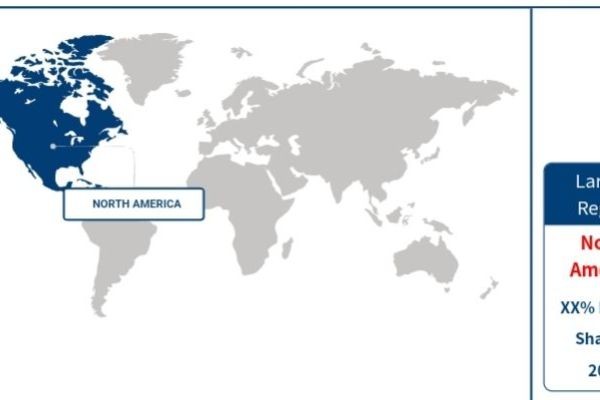
North America continues to lead the market owing to rapid 5G infrastructure deployment, strong investments by telecom providers, and increasing enterprise adoption of network virtualization technologies. The United States remains a major innovation hub for advanced telecom services and edge computing integration.
Europe is witnessing strong momentum due to rising government support for digital connectivity programs and growing implementation of industrial automation across manufacturing sectors. Telecom operators across Germany, the UK, and France are actively expanding 5G slicing capabilities for enterprise applications.
Asia Pacific is expected to experience substantial growth due to large-scale 5G rollout initiatives across China, Japan, South Korea, and India. Increasing smart city projects, expanding IoT ecosystems, and rapid industrial digitization are fueling adoption across the region.
Based on components, the solutions segment contributed a 65.09% share to the 5G network slicing market in 2025. Growing deployment of network orchestration platforms, analytics tools, and automated service management solutions is driving segment growth. Enterprises are increasingly investing in customized slicing solutions to optimize operational efficiency and ensure secure connectivity.
By architecture type, the non-standalone segment accounted for a 61.18% share of the market in 2025. Telecom operators continue leveraging non-standalone architectures to accelerate 5G deployment while utilizing existing LTE infrastructure. This approach offers cost-effective scalability and enables gradual transition toward standalone 5G environments.
Request Free Sample Report @ https://www.fundamentalbusinessinsights.com/request-sample/14413
Top Market Trends Transforming the 5G Network Slicing Industry
Expansion of Enterprise Private 5G Networks
One of the most influential trends in the 5G network slicing market is the rapid deployment of private 5G networks across enterprises. Manufacturing facilities, logistics hubs, mining operations, healthcare institutions, and smart factories are increasingly implementing dedicated network slices to support mission-critical operations. These customized slices provide enhanced security, predictable latency, and optimized bandwidth allocation for enterprise-specific workloads.
Several telecom operators are partnering with industrial enterprises to launch tailored 5G slicing solutions for autonomous robotics, predictive maintenance, and real-time monitoring applications. This trend is expected to significantly accelerate adoption across industrial verticals.
Integration of Edge Computing and AI Technologies
The integration of edge computing and artificial intelligence is transforming how network slicing services are managed and optimized. AI-driven network automation enables telecom providers to dynamically allocate resources, monitor traffic patterns, and improve service quality in real time.
Edge computing capabilities are also enabling low-latency applications such as autonomous vehicles, immersive gaming, and remote healthcare services. Telecom companies are increasingly deploying edge-enabled slicing frameworks to enhance application performance and improve user experience.
Growing Demand for IoT Connectivity
The increasing adoption of IoT devices across industries is driving demand for scalable and efficient network slicing architectures. Connected devices in smart cities, industrial automation systems, and energy management networks require differentiated connectivity profiles with varying bandwidth and latency requirements.
5G network slicing provides telecom operators with the flexibility to create dedicated slices for IoT ecosystems, enabling reliable device communication and efficient resource utilization. As IoT deployments continue expanding globally, network slicing is expected to become a critical enabler of large-scale connectivity.
Rise of Cloud-Native Telecom Infrastructure
Telecom operators are increasingly transitioning toward cloud-native infrastructure to support flexible and scalable network slicing deployment. Virtualized core networks, software-defined networking (SDN), and network function virtualization (NFV) technologies are enabling faster service delivery and improved operational agility.
Cloud-native architectures also facilitate automation and simplify network management, allowing operators to rapidly introduce new services and customized connectivity offerings. This trend is expected to redefine telecom operational models over the coming years.
Request Free Sample Report @ https://www.fundamentalbusinessinsights.com/request-sample/14413
Recent Company Developments in the 5G Network Slicing Market
Ericsson
Ericsson has expanded its 5G core portfolio with advanced network slicing orchestration capabilities designed to support enterprise-grade connectivity services. The company continues investing in cloud-native network infrastructure and automation technologies.
Nokia
Nokia recently strengthened its private wireless offerings by introducing advanced slicing solutions for industrial automation and smart manufacturing applications. The company is also collaborating with telecom operators to accelerate standalone 5G adoption.
Huawei Technologies
Huawei has been actively deploying 5G slicing solutions across Asia Pacific and the Middle East. The company is focusing on AI-powered network optimization and edge computing integration to improve service efficiency.
Samsung Electronics
Samsung continues expanding its 5G network portfolio with enhanced virtualization capabilities and slicing management tools. The company is targeting enterprise and smart city deployments through strategic partnerships with telecom carriers.
Cisco Systems
Cisco has strengthened its telecom cloud strategy by launching software-defined networking solutions optimized for 5G network slicing environments. The company is focusing on cybersecurity and automation features for enterprise applications.
VMware
VMware is investing heavily in virtualized network infrastructure solutions to support scalable network slicing deployment. The company’s cloud-native platform is enabling telecom operators to simplify network operations and improve agility.
NEC Corporation
NEC has partnered with telecom providers to develop open RAN-based network slicing frameworks aimed at improving interoperability and reducing infrastructure costs. The company is emphasizing AI-enabled automation capabilities.
ZTE Corporation
ZTE has introduced integrated 5G slicing platforms focused on industrial IoT and smart transportation applications. The company is actively participating in smart city initiatives across emerging markets.
Mavenir
Mavenir continues expanding its cloud-native telecom solutions portfolio with advanced network slicing capabilities for enterprise and private network deployments. The company is focusing on flexible open-network architectures.
Juniper Networks
Juniper Networks has enhanced its AI-driven networking solutions to support intelligent traffic management and dynamic slice orchestration. The company is targeting telecom operators seeking automated service delivery platforms.
Request Free Sample Report @ https://www.fundamentalbusinessinsights.com/request-sample/14413
Related Report
Volatile Organic Compound (VOC) Gas Sensor Market
Power over Ethernet (PoE) Chipset Market
About Fundamental Business Insights:
Fundamental Business Insights is global market research and consulting company which is engaged in providing in depth market reports to its various types of clients like industrial sectors, financial sectors, universities, non-profit, and corporations. Our goal is to offer the correct information to the right stakeholder at the right time, in a format that enables logical and informed decision making. We have a team of consultants who have experience in offering executive level blueprints of markets and solutions. Our services include syndicated market studies, customized research reports, and consultation.
Contact us:
Robbin Fernandez
Head of Business Development
Fundamental Business Insights and Consulting
Email: sales@fundamentalbusinessinsights.com






