
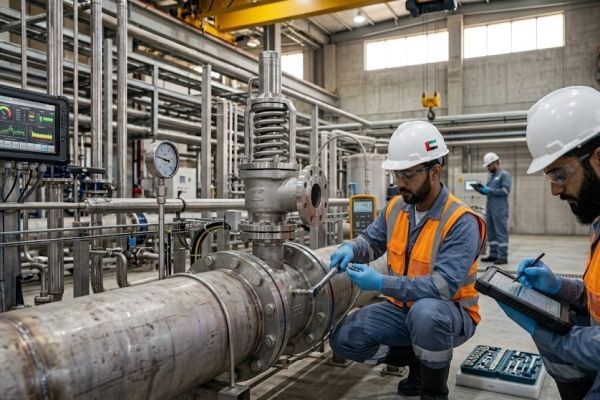
Industrial facilities rely on countless pieces of equipment to keep operations running smoothly, but few components are as critical as the safety valve. Whether it's protecting a boiler, pressure vessel, compressor, or pipeline, this small yet powerful device acts as the last line of defense against excessive pressure. When it functions correctly, it prevents equipment damage, costly downtime, and, most importantly, serious safety incidents.
The challenge is that safety valves often spend long periods without operating. Because they remain idle until pressure reaches a preset limit, it's easy to assume they're always ready for action. In reality, exposure to dust, corrosion, vibration, process contaminants, and changing operating conditions can gradually affect their performance.
A well-planned inspection and maintenance program ensures these valves operate exactly when they're needed. Here are eight proven practices that help industries across the UAE keep their pressure protection systems reliable.
1. Follow a Scheduled Inspection Program
Waiting until something goes wrong is never a good maintenance strategy for pressure relief equipment.
Every safety valve should be inspected according to a documented schedule that considers operating conditions, industry regulations, and manufacturer recommendations. Facilities operating in demanding environments—such as oil and gas plants, desalination facilities, or chemical processing units—may require more frequent inspections than those working under lighter conditions.
Routine inspections help identify small issues before they become costly failures.
2. Look for Visible Signs of Wear
Many valve problems can be detected during a simple visual inspection.
Maintenance personnel should carefully examine the valve for:
- External corrosion
- Rust buildup
- Damaged seals
- Loose mounting hardware
- Leakage around connections
- Dirt or debris accumulation
- Physical damage caused by vibration or impact
The UAE's coastal climate can expose industrial equipment to high humidity and salt-laden air, making corrosion monitoring especially important.
A few minutes spent inspecting the valve exterior can prevent hours of unexpected downtime later.
3. Perform Regular Functional Testing
A valve that looks fine externally may still fail to operate correctly.
Functional testing verifies that the safety valve opens at its designated pressure and reseats properly once pressure returns to normal.
Depending on the application, testing may involve:
- Bench testing
- Online testing
- Pressure calibration
- Lift testing
Regular performance verification provides confidence that the valve will respond immediately during an overpressure event.
4. Keep Inspection Records Up to Date
Good maintenance isn't only about performing inspections—it's also about documenting them.
Detailed maintenance records should include:
- Inspection dates
- Test results
- Calibration values
- Parts replaced
- Technician observations
- Next scheduled inspection
Over time, these records help maintenance teams identify recurring issues and make informed decisions about repairs or replacements.
Facilities with comprehensive maintenance histories often troubleshoot problems much faster than those relying solely on memory.
5. Replace Worn Components Promptly
It's tempting to postpone replacing minor components if the valve still appears operational.
However, worn springs, seals, seats, discs, and gaskets can gradually reduce valve accuracy and reliability.
Replacing these components during planned maintenance is usually far less expensive than repairing equipment damaged by a failed pressure relief system.
Using genuine replacement parts also helps maintain the valve's original performance specifications.
6. Protect Valves from Environmental Damage
Operating conditions significantly affect equipment lifespan.
Dust, moisture, chemical vapors, extreme heat, and corrosive environments all contribute to valve deterioration.
Simple protective measures can extend service life considerably, including:
- Installing weather protection covers
- Applying corrosion-resistant coatings
- Maintaining proper drainage
- Cleaning valves regularly
- Preventing moisture accumulation
For outdoor industrial facilities in the UAE, environmental protection is often just as important as mechanical maintenance.
7. Ensure Proper Installation After Maintenance
Even a perfectly maintained valve can fail if installed incorrectly.
After servicing, technicians should verify:
- Correct orientation
- Proper tightening torque
- Compatible flange connections
- Accurate pressure settings
- Unobstructed discharge piping
Incorrect installation may restrict valve movement or alter pressure performance, reducing the effectiveness of the entire pressure protection system.
Following manufacturer installation guidelines minimizes these risks.
8. Train Maintenance Teams Regularly
Technology continues to evolve, and maintenance procedures improve over time.
Providing ongoing training ensures technicians remain familiar with the latest inspection methods, safety standards, diagnostic tools, and manufacturer recommendations.
Well-trained personnel are more likely to identify developing issues early, perform accurate testing, and reduce maintenance errors.
Regular refresher programs also reinforce workplace safety practices when working with pressurized systems.
Why Preventive Maintenance Delivers Long-Term Value
Some organizations still view valve maintenance as an expense rather than an investment.
In reality, preventive inspection programs help reduce emergency repairs, extend equipment life, improve plant reliability, and support regulatory compliance.
More importantly, they protect employees and critical infrastructure from the potentially severe consequences of pressure system failures.
When maintenance becomes part of daily operational culture instead of an occasional task, facilities experience fewer unexpected shutdowns and greater operational confidence.
Conclusion
A safety valve is designed to perform during the moments that matter most. Yet its reliability depends entirely on the care it receives throughout its service life.
By following structured inspection schedules, performing routine testing, replacing worn components promptly, maintaining accurate records, and investing in technician training, industrial facilities can significantly improve equipment reliability while reducing operational risks.
For industries across the UAE, consistent safety valve inspection and maintenance isn't simply good engineering practice—it's a proactive approach that protects people, equipment, and long-term business continuity.
Frequently Asked Questions
How often should a safety valve be inspected?
Inspection frequency depends on operating conditions, industry standards, and manufacturer recommendations. High-pressure or harsh industrial environments often require more frequent inspections than less demanding applications.
What are the common signs of a failing safety valve?
Common indicators include leakage, corrosion, visible damage, unusual vibration, improper opening pressure, delayed valve response, and failure to reseat correctly after operation.
Can safety valves be repaired instead of replaced?
Yes, many safety valves can be repaired if worn components such as springs, seals, or seats are replaced. However, severely damaged or heavily corroded valves may require complete replacement.






