
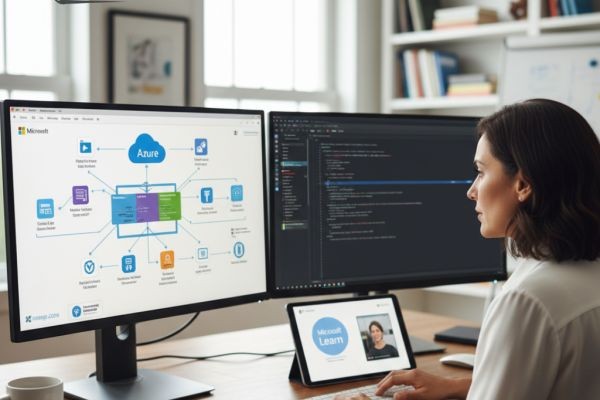
To become a Microsoft Certified Professional in 2026, you should first get a Fundamentals credential like AZ-900 or AI-900. Then, you should take a role-based Associate exam that is specific to the job you want. AI-102 and SC-300 are the most in-demand jobs right now because the market is focused on AI. After real-world experience, you can get expert-level credentials like AZ-305.
Something I want to say before anything else.
The MCP title means something completely different in 2026 than it did when I first earned it. Back in the MCSE era, certification meant you had studied a product deeply enough to pass a test about it. That was it. The credential told an employer which Microsoft products you had read about, not what you could actually build, troubleshoot, or design under real business pressure. The engineers who thrived back then were the ones who combined the badge with genuine hands-on experience. The ones who relied on the badge alone got exposed the moment a production problem required actual judgment.
That dynamic has not changed. What changed is that Microsoft rebuilt the entire credential framework around job roles rather than products, which means the certification now points more directly at what you can do rather than what you studied. Before you commit to any specific exam, spend time going through the Microsoft certification complete guide on Microsoft Learn to understand which credential actually aligns with your target role. That fifteen-minute investment prevents the most common and most expensive mistake I see candidates make: preparing thoroughly for the wrong exam and then wondering why nothing changed afterward.
Here is the honest picture of what becoming a Microsoft Certified Professional actually means in 2026.
Why the Shift to Role-Based Certifications Actually Matters for Your Career
Microsoft did not retire the MCSE because it needed a rebrand. They retired it because the product-based model was producing engineers who could pass exams and struggle to do the actual job.
The old structure tested whether you knew a product. The new structure tests whether you can perform a role. Administrator, Developer, Architect, Security Engineer, AI Engineer, these are the credential categories now, and they map directly to job descriptions in ways that the old certifications never did. When a hiring manager sees AZ-104 on your resume in 2026, they know specifically what you should be able to configure and manage. When they saw an MCSE a decade ago, they knew which software version you had studied. Those are genuinely different signals, and the market treats them differently.
The four tracks worth understanding before you choose a direction are Azure infrastructure and administration, Microsoft 365 and productivity, security and compliance, and data and AI. Getting the track choice right before you start studying is worth more than any individual study resource you will find afterward.
The AI Dimension That Is Now Inside Every Certification Track
Here is something that genuinely surprises engineers when they review the 2026 exam blueprints for the first time.
AI integration is not a separate topic sitting in AI-specific exams anymore. AZ-104 includes Azure AI service awareness as operational context. SC-300 includes Copilot for Security governance considerations. MS-700 includes Microsoft 365 Copilot administration. Microsoft's exam content teams have embedded AI service understanding into certifications across the entire portfolio because engineers operating the Microsoft stack in 2026 are expected to understand how AI integrates with the infrastructure they manage, not just the infrastructure itself in isolation.
This is not an incremental update to existing content. It represents a genuine shift in what Microsoft considers baseline knowledge for certified professionals, and it changes how you should allocate study time regardless of which track you are pursuing.
Why AI-102 Is the Single Most Marketable Microsoft Badge Right Now
I keep recommending AI-102 to mid-career engineers more than any other Microsoft credential right now, and the reason is straightforward.
Organizations building AI-enabled applications on Azure need engineers who own the AI services layer, Cognitive Services, Azure OpenAI Service, bot frameworks, and AI integration into existing application architectures. The certified talent pool for this credential is still genuinely thin relative to where active demand is heading. Engineers holding AZ-104 plus AI-102 with real Azure OpenAI production experience behind both are presenting a profile that enterprise accounts are specifically hunting for and consistently struggling to find in sufficient numbers. That gap is the career opportunity, and it will not stay this wide once more engineers recognize it.
Microsoft Fabric and Why Data Engineers Need to Pay Attention Right Now
The data certification track shifted significantly with Microsoft Fabric and most guides are still presenting the old picture.
Microsoft Fabric is Microsoft's unified analytics platform, and it has reorganized how the data credential track maps to real job roles in ways that matter practically for anyone pursuing DP-203 or planning their next data engineering credential. The real challenge is not just passing the DP-203 exam; it is understanding how Azure data services interact with the broader Fabric ecosystem that enterprise organizations are actively adopting right now. Engineers who were certified in data eighteen months ago and have not engaged with Fabric since are holding credentials that reflect a platform architecture that has genuinely evolved around them.
For data professionals building their credential stack in 2026 the sequence that reflects current market reality is DP-900 for foundational awareness if you are new to Azure data services, DP-203 for implementation-depth data engineering roles, DP-600 for the Microsoft Fabric Analytics Engineer credential where new data engineering hiring is increasingly concentrated, and AI-102 as a natural complement for data engineers who want to work at the intersection of data platforms and AI implementation.
Applied Skills: The Lab-Based Credentials Most Engineers Are Still Ignoring
Applied Skills are the most underexplained development in the Microsoft certification ecosystem right now, and most candidates either do not know they exist or treat them as minor footnotes to the traditional exam system.
They are not minor footnotes. Applied Skills are lab-based assessments conducted in live Azure environments where you complete specific real-world tasks. No multiple choice questions. No answer patterns to recognize. You produce a working solution, or you do not. That format is genuinely harder to fake than traditional exams, and employers who understand what it represents are starting to weigh these credentials seriously alongside traditional certifications in ways that were not happening two years ago.
The way to think about Applied Skills is as targeted validations of specific implementation capabilities that traditional multiple-choice exams simply cannot assess adequately. An engineer holding AZ-104 plus relevant Applied Skills credentials for specific Azure configuration scenarios is presenting something more compelling to technical hiring managers than either credential type alone, broad architectural knowledge validated by a written exam, combined with demonstrated hands-on capability validated by a live lab environment.
The Renewal Reality That Catches Engineers Off Guard Every Year
Microsoft certifications require annual renewal through a free online assessment. Not every three years. Every year.
The renewal assessment is open-book, runs through Microsoft Learn, and takes roughly thirty to forty-five minutes. Miss the window and the credential lapses entirely. You sit the full exam again from scratch. That consequence is disproportionately large relative to the minor administrative effort required to avoid it, and it catches engineers off guard far more often than it should, given how straightforward the process is.
The renewal content is not a trivial review either. It reflects how the platform actually evolved since you last certified. Services that did not exist when you passed AZ-104 two years ago are current renewal assessment content. Architectural recommendations that have been superseded by new service capabilities are replaced with current guidance. Microsoft's renewal cycle is designed to ensure that certified credentials reflect the platform as it is right now, not as it was when an engineer first studied it years ago. Staying current through renewals is what keeps your credential credible to hiring managers who know the platform well enough to notice when someone's knowledge has stopped updating.
Set up the Microsoft Credentials portal the same day you pass your first exam. It tracks renewal deadlines and sends reminders. Thirty seconds of setup prevents a genuinely painful and completely avoidable outcome.
The Honest Sequence for 2026
For most IT professionals building toward cloud roles right now, here is the sequence that reflects current market reality rather than conventional certification advice.
Start with AZ-900 if cloud concepts are genuinely new territory, three to four weeks maximum, not six. Move to AZ-104 as the foundational technical credential that every advanced Azure path builds directly on top of. Add AI-102 alongside or immediately after AZ-104 if AI-enabled application roles are anywhere in your target direction. The talent shortage here is real, and the window for positioning ahead of the crowded phase is still open but closing.
Pursue AZ-305 after twelve months of real Azure production experience. Not before, regardless of how strong your preparation feels and regardless of how confident your practice assessment scores make you. The architectural judgment AZ-305 tests are developed through real production exposure, not through additional studying, and experienced interviewers can tell immediately when that judgment is missing behind the badge.
Layer in SC-300 or SC-200 if security operations or identity management is your target sector. For data professionals, DP-203 followed by DP-600 reflects where the hiring is actually moving in 2026 rather than where it was positioned two years ago.
Back every badge with genuine hands-on depth through Microsoft Learn sandboxes and real Azure work. The credential gets you into the room. What happens in the room depends entirely on the experience behind it.






