
A few years ago, most people interacted with AI for one simple reason: they needed an answer. Today, that relationship is changing. People are using AI to brainstorm ideas, create content, practice conversations, generate images, and even spend time when they simply want someone to talk to.
That shift says a lot about where consumer technology is heading.
AI Companions represent the next stage of this evolution because they are designed around ongoing interaction rather than one-time tasks. Instead of opening a tool, asking a question, and leaving, users can develop a continuing experience with an AI character that remembers preferences, follows conversational context, and adapts its personality.
I find this shift particularly interesting because it changes what people expect from digital products. We are moving from software that responds to commands toward technology that can feel more personalized and familiar.
The technology is still developing, but the direction is becoming increasingly clear: consumers want AI that does not simply work for them but also fits naturally into their individual habits and preferences.
Consumer AI Is Moving Beyond Simple Commands
Traditional digital tools usually have a defined purpose. A calculator calculates, a search engine finds information, and a productivity application helps manage tasks.
AI has already blurred some of those boundaries.
A modern conversational system can write an email, explain a complicated topic, create a story, or help plan a trip. However, most interactions are still based on individual requests.
Personalized AI changes that model.
Instead of asking what a system can do once, users can develop an ongoing relationship with a particular AI experience. The system can maintain context and adapt its responses based on previous interactions.
For example, someone may prefer a humorous communication style while another person wants straightforward responses. One user may enjoy discussing movies, while another prefers gaming, music, or creative writing.
The more the system adapts to those preferences, the less generic the experience becomes.
That is one reason personalized AI has such strong potential in the consumer market.
Why Personalization Matters More Than Ever
People are already accustomed to personalized digital experiences.
Streaming services recommend content based on viewing habits. Social platforms organize feeds around individual interests. Online stores suggest products based on previous activity.
The difference with conversational AI is that personalization becomes part of the interaction itself.
Users can actively shape how an AI behaves rather than simply receiving recommendations generated in the background.
This creates a more flexible experience.
Someone might want a friendly conversational character one day and a creative brainstorming partner the next. The same platform can potentially support both experiences when customization is built into its design.
Likewise, personalization can make interactions more efficient. If an AI remembers communication preferences, favorite topics, or recurring interests, users do not have to explain everything from the beginning each time.
That sense of continuity can become a major reason people return to the same product.
AI Characters Are Changing the Way People Interact With Technology
Personality has always played an important role in entertainment.
People remember fictional characters because of their personalities, voices, habits, and stories. Now, AI is allowing users to interact with digital characters rather than simply watching or reading about them.
This creates a completely different type of experience.
An AI character can respond to questions, participate in roleplay, tell stories, and maintain a recognizable personality. Users can also influence the character through their conversations.
For example, a person might create a character who is witty and outgoing. Someone else might prefer a calm, thoughtful personality.
Neither experience needs to be identical.
This flexibility is helping move consumer AI away from a one-size-fits-all model.
It also explains why character-based AI applications are becoming increasingly popular across entertainment and social experiences.
The Rise of Custom AI Girlfriend Experiences
One area where personalization is particularly visible is AI relationship technology.
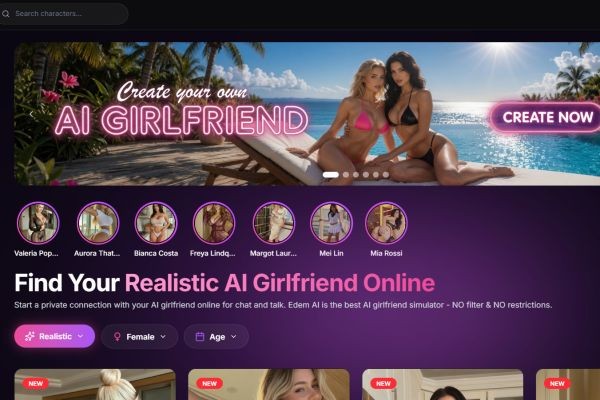
A free AI girlfriend generator [https://edemai.org/ai-girlfriend-generator] can allow users to experiment with different AI personalities, appearances, and conversational styles without immediately paying for access. The appeal often comes from the ability to create a character that feels different from a standard chatbot.
Rather than interacting with an anonymous system, users can choose characteristics that make the experience feel more personal.
The same principle applies to paid platforms, where users may receive additional customization options, longer conversations, voice features, images, or other forms of interaction.
The broader trend is important because it demonstrates how consumers are beginning to treat AI as an interactive experience rather than simply a utility.
At the same time, these platforms need to provide clear privacy policies and responsible safeguards, particularly when conversations involve personal information.
Voice and Visual Features Make AI More Interactive
Text-based conversations were an important starting point, but AI is no longer limited to text.
Voice interaction can make conversations feel faster and more natural. Image generation can give characters a stronger visual identity. Memory can help maintain continuity between conversations.
When these features work together, the result can feel considerably more immersive.
Imagine chatting with a digital character through text during the day and switching to voice later without losing the context of the conversation.
Similarly, a character could have a consistent visual identity while adapting its conversational style based on the user's preferences.
These capabilities are still improving, but they demonstrate why multimodal AI could become so important for consumer applications.
The more ways people can interact with a system, the easier it becomes for AI to fit into different situations.
Adult AI Shows How Specific Personalization Can Become
The consumer AI market is not limited to productivity or entertainment for general audiences. Adult-oriented applications are also demonstrating how detailed personalization can become.
For example, a hot AI girlfriend generator may focus on customizable personalities, appearance, conversations, and adult-oriented interactions for eligible users.
What makes these services notable from a technology perspective is the degree of customization they can offer.
Instead of presenting the same experience to every user, platforms can allow people to shape the characteristics of an AI personality around their preferences.
This reflects a larger trend that goes beyond adult applications. Consumers increasingly expect software to provide experiences that feel tailored to them.
Of course, adult AI platforms also have additional responsibilities. Age restrictions, privacy, consent, content controls, and secure handling of personal information are important considerations.
Personalization is valuable, but it needs to be supported by responsible product design.
Memory Could Become a Defining Feature
Imagine having the same conversation with a digital character every day but needing to repeat your preferences each time.
That would quickly become frustrating.
Memory can solve part of that problem.
AI systems with suitable memory capabilities can retain relevant information from previous conversations. For a companion-style application, this could include interests, preferred conversation topics, personality preferences, or details that users specifically choose to save.
This creates continuity.
Instead of feeling like every conversation starts from zero, the experience can develop over time.
However, memory also introduces important privacy questions.
Users should know what information is being stored, why it is being stored, and how they can remove it. They should also have meaningful controls over what the system remembers.
As AI becomes more personal, privacy cannot be treated as an afterthought.
Why Consistency Matters in Personalized AI
Personalization is not only about remembering information.
It is also about consistency.
If a user creates a particular AI character, they expect that character to behave in a reasonably predictable way. A humorous personality should not suddenly become extremely formal without a reason.
Likewise, an AI character designed to be supportive should maintain an appropriate conversational tone across different interactions.
Consistency helps create familiarity.
This is particularly important for AI companions [https://edemai.org/] because users are not necessarily visiting the platform to complete a task. The interaction itself is part of the product.
That means developers need to think carefully about personality design, conversational memory, response quality, and context management.
A technically impressive AI can still feel disappointing if its personality changes randomly or its responses become repetitive.
Personalized AI Is Also Changing Digital Entertainment
Entertainment has traditionally followed a fixed format.
Everyone watches the same movie, listens to the same song, or plays through the same game.
AI introduces the possibility of more adaptive experiences.
Imagine a fictional character that responds differently depending on what a user says. A story could develop according to individual choices. A digital personality could remember previous interactions and reference them later.
This creates a more interactive relationship between the audience and the content.
Instead of simply consuming entertainment, people can participate in it.
Similarly, creators may eventually develop AI characters around specific fictional worlds, personalities, or communities.
That could open new possibilities for storytelling, gaming, and digital media.
Creators Could Build Around Interactive Personalities
The creator economy has already moved beyond traditional blogs and videos.
Creators now build communities through newsletters, podcasts, livestreams, social media, memberships, and digital products.
AI characters could become another part of that ecosystem.
A creator might develop a fictional personality that audiences can interact with rather than simply follow.
For example, a character could answer questions, tell stories, participate in roleplay, or provide personalized entertainment.
This does not mean every creator needs an AI character.
However, it creates an interesting possibility: digital personalities could become interactive products rather than static pieces of content.
The success of such experiences will depend heavily on quality. People need a reason to return, and that usually comes from personality, consistency, useful interactions, or entertainment value.
Adult Personalization Is Becoming More Sophisticated
As AI models become better at generating conversations and images, adult applications are also becoming more customizable.
An NSFW AI girlfriend generator can provide adult users with personalized characters and interactive experiences designed around specific preferences.
Again, the larger technological trend is personalization.
Users can increasingly choose personality traits, appearance, communication style, and other characteristics rather than accepting a fixed digital persona.
This is one of the clearest examples of how AI can turn software into a customizable experience.
However, responsible development remains essential. Platforms in this category should provide appropriate age controls, privacy protections, and clear boundaries around generated content.
The more realistic these systems become, the more important those safeguards will be.
AI Companions Are Not Replacing Human Relationships
It is easy to make extreme predictions about AI and relationships, but the reality is more complicated.
An AI character is still an artificial system. It does not experience emotions in the same way humans do, and it cannot replace the complexity of real human relationships.
For many users, the appeal may simply be convenience and entertainment.
Someone may want to practice a conversation, roleplay a fictional situation, brainstorm ideas, or have a casual interaction without worrying about social pressure.
Others may enjoy creating characters and experimenting with different personalities.
These uses can exist alongside human relationships rather than replacing them.
The important point is to recognize what the technology actually provides while avoiding unrealistic expectations.
The User Should Remain in Control
Personalization works best when users have meaningful control over their experience.
People should be able to adjust personality settings, change preferences, manage saved information, and decide what type of interaction they want.
For example, someone experimenting with a free AI girlfriend generator [https://edemai.org/ai-girlfriend-generator] should be able to understand what information the platform collects and how conversations are handled.
Similarly, users trying different AI characters should have clear controls for deleting conversations or stored memories where applicable.
This level of transparency will become increasingly important as AI applications become more personal.
Trust can be difficult to build and easy to lose.
What the Next Generation of AI Could Look Like
The future of consumer AI will probably not be divided into neat categories.
An AI companion could also be a productivity assistant. A creative tool could also function as a conversational partner. A digital character could provide entertainment while helping users brainstorm ideas.
These boundaries are already becoming less obvious.
Voice, images, memory, personalization, and conversational AI can all work together within one product.
For consumers, that could mean fewer separate applications and more adaptable digital experiences.
Instead of switching between different tools for different needs, people may eventually have personalized AI systems that can adjust according to the situation.
That is a significant change from how we use software today.
Where the Market Goes From Here
The biggest challenge for AI developers will not simply be making models more powerful.
It will be making those models useful, reliable, safe, and genuinely enjoyable.
Consumers have plenty of choices already. A new application needs more than a chatbot interface to stand out.
The strongest products are likely to focus on things such as:
- Natural conversations
- Strong personality consistency
- Useful long-term memory
- Flexible customization
- Voice and visual interaction
- Transparent privacy controls
- Responsible safety features
At the same time, developers will need to listen closely to how users actually interact with these systems.
Technology can look impressive in a demonstration but feel very different during everyday use.
Real-world usability will ultimately determine which products survive.
AI Companions Could Become a New Consumer AI Standard
We have already seen several major stages in the development of consumer AI.
First, AI became better at finding and organizing information. Then it became capable of generating text, images, audio, and other content. Now, it is becoming increasingly capable of maintaining personalized interactions.
AI Companions sit directly within this next stage.
Their significance comes from the combination of technology and personalization. They can remember preferences, maintain context, develop recognizable personalities, and interact through multiple formats.
That makes them different from the traditional software model where users simply operate a tool.
The next generation of consumer AI may be less about opening an application and issuing commands and more about having digital systems that adapt naturally to individual users.
The Future Will Be More Personal
The most interesting part of this shift is that personalization is becoming the experience itself.
Whether someone is using a hot AI girlfriend generator for an adult-oriented interactive experience or a general-purpose AI character for entertainment, the underlying expectation is similar: people want technology that feels relevant to them.
That expectation will likely spread across the wider AI industry.
We may eventually see AI systems that understand our preferred communication styles, remember useful context, adjust their personalities, and move smoothly between text, voice, images, and other forms of interaction.
There will certainly be challenges along the way. Privacy, safety, responsible design, and healthy boundaries will remain important.
But the direction is difficult to ignore.
Consumer AI is moving away from purely transactional interactions and toward experiences built around continuity and personalization. That makes AI Companions more than a temporary trend. They could represent an important step toward a future where technology adapts to people instead of asking people to constantly adapt to technology.
And that may be the real next chapter for consumer AI.






