
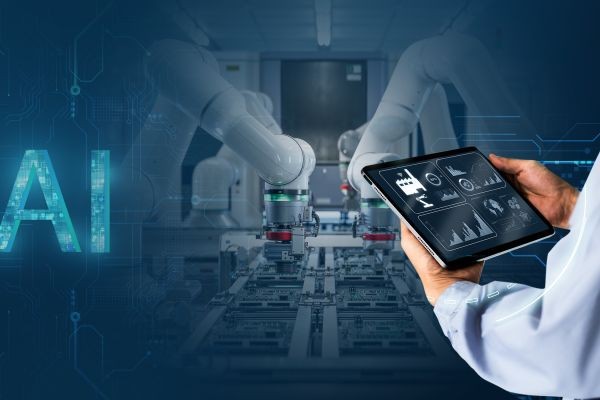
AI in Industrial Automation | Smart & Intelligent Manufacturing
Industrial automation is evolving rapidly, and Artificial Intelligence (AI) is at the heart of this transformation. Modern industries are no longer limited to machines and manual processes. Today, factories are becoming smart and intelligent, leveraging AI to enhance productivity, reduce errors, and create efficient manufacturing systems.
AI in industrial automation is helping businesses achieve more accurate production, better quality control, and faster decision-making. Tools like AI automation, AI voice agents, and AI chatbots are changing the way industrial operations work.
What Is AI in Industrial Automation?
AI industrial automation refers to using intelligent systems and machines that can learn, analyze data, and make decisions independently. Unlike traditional automation that follows fixed rules, AI adapts to changing conditions and improves performance over time.
These systems collect data from sensors, machines, and production lines. By analyzing this data, AI can identify bottlenecks, predict failures, optimize workflow, and enhance overall operational efficiency.
Smart & Intelligent Manufacturing
Smart and intelligent manufacturing combines AI, automation, and connected devices to create responsive factories. In these environments, machines communicate, share data, and adjust operations in real time.
Key benefits of intelligent manufacturing include:
-
Real-time monitoring of production processes
-
Reduced equipment downtime
-
Enhanced product quality
-
Quick adjustment of operations according to demand
This makes manufacturing more flexible, efficient, and cost-effective.
Benefits of AI in Industrial Automation
1. Increased Efficiency
AI automation optimizes workflows, reduces human error, and allows machines to operate continuously. This improves production speed and overall productivity.
2. Predictive Maintenance
AI can predict when machines are likely to fail, helping industries fix problems before they cause downtime. This reduces repair costs and prevents unplanned stoppages.
3. Improved Quality Control
AI-powered vision systems detect defects in real time, ensuring consistent quality and minimizing waste.
4. Cost Reduction
AI optimizes energy use, reduces material waste, and limits downtime, leading to significant cost savings.
5. Enhanced Safety
AI monitors workplace conditions, detects hazards, and alerts staff, creating a safer working environment.
AI Automation in Manufacturing
AI automation is the backbone of intelligent manufacturing. It connects machines, software, and data to automate complex industrial processes efficiently.
Common applications include:
-
Robotic arms that adjust automatically for precision
-
Production lines that optimize speed and output in real time
-
Smart inventory management and supply chain systems
These solutions help businesses scale production while maintaining quality and control.
Role of AI Voice Agents
AI voice agents are becoming essential in modern industrial environments. They allow workers to interact with systems using voice commands, which is especially helpful in hands-busy or noisy conditions.
Uses of AI voice agents include:
-
Hands-free control of machines
-
Real-time reporting of machine status
-
Voice-guided instructions for technicians
This improves productivity and reduces manual effort.
How AI Chatbots Support Industrial Teams
AI chatbots are transforming internal communication and support in industries. They provide instant information and reduce the workload on human teams.
AI chatbots are used for:
-
Employee support and internal FAQs
-
Maintenance guidance and troubleshooting
-
Training and onboarding
-
Process and system inquiries
By providing quick answers, AI chatbots help maintain smooth operations and faster decision-making.
Real-World Applications of AI in Industrial Automation
AI is already making an impact across various sectors:
-
Manufacturing: Smart robotics, quality inspection, and predictive maintenance
-
Automotive: Intelligent assembly lines, defect detection, and process optimization
-
Energy: Equipment monitoring, energy optimization, and smart grids
-
Logistics: Automated warehouses, smart sorting, and route planning
These applications highlight how AI is turning traditional industries into intelligent, data-driven systems.
Challenges and How to Overcome Them
While AI offers significant benefits, industries may face challenges such as:
-
High initial investment
-
Data security concerns
-
Shortage of skilled professionals
These challenges can be addressed by starting with small pilot projects, investing in employee training, and working with experienced AI solution providers.
The Future of Smart & Intelligent Manufacturing
The future of industrial automation is smart, connected, and intelligent. With advances in AI, industries can expect:
-
Fully autonomous factories
-
Smarter and faster decision-making
-
Greater use of AI voice agents and AI chatbots
-
Sustainable production through resource optimization
Companies that adopt AI early will gain a competitive edge and be better prepared for the future.
(FAQs)
What is AI in industrial automation?
AI in industrial automation uses intelligent systems to control machines, analyze data, and optimize industrial processes with minimal human input.
How does AI improve smart manufacturing?
AI improves efficiency, reduces downtime, ensures consistent quality, and helps factories respond quickly to market demands.
Can AI automation be used in small industries?
Yes, AI automation can be scaled to suit small and medium-sized industries, making production efficient and cost-effective.
How are AI voice agents used in factories?
AI voice agents enable hands-free machine control, real-time alerts, and voice-guided instructions for employees.
Do AI chatbots help industrial operations?
Yes, AI chatbots support employees by answering queries, providing guidance, and assisting with training and maintenance tasks.
Conclusion
AI in industrial automation is reshaping modern manufacturing. With smart and intelligent solutions, businesses can improve productivity, reduce costs, and ensure consistent quality. Technologies like AI automation, AI voice agents, and AI chatbots are making factories more efficient, safer, and connected.
Adopting AI today helps companies stay competitive, build intelligent operations, and prepare for a future where manufacturing is smarter, faster, and more responsive than ever.






