
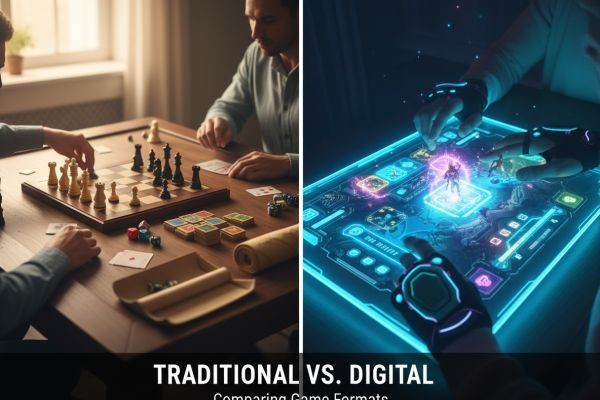
The transition of classic table games from physical layouts to digital platforms has changed how players engage. Traditional tables, such as roulette, blackjack, and baccarat, rely on physical dealers, cards, and chips. Digital game formats replace these physical elements with computer-generated graphics and random number generators. Both formats offer unique advantages and appeal to different types of players. While traditional tables provide a tactile and social experience, digital formats offer convenience and speed. Understanding the differences between these formats helps players select the gaming style that matches their preferences. This article compares the mechanics, pace, and accessibility of both traditional and digital table games.
The Social and Tactile Appeal of Traditional Tables
For many, the appeal of gaming lies in the atmosphere of a physical venue. Traditional tables offer a social environment where players can interact with the dealer and fellow participants. The physical manipulation of cards, chips, and dice adds a tactile element that cannot be fully replicated by screens. The pace of the game is determined by the dealer, allowing for natural pauses and conversations. This slower pace can make the session feel more relaxed and deliberate. However, playing at traditional tables requires traveling to a physical location, which may not always be convenient. It also involves adhering to dress codes and operating hours, which limits flexibility.
Gaming Anytime and Anywhere
Digital table games offer unmatched accessibility, allowing players to play from home or on the go. These games are available twenty-four hours a day, with no wait times for an open seat. The pace of digital games is controlled entirely by the player, who can make decisions as fast or slow as they want. Since the software automates the dealing of cards and calculation of bets, rounds are resolved in seconds. This speed makes digital formats ideal for quick sessions or practicing game strategies. Additionally, digital tables often feature lower minimum bets than physical tables, making them more accessible to beginners. The lack of physical constraints allows developers to offer multiple game variations on a single screen.
Hybrid Formats and Live Streamed Options
To combine the best of both worlds, developers have created hybrid formats, such as live dealer games. These games are hosted by real dealers in professional studios and streamed to players in real time. Players place their bets using a digital interface, while the dealer manages the physical cards or wheels. This format maintains the social interaction and transparency of traditional tables while offering the convenience of digital play. Optical character recognition technology translates the physical game actions into digital data instantly. This hybrid approach has become highly popular, representing the current frontier of digital table design. It highlights how technology can enhance classic games without losing their original charm.
Testing the Virtual Algorithms
A common concern for players transitioning to digital formats is the fairness of the software. Without a physical card deck or wheel, players must trust the platform's random number generator. To ensure integrity, digital games are audited by independent testing organizations. These agencies run millions of rounds to verify that the virtual outcomes match physical probabilities. The software must prove that it has no bias and that its results are unpredictable. Once certified, the game receives a license, proving its fairness to the regulatory bodies and players alike. Official info: https://slotsgemcasino.ch/






