
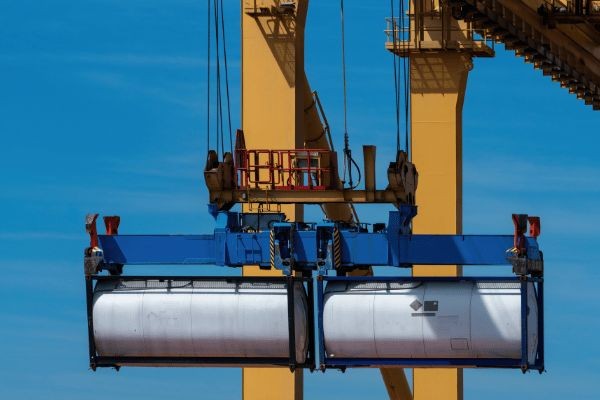
ASEAN ISO Tank Container Market Outlook
The ASEAN ISO tank container market attained a value of about USD 54.73 Million in 2025. The market is further expected to grow at a CAGR of 8.10% during the forecast period of 2026-2035 to reach a value of around USD 119.26 Million by 2035.
The market is growing as chemical manufacturers, food-grade liquid producers, energy companies, pharmaceutical firms, and logistics providers increase their use of safe, reusable, and intermodal bulk liquid transportation solutions. ISO tank containers are widely used for transporting hazardous chemicals, non-hazardous liquids, gases, food-grade oils, solvents, acids, fuels, and specialty products.
ASEAN’s expanding manufacturing base, chemical trade, port infrastructure, cross-border logistics, and industrial growth are supporting demand for ISO tank containers. Countries such as Singapore, Malaysia, Indonesia, Thailand, Vietnam, and the Philippines are becoming important hubs for regional and international bulk liquid movement.
ASEAN ISO Tank Container Market Growth Drivers
Rising Chemical Trade Across ASEAN
Chemical trade is one of the strongest drivers of the ASEAN ISO tank container market. The region has a growing base of petrochemical, specialty chemical, agrochemical, paint, coating, adhesive, and industrial chemical manufacturers.
These industries require safe and compliant transport for liquid chemicals. ISO tank containers offer better safety, lower contamination risk, and easier intermodal movement compared to drums and flexitanks for many chemical applications.
As chemical exports and intra-regional trade increase, demand for ISO tank leasing, cleaning, maintenance, and logistics services is expected to rise.
Growth of Intermodal Logistics
ISO tank containers are designed for seamless movement by road, rail, and sea. This makes them highly suitable for ASEAN’s trade routes, port networks, and regional supply chains.
Logistics companies are using ISO tanks to reduce handling, improve cargo safety, and support efficient international shipping. The containers can move across multiple transport modes without transferring cargo from one vessel to another.
This advantage is especially important for companies moving chemicals, food-grade liquids, and industrial fluids across ports and production hubs.
Expansion of Food-Grade Liquid Transport
Food-grade liquid transportation is creating steady demand for ISO tank containers in ASEAN. Products such as edible oils, palm oil derivatives, fruit concentrates, liquid sweeteners, sauces, alcohol-free beverages, and food ingredients require hygienic and contamination-free transport.
ISO tanks are preferred for bulk liquid food products because they support better cleanliness, temperature control options, and quality preservation. Stainless steel tanks are especially useful for sensitive products that require strict hygiene standards.
As ASEAN strengthens its food processing and edible oil industries, food-grade ISO tank demand is expected to grow.
Rising Need for Safe Hazardous Material Handling
Hazardous liquid transportation requires strong safety standards, proper containment, and regulatory compliance. ISO tank containers are built to handle demanding cargo types, including corrosive chemicals, flammable liquids, gases, and toxic materials.
Companies are increasingly choosing ISO tanks because they reduce leakage risks, improve cargo protection, and support safer handling compared to smaller packaging formats.
This is strengthening demand among chemical producers, energy companies, and industrial logistics providers.
Get a Free Sample Report with Table of Content: https://www.expertmarketresearch.com/reports/asean-iso-tank-container-market/requestsample
ASEAN ISO Tank Container Market Trends
Tank Leasing Is Gaining Popularity
Tank leasing is becoming more popular as companies avoid large upfront investments in container ownership. Leasing allows businesses to access ISO tanks based on project needs, cargo type, trade route, and seasonal demand.
Short-term and long-term leasing models are gaining demand among chemical exporters, traders, and logistics companies. Leasing also helps companies scale operations without maintaining their own tank fleets.
Stainless Steel Tanks Remain Preferred
Stainless steel ISO tanks remain widely preferred due to their durability, corrosion resistance, hygiene, and compatibility with a wide range of cargo. They are used for chemicals, food-grade liquids, pharmaceuticals, and specialty products.
Their long service life and reusability make them attractive for companies seeking reliable and sustainable bulk transport solutions.
Demand for Temperature-Controlled Tanks Is Rising
Temperature-sensitive products require specialised ISO tanks with insulation, heating, or cooling features. Demand is increasing for tanks that can transport products such as specialty chemicals, food ingredients, oils, waxes, and temperature-sensitive liquids.
These tanks help maintain product quality during long-distance movement and reduce the risk of product degradation.
Cleaning and Maintenance Services Are Expanding
As ISO tank usage grows, demand is also rising for cleaning, repair, inspection, certification, and depot services. Proper cleaning is essential to avoid cargo contamination and meet safety standards.
Tank depots near ports and industrial zones are becoming important parts of the ISO tank container ecosystem.
ASEAN ISO Tank Container Market Segmentation
By Tank Type
The ASEAN ISO tank container market can be segmented into standard tanks, swap body tanks, refrigerated tanks, gas tanks, lined tanks, and specialised tanks.
Standard ISO tanks hold strong demand due to their use in transporting chemicals, food-grade liquids, oils, and industrial fluids. They offer flexibility and are suitable for many common bulk liquid cargo types.
Lined tanks are used for corrosive or sensitive products that need additional protection from the stainless steel surface.
Refrigerated and temperature-controlled tanks are gaining demand for products that require stable temperature during transport.
Gas tanks are used for liquefied gases and other pressure-based cargo applications.
Specialised tanks are required for high-value, hazardous, or technically sensitive cargo.
By Cargo Type
Based on cargo type, the market includes hazardous chemicals, non-hazardous chemicals, food-grade liquids, gases, petroleum products, pharmaceuticals, and specialty liquids.
Hazardous chemicals account for strong demand because ISO tanks provide safer and more compliant transport than many alternative bulk packaging formats.
Non-hazardous chemicals are also widely transported in ISO tanks due to cost efficiency, contamination control, and intermodal flexibility.
Food-grade liquids are expected to grow steadily as ASEAN’s food processing and edible oil sectors expand.
Petroleum products and industrial fluids also support demand from energy, marine, and manufacturing sectors.
By Ownership Model
The market can be segmented into owned tanks, leased tanks, and third-party logistics-managed tanks.
Leased tanks are gaining strong popularity because they reduce capital burden and offer operational flexibility.
Owned tanks are preferred by large chemical companies, logistics firms, and industrial groups with regular bulk liquid transport needs.
Third-party logistics-managed tanks are widely used by companies that prefer outsourced handling, routing, cleaning, and compliance support.
By Application
The market includes chemicals, food and beverages, pharmaceuticals, oil and gas, agriculture, industrial manufacturing, and specialty materials.
Chemical applications hold a major share due to rising regional chemical trade and manufacturing activity.
Food and beverage applications are supported by edible oils, food ingredients, liquid sweeteners, concentrates, and specialty food liquids.
Pharmaceutical applications require clean and controlled transport for sensitive liquid ingredients.
Oil and gas applications include fuels, lubricants, additives, and specialty petroleum products.
Agriculture uses ISO tanks for liquid fertilisers, pesticides, and other agrochemical products.
By Service Type
The market can be segmented into transportation, leasing, cleaning, repair, maintenance, inspection, storage, and fleet management.
Transportation services account for strong demand due to regular movement of bulk liquids across ASEAN and international trade routes.
Leasing services are expected to grow quickly as companies seek flexible access to ISO tank fleets.
Cleaning and maintenance services are critical because tank hygiene, safety, and certification directly affect cargo acceptance and regulatory compliance.
Fleet management services are gaining importance among companies operating large tank networks across multiple countries.
Regional Insights
Singapore Leads as a Logistics and Chemical Hub
Singapore is one of the most important markets in the ASEAN ISO tank container industry due to its strong port infrastructure, chemical storage facilities, petrochemical base, and regional logistics role.
The country serves as a major transshipment and tank management hub for chemicals, gases, food-grade liquids, and specialty cargo moving across Asia and global markets.
Malaysia Supports Chemical and Palm Oil Logistics
Malaysia contributes strong demand due to its petrochemical sector, palm oil industry, food processing base, and export-oriented manufacturing. ISO tanks are used for chemicals, oleochemicals, edible oils, and specialty liquids.
Port infrastructure and proximity to regional trade routes make Malaysia an important market for ISO tank operators and depot services.
Indonesia Offers Strong Growth Potential
Indonesia is expected to offer strong growth opportunities due to its large manufacturing base, expanding chemical industry, food processing sector, and archipelagic logistics needs.
Bulk liquid movement across islands, ports, and industrial zones creates demand for reliable and safe tank container solutions.
Thailand Supports Industrial and Chemical Demand
Thailand has a strong industrial base, including chemicals, automotive, food processing, and petrochemicals. These sectors support demand for ISO tank transportation and related services.
The country’s export-oriented manufacturing economy also strengthens demand for intermodal logistics solutions.
Vietnam Shows Rising Demand from Manufacturing Growth
Vietnam is emerging as a high-potential ISO tank container market due to rapid industrialisation, rising foreign investment, growing chemicals trade, and expanding port infrastructure.
Demand is increasing for tank logistics linked with industrial chemicals, food ingredients, specialty materials, and manufacturing inputs.
Philippines Offers Emerging Opportunities
The Philippines presents opportunities in chemicals, food processing, fuels, industrial liquids, and inter-island logistics. Demand is expected to improve as industrial distribution and port-connected supply chains develop further.
Competitive Landscape
The ASEAN ISO tank container market is competitive, with tank operators, leasing companies, logistics providers, tank manufacturers, depot operators, chemical logistics firms, and freight forwarders competing across fleet availability, safety compliance, route coverage, cleaning access, pricing, and service reliability.
Major companies operating in or influencing the ASEAN ISO tank container market include:
- Stolt-Nielsen Limited
- Hoyer Group
- Bertschi AG
- Den Hartogh Logistics
- Suttons International
- NewPort Tank Containers
- VTG Tanktainer
- Intermodal Tank Transport
- Peacock Container
- Seaco Global
Global tank operators compete through large fleets, international coverage, safety systems, and experience in chemical logistics.
Leasing companies compete through flexible contracts, tank availability, specialised tank types, and fleet management services.
Challenges in the ASEAN ISO Tank Container Market
The market faces challenges from regulatory complexity, high capital cost, depot availability, cleaning requirements, cross-border documentation, and cargo safety risks.
ISO tank containers require proper maintenance, inspection, and certification. Any gap in compliance can delay shipments or increase safety risks.
Cleaning and depot infrastructure may vary across ASEAN markets, which can affect turnaround times. Companies handling hazardous or food-grade cargo must ensure strict cleaning and contamination control.
Cross-border logistics can also involve customs procedures, port congestion, route planning issues, and documentation requirements.
Future Outlook
The ASEAN ISO tank container market is expected to grow strongly during 2026-2035, supported by chemical trade, food-grade liquid transport, manufacturing growth, intermodal logistics, and demand for safer bulk liquid movement.
The market attained a value of about USD 54.73 Million in 2025 and is expected to reach around USD 119.26 Million by 2035, growing at a CAGR of 8.10% during the forecast period.
Future growth will be shaped by tank leasing, hazardous chemical logistics, stainless steel tank demand, temperature-controlled solutions, cleaning depot expansion, and stronger cross-border supply chains across ASEAN.
FAQs
What was the value of the ASEAN ISO tank container market in 2025?
The ASEAN ISO tank container market attained a value of about USD 54.73 Million in 2025.
What is the growth rate of the ASEAN ISO tank container market?
The market is expected to grow at a CAGR of 8.10% during the forecast period of 2026-2035.
What will be the value of the ASEAN ISO tank container market by 2035?
The ASEAN ISO tank container market is expected to reach a value of around USD 119.26 Million by 2035.
What is driving the ASEAN ISO tank container market?
The market is driven by rising chemical trade, intermodal logistics growth, food-grade liquid transport, hazardous material handling, manufacturing expansion, and port infrastructure development.
What opportunities exist in the ASEAN ISO tank container market?
Opportunities exist in chemical-grade tank transport, food-grade liquid logistics, tank leasing, temperature-controlled tanks, cleaning depots, hazardous cargo logistics, digital tracking, and intermodal partnerships.
What is the future outlook for the ASEAN ISO tank container market?
The market is expected to grow strongly through 2035 as ASEAN’s chemical, food processing, manufacturing, and logistics sectors increase demand for safe and efficient bulk liquid transportation.






