
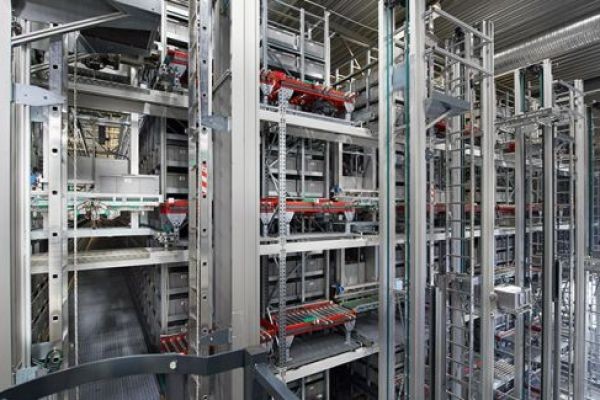
The automated storage and retrieval systems market report is benefiting significantly from rising demand within manufacturing logistics. As manufacturers face growing pressure to enhance production efficiency, reduce operational costs, and maintain supply chain resilience, automated storage and retrieval systems (AS/RS) are becoming integral to modern industrial operations. These systems are transforming how raw materials, components, work-in-progress (WIP), and finished goods are stored, retrieved, and managed.
Manufacturing environments require precision, speed, and synchronization. Any delays in material availability can disrupt production schedules, increase downtime, and impact profitability. AS/RS technologies address these challenges by ensuring reliable, automated, and efficient material handling.
Lean Manufacturing Driving Automation
Lean manufacturing principles emphasize waste reduction, continuous improvement, and optimal resource utilization. Traditional storage methods often introduce inefficiencies through excessive material movement, search times, and handling errors.
AS/RS solutions streamline storage and retrieval workflows, minimizing unnecessary transportation and idle time. Automated systems ensure materials are available exactly when needed, supporting smoother production cycles.
Just-In-Time (JIT) Inventory Requirements
Just-in-time manufacturing relies on precise inventory coordination to reduce holding costs and enhance operational agility. JIT models demand rapid, accurate retrieval of components to maintain uninterrupted workflows.
Automated storage and retrieval systems deliver high-speed access to inventory while maintaining strict accuracy. Integration with manufacturing execution systems (MES) enables synchronized material flow aligned with production schedules.
Space Optimization In Production Facilities
Manufacturing plants often operate within constrained footprints where space must be allocated carefully among production lines, storage areas, and logistics zones.
High-density AS/RS installations maximize vertical storage capacity, enabling manufacturers to store more inventory within limited areas. Compact layouts reduce floor space usage, freeing room for production expansion or workflow optimization.
Reduction Of Production Downtime
Material handling delays are a common cause of manufacturing downtime. Manual retrieval processes can introduce variability, leading to disruptions and inefficiencies.
AS/RS technologies ensure consistent, predictable material delivery. Automated retrieval mechanisms eliminate delays caused by manual searching or misplacement. This reliability improves production continuity and throughput.
Accuracy And Traceability Benefits
Manufacturers require accurate inventory tracking for quality control, compliance, and process optimization. Errors in component identification or placement can result in defective products or costly recalls.
Automated storage systems enhance precision through barcode scanning, RFID integration, and sensor-driven validation. AS/RS platforms maintain detailed transaction logs, improving traceability across the production lifecycle.
Labor Efficiency Improvements
Manufacturing logistics often involves repetitive and physically demanding tasks, including material transport, storage, and retrieval. Labor shortages and rising wages are intensifying operational challenges.
AS/RS deployments reduce manual workload, allowing employees to focus on higher-value activities such as assembly, quality assurance, and system supervision. Automation also improves workplace safety by minimizing heavy lifting and hazardous movements.
Integration With Smart Manufacturing
Industry 4.0 initiatives are accelerating adoption of intelligent automation across manufacturing ecosystems. Digital connectivity, IoT-enabled monitoring, and AI-driven analytics are reshaping factory operations.
AS/RS systems integrated with smart manufacturing platforms enable real-time inventory visibility, predictive maintenance, and dynamic workflow optimization. This connectivity enhances operational agility and decision-making.
Industry Adoption Patterns
Automotive, electronics, aerospace, heavy machinery, and consumer goods manufacturers are increasingly investing in AS/RS solutions. High-volume, high-precision production environments particularly benefit from automated storage technologies.
Small and mid-sized manufacturers are also adopting modular AS/RS platforms as automation becomes more accessible and scalable.
Technology Advancements Enhancing Manufacturing Logistics
Innovations in shuttle-based systems, robotic picking, automated pallet cranes, and AI-driven warehouse orchestration are expanding AS/RS capabilities. These technologies support flexible storage configurations suited to diverse manufacturing needs.
Cloud-based analytics tools provide insights into inventory flows and production bottlenecks.
Challenges In Implementation
Despite strong advantages, deploying AS/RS in manufacturing facilities requires careful planning. Integration with legacy systems, facility redesign, and capital investment considerations may present challenges.
Workforce training and change management strategies are essential for successful transitions. However, long-term efficiency gains typically justify investment.
Future Outlook
The automated storage and retrieval systems market is expected to continue benefiting from manufacturing sector modernization. Increasing emphasis on automation, resilience, and cost optimization will sustain demand.
Conclusion
Rising demand in manufacturing logistics is playing a crucial role in strengthening the automated storage and retrieval systems market. By enabling lean operations, reducing downtime, optimizing space, and enhancing accuracy, AS/RS technologies are becoming indispensable assets in next-generation industrial production environments.






