
Automotive Image Sensors Market Outlook and Forecast
The Automotive Image Sensors Market is witnessing strong momentum as vehicle manufacturers continue integrating advanced driver assistance systems (ADAS), autonomous driving technologies, and intelligent safety features into modern vehicles. Automotive image sensors play a critical role in enabling cameras to capture real-time visual data, helping vehicles identify road conditions, pedestrians, traffic signs, and surrounding obstacles. The growing emphasis on vehicle safety regulations and the rapid evolution of connected mobility solutions are driving widespread adoption of image sensing technologies across the automotive ecosystem.
In 2025, the automotive image sensors market was valued at USD 4.02 Billion. The market is projected to reach USD 11.94 Billion by 2035, expanding at a CAGR of 11.5% during the forecast period from 2026 to 2035. The increasing deployment of camera-based systems for parking assistance, collision avoidance, driver monitoring, and autonomous navigation is expected to sustain long-term market growth.
Regional Performance Highlights
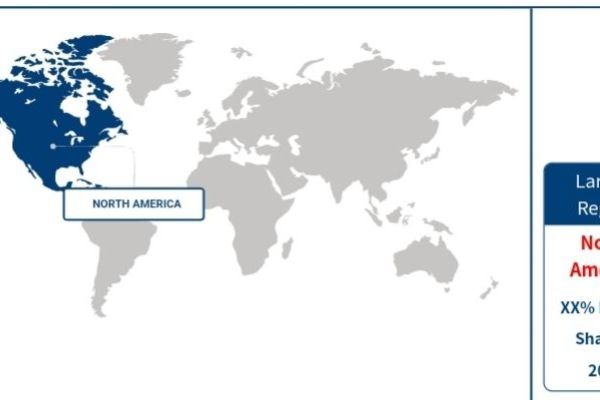
North America remains a significant market due to the rapid adoption of advanced safety technologies, increasing investments in autonomous vehicle development, and strong regulatory support for vehicle safety innovations.
Europe continues to demonstrate robust demand driven by stringent automotive safety standards, rising penetration of ADAS-equipped vehicles, and ongoing investments in smart mobility infrastructure.
Asia Pacific is emerging as the fastest-growing regional market, supported by expanding automotive production, increasing electric vehicle adoption, and substantial investments in intelligent transportation technologies across countries such as China, Japan, and South Korea.
Market Segment Analysis
Segment 1 – CMOS Image Sensors
The CMOS image sensors segment captured a dominant 76.63% share of the automotive image sensors market in 2025. CMOS technology continues to gain preference due to its lower power consumption, faster processing capabilities, compact design, and cost efficiency. Manufacturers are increasingly deploying CMOS sensors across front-view, rear-view, surround-view, and driver monitoring systems.
Segment 2 – Passenger Vehicles
The passenger vehicles segment dominated the market with a 66.93% share in 2025. Growing consumer demand for enhanced vehicle safety, premium infotainment systems, and semi-autonomous driving functionalities is accelerating the integration of high-performance image sensors across passenger vehicle platforms.
Request Free Sample Report @ https://www.fundamentalbusinessinsights.com/request-sample/14933
Top Market Trends Transforming the Automotive Image Sensors Market
1. Rapid Expansion of ADAS Technologies
The increasing adoption of advanced driver assistance systems is one of the most influential trends shaping the automotive image sensors market. Modern vehicles increasingly rely on camera-based technologies for lane departure warnings, adaptive cruise control, traffic sign recognition, and emergency braking systems. Automotive image sensors serve as the foundation for these safety features, enabling precise environmental perception and real-time decision-making.
Automakers are expanding camera installations across vehicles to improve safety performance and comply with evolving regulatory requirements, thereby driving substantial demand for high-resolution image sensors.
2. Growing Focus on Autonomous Driving Capabilities
The evolution of autonomous driving technologies continues to create significant opportunities for image sensor manufacturers. Autonomous and semi-autonomous vehicles require multiple cameras to monitor vehicle surroundings from different angles. High-performance image sensors capable of operating in diverse lighting and weather conditions are becoming increasingly important for achieving reliable vehicle autonomy.
Industry participants are investing in advanced sensor architectures that enhance image quality, improve object recognition accuracy, and support real-time processing requirements.
3. Increasing Adoption of Driver Monitoring Systems
Driver monitoring systems are becoming a critical component of modern vehicle safety strategies. Governments and automotive safety organizations are promoting technologies that detect driver fatigue, distraction, and inattentiveness. As a result, image sensors are being integrated into cabin monitoring solutions that track driver behavior and provide alerts when potential risks are detected.
The trend is expected to accelerate as vehicle manufacturers prioritize occupant safety and regulatory compliance.
4. Advancements in AI-Enabled Imaging Solutions
Artificial intelligence is increasingly being combined with automotive imaging technologies to improve object detection, scene analysis, and predictive safety capabilities. AI-powered image processing enables vehicles to interpret complex road environments more accurately while reducing response times.
Automotive manufacturers and semiconductor companies are collaborating to develop next-generation imaging solutions that support higher levels of vehicle automation and intelligent mobility.
Request Free Sample Report @ https://www.fundamentalbusinessinsights.com/request-sample/14933
Recent Company Developments
Sony Semiconductor Solutions
Sony continues to expand its automotive imaging portfolio by developing advanced CMOS image sensors designed for autonomous driving and ADAS applications. The company remains focused on improving image quality, dynamic range, and low-light performance.
onsemi
onsemi has strengthened its automotive sensing capabilities through continued investments in intelligent sensing technologies. The company is focusing on high-performance image sensors that support advanced vehicle safety and autonomous mobility applications.
OmniVision Technologies
OmniVision has introduced innovative automotive-grade image sensing solutions designed to improve camera system efficiency and support multiple vehicle vision applications, including surround-view and driver monitoring systems.
Samsung Electronics
Samsung continues to expand its automotive semiconductor business with advanced image sensor technologies targeting next-generation vehicles. The company is investing heavily in high-resolution automotive camera solutions.
STMicroelectronics
STMicroelectronics remains focused on developing intelligent imaging technologies that enhance vehicle perception capabilities and support advanced safety systems across automotive platforms.
SmartSens Technology
SmartSens is increasing its presence in the automotive imaging market through innovations in high-definition image sensing solutions that support ADAS and intelligent transportation applications.
PixArt Imaging
PixArt Imaging continues to enhance its automotive imaging portfolio by focusing on improved sensor accuracy, power efficiency, and image processing performance.
Teledyne Technologies
Teledyne is actively advancing imaging technologies that support autonomous mobility initiatives and next-generation vehicle vision systems.
Canon Inc.
Canon continues to explore automotive imaging opportunities through innovations in optical and image sensing technologies aimed at improving vehicle safety and environmental awareness.
Hamamatsu Photonics
Hamamatsu is strengthening its position within advanced imaging applications by developing specialized sensing technologies that support automotive safety and autonomous driving systems.
These companies are investing heavily in research and development, strategic partnerships, and product innovation to address the growing demand for intelligent vehicle vision systems. Their efforts are expected to contribute significantly to the future evolution of the automotive image sensors market.
Request Free Sample Report @ https://www.fundamentalbusinessinsights.com/request-sample/14933
Related Reports
About Fundamental Business Insights:
Fundamental Business Insights is global market research and consulting company which is engaged in providing in depth market reports to its various types of clients like industrial sectors, financial sectors, universities, non-profit, and corporations. Our goal is to offer the correct information to the right stakeholder at the right time, in a format that enables logical and informed decision making. We have a team of consultants who have experience in offering executive level blueprints of markets and solutions. Our services include syndicated market studies, customized research reports, and consultation.
Contact us:
Robbin Fernandez
Head of Business Development
Fundamental Business Insights and Consulting
Email: sales@fundamentalbusinessinsights.com






