
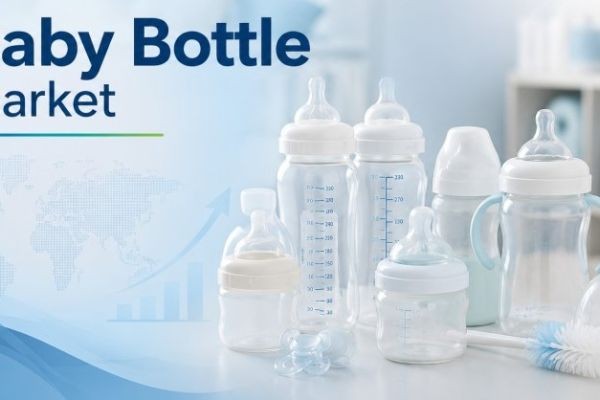
The global Baby Bottle Market is witnessing steady growth as rising birth rates in emerging economies, increasing parental focus on infant nutrition and feeding safety, and continuous innovation in baby care products support market expansion worldwide. Valued at USD 4.6 billion in 2025, the market is projected to reach USD 4.8 billion in 2026 and USD 7.2 billion by 2036, expanding at a CAGR of 4.1% during the forecast period. The industry is expected to create an incremental opportunity of approximately USD 2.4 billion between 2026 and 2036, reflecting sustained demand for premium feeding solutions across global consumer markets.
Growing investments in anti-colic feeding technologies, BPA-free materials, ergonomic bottle designs, and expanding e-commerce distribution continue to strengthen market growth. Manufacturers are simultaneously investing in product innovation, sustainable materials, and manufacturing efficiency to reinforce their competitive positioning across developed and emerging economies.
To access the complete data tables and in-depth insights — Request Your Sample Report Now https://www.futuremarketinsights.com/reports/sample/rep-gb-11104
Market Overview
The Baby Bottle Market comprises feeding bottles designed for infants and toddlers, including anti-colic baby bottles, standard bottles, wide-neck bottles, vented bottles, and disposable baby bottles manufactured using plastic, glass, silicone, stainless steel, and other advanced materials. Distribution spans supermarkets and hypermarkets, specialty baby stores, pharmacies, online platforms, and other retail channels.
Baby bottles remain an essential infant feeding product due to growing awareness regarding infant nutrition, increasing participation of working parents, and continuous product improvements focused on safety, convenience, and feeding comfort. Rising disposable incomes and premiumization trends in baby care products continue supporting long-term market expansion.
Technology & Innovation Trends
Innovation remains central to the baby bottle market as manufacturers introduce advanced anti-colic vent systems, improved nipple designs, leak-proof closures, ergonomic bottle shapes, and temperature-resistant materials that enhance infant feeding experiences.
Manufacturers are increasingly investing in BPA-free plastics, medical-grade silicone, borosilicate glass, recyclable materials, and eco-friendly packaging to address evolving consumer preferences for safe and sustainable baby products. Smart product development emphasizing sterilization compatibility, easy cleaning, and lightweight construction continues driving premium product adoption.
Digital commerce is also transforming purchasing behavior through direct-to-consumer channels, subscription services, personalized product recommendations, and online baby care platforms that improve convenience and customer loyalty.
Market Challenges & Restraints
Despite favorable growth prospects, manufacturers continue facing pressure from fluctuating raw material costs, particularly plastics, silicone, glass, stainless steel, and packaging materials. Rising production costs directly influence pricing strategies and operating margins.
Stringent global product safety regulations, certification requirements, and quality compliance standards further increase development and manufacturing costs. Additionally, intense competition among established global brands and regional manufacturers continues placing pressure on pricing, innovation cycles, and retail shelf space across mature markets.
Segment Analysis
- Product Type: Anti-Colic Baby Bottles are expected to dominate the market with 0% market share during the forecast period, driven by increasing consumer preference for products that minimize infant discomfort and improve feeding efficiency. Standard baby bottles continue maintaining significant market demand, while disposable and vented bottles offer niche growth opportunities.
- Material: Plastic baby bottles are projected to lead the market with 0% share, supported by lightweight construction, affordability, durability, and broad consumer acceptance. Glass and silicone bottles continue gaining popularity among health-conscious parents seeking premium and sustainable alternatives.
- Sales Channel: Supermarkets and hypermarkets are expected to account for 0% of market sales, benefiting from extensive product availability and strong retail penetration. Meanwhile, online sales continue expanding rapidly through e-commerce platforms, brand websites, and direct-to-consumer purchasing models.
- Capacity: Small-capacity baby bottles are projected to account for 0% of demand, supported by widespread usage among newborns and younger infants requiring smaller feeding volumes.
- End User: Infants will remain the primary end-user segment throughout the forecast period, supported by consistent global birth rates and increasing parental investment in high-quality infant feeding products.
Regional Analysis
Asia-Pacific is expected to remain the fastest-growing regional market throughout the forecast period.
China leads global expansion with a 7.5% CAGR, supported by expanding e-commerce infrastructure, rising disposable income, increasing demand for premium baby care products, and strong domestic manufacturing capabilities.
India follows with a 7.2% CAGR, driven by urbanization, organized retail expansion, growing online shopping adoption, government support for domestic manufacturing, and rising awareness regarding infant nutrition.
Among developed economies, Germany (6.3%), the United States (6.2%), and the United Kingdom (6.0%) continue demonstrating healthy growth through premium product adoption, evolving safety standards, and increasing demand for sustainable baby feeding solutions.
Competitive Landscape
The baby bottle market remains highly competitive, with multinational baby care companies, regional manufacturers, and specialty brands competing through product innovation, manufacturing capabilities, brand reputation, and extensive distribution networks.
Philips Avent maintains a leading market position through its broad product portfolio and global distribution network, while Dr. Brown's, Tommee Tippee, Munchkin, and Medela continue strengthening their presence through innovative feeding technologies, premium product offerings, and strategic regional expansion.
Advanced manufacturing capabilities, regulatory compliance expertise, established retail partnerships, and strong consumer trust remain significant competitive advantages across the industry.
Leading Companies Analysis
Leading manufacturers continue investing in advanced anti-colic technologies, sustainable materials, product safety enhancements, automation, and manufacturing optimization to improve product performance and operational efficiency.
During 2025, Philips Avent expanded its Anti-Colic Baby Bottle portfolio to address growing demand across China and North America. In 2026, Dr. Brown's announced additional manufacturing capacity investments focused on plastic bottle production to meet increasing demand across India and Europe.
Investment & Strategic Developments
Industry investments are increasingly focused on sustainable materials, advanced feeding technologies, manufacturing automation, premium product innovation, and digital retail expansion.
Growing investment in direct-to-consumer sales platforms, organized retail partnerships, eco-friendly product development, and regional manufacturing expansion continues creating attractive long-term opportunities for global manufacturers. Companies capable of balancing affordability, regulatory compliance, innovation, and sustainability are expected to strengthen their competitive position throughout the forecast period.
Future Outlook
The global baby bottle market is expected to witness steady long-term growth, driven by rising demand for safe, comfortable, and sustainable infant feeding products. Innovation in anti-colic technology, BPA-free and eco-friendly materials, ergonomic designs, and expanding e-commerce channels will continue shaping the market. Manufacturers focused on product quality, sustainability, and strong distribution networks are expected to benefit from growth opportunities through 2036.
Explore More Insights from the Consumer Product Industry Analysis
https://www.openpr.com/news/4494215/global-cloud-kitchen-market-set-to-reach-usd-286-3-billion
https://www.openpr.com/news/4494244/sports-and-athletic-insoles-market-to-reach-usd-8-4-billion
https://www.openpr.com/news/4494265/global-airport-retailing-market-set-for-strong-growth-by-2036
FMI Custom Research: Strategic Intelligence for Confident Decision-Making
In today’s rapidly evolving business environment, leadership teams need more than market data—they need clear, actionable intelligence tailored to their strategic objectives. FMI’s Custom Research solutions are designed around the specific business questions organizations need answered, enabling executives to evaluate growth opportunities, validate investments, assess competitive dynamics, and reduce uncertainty before making critical decisions. By combining deep industry expertise, primary research, and proprietary market intelligence, FMI delivers insights that help organizations move from assumptions to evidence-based strategies with greater speed and confidence.
Key Executive Benefits
- Decision-Ready Insights: Research tailored to your specific business challenges, growth plans, and investment priorities.
- Reduced Strategic Risk: Validate market opportunities, customer demand, and competitive positioning before committing resources.
- Market Entry Confidence: Assess opportunity size, regulatory barriers, channel dynamics, and competitive landscapes with precision.
- Competitive Advantage: Gain proprietary intelligence unavailable through syndicated reports or internal datasets.
- Faster Growth Decisions: Accelerate expansion, product development, portfolio optimization, and investment planning.
- Primary Market Validation: Access real-world customer, buyer, and stakeholder insights that support high-confidence decision-making.
- Global Industry Expertise: Powered by 100+ analysts, 20,000+ published reports, and 1.6 million+ hours of research experience.
- Proven Track Record: Over 7,000 market-entry engagements completed across six regions and 14 industry sectors with strong client retention.
Business Impact
FMI helps organizations transform market complexity into strategic clarity, enabling leadership teams to identify growth opportunities faster, optimize resource allocation, strengthen competitive positioning, and make high-stakes business decisions with confidence.
To explore how FMI Custom Research can support your strategic priorities, please connect with our team at – sales@futuremarketinsights.com
Contact Us:
Future Market Insights Inc.
Christiana Corporate, 200 Continental Drive,
Suite 401, Newark, Delaware – 19713, USA
T: +1-347-918-3531
For Sales Enquiries: sales@futuremarketinsights.com
Website: https://www.futuremarketinsights.com
LinkedIn| Twitter| Blogs | YouTube






