
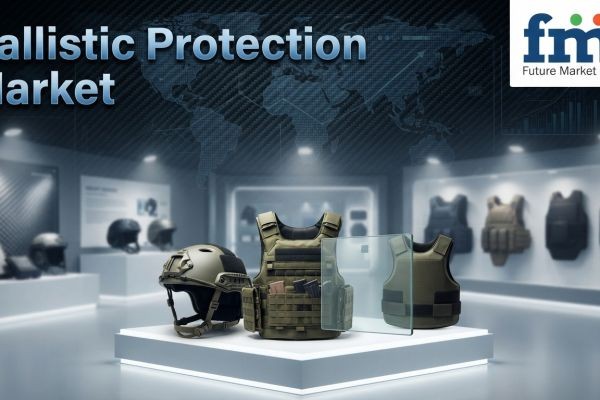
According to the latest market analysis by Future Market Insights, the global Ballistic Protection Market [https://www.futuremarketinsights.com/reports/ballistic-protection-market] is entering a sustained phase of expansion as governments increase defense spending, strengthen homeland security capabilities, and invest in next-generation protective equipment for military and law enforcement personnel. The market is valued at USD 17.11 billion in 2026 and is projected to reach USD 29.50 billion by 2036, expanding at a 5.60% CAGR during the forecast period. The industry generated an estimated USD 16.20 billion in 2025, reflecting steady momentum supported by procurement of advanced body armor, vehicle protection systems, and ballistic infrastructure solutions.
Increasing geopolitical uncertainty, asymmetric warfare, cross-border conflicts, and growing critical infrastructure protection initiatives are encouraging defense agencies to replace conventional armor with lightweight, multi-threat protection systems. Procurement is shifting toward integrated protection ecosystems that combine personal armor, vehicle armor, and structural ballistic solutions under unified contracts, creating new opportunities for manufacturers with diversified product portfolios.
Key Market Highlights at a Glance
- Market Size (2026): USD 17.11 Billion
- Forecast Market Value (2036): USD 29.50 Billion
- CAGR (2026–2036): 5.60%
- Base Year Market Size (2025): USD 16.20 Billion
- Absolute Dollar Opportunity: USD 12.39 Billion
- Leading Product Type: Personal Protection Equipment – 46.0% market share (2026)
- Leading Material Type: Composites – 31.0% market share (2026)
- Leading Technology: Hard Armor – 59.0% market share (2026)
- Fastest Growing Country: China – 7.6% CAGR
Why Is the Ballistic Protection Market Growing?
The ballistic protection market is witnessing sustained investment as governments modernize military forces and strengthen tactical capabilities for homeland security. Demand extends beyond traditional body armor to include armored vehicles, ballistic shields, protective helmets, bullet-resistant glass, and infrastructure protection systems.
Major procurement programs increasingly emphasize lightweight composite materials that improve mobility while maintaining higher levels of ballistic resistance. These innovations are reducing soldier fatigue, improving operational efficiency, and supporting long-duration missions.
Key growth drivers include:
- Rising global defense budgets supporting military modernization initiatives.
- Expansion of law enforcement tactical response programs requiring military-grade protection.
- Growing investment in ballistic protection for embassies, transportation hubs, and critical infrastructure.
- Increasing demand for integrated multi-threat protection systems.
- Continuous innovation in composite materials, ceramics, UHMWPE, and aramid-based armor technologies.
According to Nikhil Kaitwade, Principal Consultant – Chemicals & Materials at Future Market Insights, "The ballistic protection market is transitioning from individual equipment procurement to integrated protection ecosystems. Defense agencies increasingly prefer suppliers capable of delivering complete protection solutions across personal armor, vehicle systems, helmets, and structural protection under unified procurement contracts. Manufacturers with broad certification capabilities across both hard and soft armor technologies are expected to gain long-term competitive advantages."
Get detailed market forecasts, competitive benchmarking, and pricing trends: https://www.futuremarketinsights.com/reports/sample/rep-gb-23279
Which Product Segment Holds the Largest Market Share?
Personal Protection Equipment is expected to capture 46.0% of global revenue in 2026, making it the dominant product category.
Growing investment in soldier modernization programs and tactical police units has significantly increased procurement of ballistic vests, helmets, shields, and personal protective equipment. Urban warfare, counterterrorism operations, and border security missions require advanced protection without compromising mobility, encouraging adoption of lightweight modular armor systems.
Key product insights include:
- Personal Protection Equipment remains the largest revenue-generating category.
- Vehicle armor demand continues to grow through military fleet modernization.
- Structural ballistic protection is expanding across government facilities and transportation infrastructure.
Why Do Composite Materials Lead the Market?
Composites are projected to account for 31.0% of the material market in 2026, making them the preferred material platform for modern ballistic protection systems.
Advanced composite materials combine exceptional strength with significantly lower weight than conventional steel armor. High-performance aramid fibers, carbon fiber composites, and ultra-high molecular weight polyethylene (UHMWPE) improve protection while enhancing wearer comfort and operational endurance.
Material advantages include:
- Superior strength-to-weight ratio.
- Higher multi-hit resistance.
- Enhanced energy absorption.
- Improved corrosion resistance.
- Greater flexibility for personal and vehicle protection applications.
Hard Armor Continues to Dominate Technology Adoption
Hard armor is forecast to represent 59.0% of market revenue by 2026 owing to increasing deployment in high-risk military operations.
Ceramic strike plates, hybrid composite systems, and advanced trauma-reduction technologies continue improving ballistic performance against armor-piercing ammunition. Military modernization initiatives increasingly specify hard armor solutions capable of protecting personnel from evolving battlefield threats while maintaining operational mobility.
Market Dynamics Shaping Future Industry Growth
Market Driver
Global defense modernization remains the strongest catalyst for ballistic protection demand. Military organizations across NATO countries, Asia-Pacific, and emerging defense economies continue replacing legacy protective systems with advanced armor capable of addressing multiple threat environments. Procurement now extends beyond personnel to include armored vehicles, infrastructure protection, and mobile tactical systems.
Market Restraint
Despite strong demand, stringent certification requirements such as NIJ, STANAG, and VPAM standards increase product development costs and extend commercialization timelines. Export regulations, defense licensing restrictions, and high manufacturing costs also present barriers for new market entrants.
Market Trend
Manufacturers are increasingly developing integrated modular protection systems capable of combining hard and soft armor technologies with wearable electronics and communication platforms. Lightweight composite armor, ergonomic plate carriers, and scalable vehicle protection systems continue redefining procurement priorities.
Regional Outlook: Which Countries Are Driving Market Growth?
Country-wise forecast highlights include:
- China – 7.6% CAGR
- India – 7.0% CAGR
- Germany – 6.4% CAGR
- France – 5.9% CAGR
- United Kingdom – 5.3% CAGR
- United States – 4.8% CAGR
- Brazil – 4.2% CAGR
China remains the fastest-growing market as PLA modernization programs accelerate procurement of advanced body armor, ballistic shields, and protective vehicle systems while expanding domestic manufacturing capabilities.
India continues benefiting from Make in India defense initiatives, increasing procurement by the Indian Army and Central Armed Police Forces, alongside expanding indigenous armor manufacturing.
Germany's growth is supported by Bundeswehr modernization and NATO interoperability programs that prioritize advanced tactical armor and composite protection technologies.
France maintains consistent expansion through military equipment renewal initiatives, while the United Kingdom continues upgrading Future Soldier protective equipment programs emphasizing lightweight tactical gear.
Competitive Landscape
The ballistic protection industry remains highly competitive as manufacturers expand portfolios across personal protection, vehicle armor, structural systems, and advanced composite materials.
Leading companies include:
- BAE Systems – Integrated military armor systems and vehicle protection solutions.
- ADA – Lightweight tactical armor for defense and law enforcement.
- Armor Source – Advanced ballistic helmets.
- Armor Works – Multi-hit resistant body armor systems.
- Avon Technologies – Integrated ballistic and respiratory protection.
- MKU – Comprehensive helmets, shields, and vehicle armor.
- NP Aerospace – Modular armor solutions for tactical vehicles.
- Point Blank Enterprises – High-performance personal ballistic protection.
- Rheinmetall – Military armor technologies and vehicle protection.
- Revision Military – Lightweight advanced tactical protection systems.
- Seyntex – Ballistic protective textiles.
- Survitec Group – Protective solutions for defense and maritime sectors.
Competition is increasingly centered on integrated product portfolios, material innovation, certification capabilities, and long-term defense procurement partnerships rather than individual protective products.
Customize insights for your business strategy: https://www.futuremarketinsights.com/customization-available/rep-gb-23279
Frequently Asked Questions
What is the projected size of the Ballistic Protection Market?
The Ballistic Protection Market is projected to grow from USD 17.11 billion in 2026 to USD 29.50 billion by 2036.
What is the expected CAGR during the forecast period?
The market is forecast to expand at a 5.60% CAGR between 2026 and 2036.
Which product segment leads the Ballistic Protection Market?
Personal Protection Equipment leads the market with an expected 46.0% share in 2026.
Which material type dominates the industry?
Composite materials account for 31.0% of the market because of their superior strength-to-weight performance and enhanced ballistic resistance.
Which technology holds the largest market share?
Hard armor leads the technology segment with an estimated 59.0% market share in 2026.
Which country is expected to grow the fastest?
China is forecast to register the highest growth rate with a 7.6% CAGR through 2036.
FMI Custom Research: Strategic Intelligence for Confident Decision-Making
In today's rapidly evolving business environment, leadership teams need more than market data—they need clear, actionable intelligence tailored to their strategic objectives. FMI's Custom Research solutions are designed around the specific business questions organizations need answered, enabling executives to evaluate growth opportunities, validate investments, assess competitive dynamics, and reduce uncertainty before making critical decisions. By combining deep industry expertise, primary research, and proprietary market intelligence, FMI delivers insights that help organizations move from assumptions to evidence-based strategies with greater speed and confidence.
Key Executive Benefits
- Decision-Ready Insights: Research tailored to your specific business challenges, growth plans, and investment priorities.
- Reduced Strategic Risk: Validate market opportunities, customer demand, and competitive positioning before committing resources.
- Market Entry Confidence: Assess opportunity size, regulatory barriers, channel dynamics, and competitive landscapes with precision.
- Competitive Advantage: Gain proprietary intelligence unavailable through syndicated reports or internal datasets.
- Faster Growth Decisions: Accelerate expansion, product development, portfolio optimization, and investment planning.
- Primary Market Validation: Access real-world customer, buyer, and stakeholder insights that support high-confidence decision-making.
- Global Industry Expertise: Powered by 100+ analysts, 20,000+ published reports, and 1.6 million+ hours of research experience.
- Proven Track Record: Over 7,000 market-entry engagements completed across six regions and 14 industry sectors with strong client retention.
Business Impact
FMI helps organizations transform market complexity into strategic clarity, enabling leadership teams to identify growth opportunities faster, optimize resource allocation, strengthen competitive positioning, and make high-stakes business decisions with confidence.
Related Report:
https://www.newstrail.com/green-solvents-for-industrial-cleaning-market-poised-for-explosive-growth-to-1-69b-by-2036-fmi-report/
https://www.newstrail.com/green-chelating-agents-for-brownfield-redevelopment-market-to-reach-usd-839-million-by-2036-fmi-analysis/
https://www.newstrail.com/low-impact-textile-dye-fixing-agents-market-to-surpass-usd-1314-5-million-by-2036-fmi-report/
About Future Market Insights (FMI)
Future Market Insights (FMI) is a global market intelligence and consulting firm providing comprehensive market research, competitive intelligence, and strategic business insights across industries. The firm delivers detailed forecasts, technology analysis, and data-driven recommendations that support informed decision-making for manufacturers, investors, distributors, and policymakers worldwide.
For Press & Corporate Inquiries
Rahul Singh
AVP - Marketing and Growth Strategy
Future Market Insights, Inc.
+91 8600020075
For Sales - sales@futuremarketinsights.com
For Media - Rahul.singh@futuremarketinsights.com
For web - https://www.futuremarketinsights.com/ [https://pr.report/imhr]






