
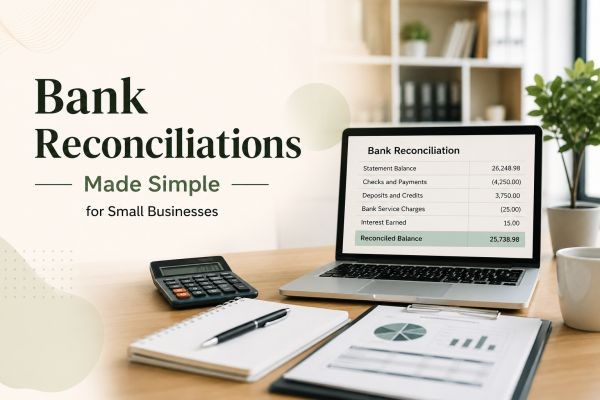
Managing business finances is about more than recording income and expenses. One of the most valuable financial habits any business owner can develop is performing regular bank reconciliations. While many entrepreneurs focus on sales and daily operations, overlooking this simple accounting process can lead to inaccurate records, cash flow confusion, and costly financial mistakes.
Whether you handle your own bookkeeping for small business operations or work with a professional bookkeeper, understanding how bank reconciliation works can save time, improve financial accuracy, and provide confidence when making business decisions.
What Is a Bank Reconciliation?
A bank reconciliation is the process of comparing the transactions recorded in your accounting records with the transactions listed on your bank statement. The goal is to confirm that every deposit, withdrawal, fee, payment, and transfer has been recorded correctly.
If the balances do not match, the reconciliation process helps identify why. Differences may result from outstanding checks, pending deposits, bank fees, duplicate entries, or recording errors.
Completing this process regularly helps ensure that your financial records accurately reflect your business's actual cash position.
Why Accurate Financial Records Matter
Many business owners only discover bookkeeping issues when preparing tax returns or applying for financing. By then, correcting months of inaccurate records can become stressful and time-consuming.
Regular reconciliations provide several important benefits:
- Detect recording mistakes before they become larger problems.
- Identify unauthorized transactions quickly.
- Maintain accurate cash balances.
- Improve budgeting and financial planning.
- Simplify tax preparation.
- Build confidence in financial reports.
Reliable financial information allows business owners to make informed decisions based on real numbers rather than estimates.
Common Problems That Bank Reconciliations Solve
Even businesses with steady revenue can experience financial confusion when accounts are not reconciled consistently.
Missing Transactions
Sometimes deposits or expenses are accidentally left out of accounting records. Missing transactions create inaccurate reports that may overstate or understate available cash.
Reconciling accounts each month helps identify these omissions before they affect financial planning.
Duplicate Entries
Entering the same payment twice is a common bookkeeping mistake. Duplicate transactions distort profit calculations and create unnecessary confusion.
Comparing accounting records with the bank statement quickly reveals duplicate entries so they can be corrected.
Bank Fees and Interest
Banks may charge monthly service fees or deposit interest that business owners forget to record.
Without reconciliation, these small transactions gradually create differences between accounting records and bank balances.
Outstanding Checks
Checks issued to vendors may not clear immediately. A reconciliation helps distinguish between outstanding payments and actual accounting errors.
This provides a more realistic picture of available cash.
Unauthorized Transactions
Unexpected withdrawals, fraudulent charges, or payment processing errors can occur without immediate notice.
Routine reconciliations allow businesses to detect suspicious activity sooner and report problems before additional losses occur.
How Often Should Businesses Reconcile Accounts?
For most small businesses, monthly reconciliation is the recommended standard because bank statements are typically issued every month.
However, businesses with high transaction volumes may benefit from weekly or even daily reconciliation to maintain better financial visibility.
More frequent reviews reduce the amount of work required each time while allowing issues to be resolved faster.
Simple Steps to Complete a Bank Reconciliation
The reconciliation process becomes much easier when completed consistently.
Gather Financial Records
Collect your latest bank statement along with your accounting records or bookkeeping software reports.
Having complete information prevents unnecessary delays during the review.
Compare Every Transaction
Review deposits, electronic payments, transfers, checks, debit card purchases, and bank fees.
Each transaction should appear in both the accounting records and the bank statement.
Investigate Differences
If balances do not match, look for:
- Data entry mistakes
- Missing receipts
- Duplicate transactions
- Outstanding payments
- Timing differences
- Bank service charges
Understanding the reason behind each difference is more important than simply adjusting numbers.
Make Necessary Adjustments
Once discrepancies are identified, update the accounting records where appropriate.
Avoid making unexplained adjustments simply to force balances to match.
Confirm the Final Balance
After all corrections are completed, your adjusted accounting balance should agree with the adjusted bank statement balance.
Keeping documentation of completed reconciliations also supports future audits and tax preparation.
Technology Makes Reconciliation Easier
Modern accounting software has significantly reduced the time required for reconciliations.
Many platforms automatically import bank transactions, categorize expenses, and match payments with accounting records.
Automation speeds up the process, but human review remains essential. Software cannot always recognize unusual transactions, duplicate entries, or recording mistakes.
A careful review helps ensure the information remains accurate.
Signs Your Business Needs Better Financial Monitoring
Many businesses delay reconciliations until problems become obvious.
Consider reviewing your financial process if you experience:
- Frequent cash shortages
- Unexplained account balance differences
- Difficulty preparing financial reports
- Missing expense records
- Delayed tax preparation
- Uncertainty about available cash
These issues often indicate that financial records need closer attention.
Best Practices for Maintaining Accurate Records
Strong bookkeeping habits make reconciliation faster and more reliable.
Useful practices include:
- Record transactions consistently.
- Save invoices and receipts digitally.
- Separate business and personal expenses.
- Review financial reports regularly.
- Reconcile accounts every month.
- Investigate discrepancies immediately.
- Maintain organized documentation.
Small improvements in financial organization often prevent larger accounting problems later.
How Better Bookkeeping Supports Business Growth
Accurate financial records provide more than compliance. They create a foundation for smarter business decisions.
Business owners with organized accounting records can monitor profitability, manage expenses, evaluate investments, prepare budgets, and respond more confidently to financial opportunities.
When reports reflect accurate bank balances, planning becomes easier because decisions are based on reliable financial data instead of assumptions.
Consistent bookkeeping also builds credibility with lenders, investors, and tax professionals who rely on accurate records when evaluating business performance.
Final Thoughts
Bank reconciliations are one of the simplest yet most effective ways to maintain accurate financial records. They help uncover errors, improve cash management, detect unusual activity, and support confident decision-making throughout the year.
For business owners focused on long-term success, making reconciliation a regular part of the financial routine is a practical investment. Combined with organized bookkeeping for small business operations, this habit creates dependable financial information that supports growth, reduces stress, and keeps the business prepared for future opportunities.






