
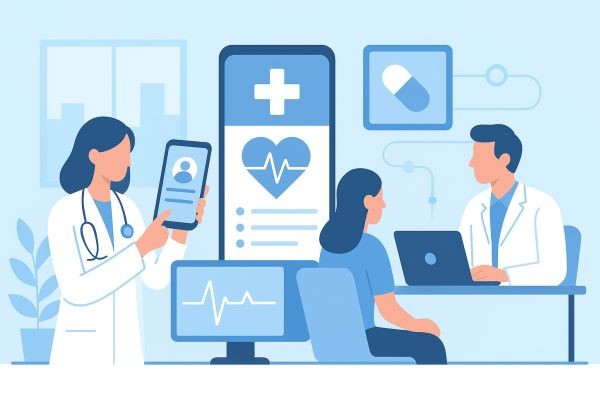
The healthcare industry is rapidly evolving with the integration of digital technologies. Modern hospitals are increasingly adopting mobile and web-based solutions to enhance patient care, streamline operations, and improve overall efficiency. One of the most significant technological advancements in recent years is app development in healthcare. From appointment scheduling to remote monitoring, healthcare applications are transforming the way hospitals operate and interact with patients.
In this article, we will explore the key benefits of app development in healthcare for modern hospitals and why investing in digital solutions is no longer optional but essential.
Improved Patient Engagement and Experience
One of the biggest advantages of healthcare apps is enhanced patient engagement. Modern hospitals are focusing more on patient-centered care, and mobile apps play a crucial role in achieving this goal. Through dedicated hospital apps, patients can book appointments, access medical records, receive test results, and communicate directly with doctors.
These features reduce waiting times and eliminate the need for multiple hospital visits. Patients feel more informed and empowered when they can easily track their health data. Push notifications for medication reminders, follow-up appointments, and health tips further improve treatment adherence and patient satisfaction.
By offering convenience and transparency, healthcare apps strengthen the relationship between hospitals and patients, leading to higher trust and loyalty.
Streamlined Operations Through Healthcare App Development
Hospitals manage a vast amount of data and administrative tasks every day. Efficient healthcare app development helps automate many of these processes, reducing manual errors and saving time. From patient registration and billing to staff scheduling and inventory management, digital solutions simplify complex workflows.
For example, integrated hospital management apps allow doctors and nurses to access real-time patient records, lab reports, and treatment histories. This minimizes paperwork and improves coordination between departments. Administrative staff can also manage appointments and billing more effectively, reducing delays and improving revenue cycles.
Automation not only increases efficiency but also lowers operational costs. Hospitals can allocate resources more effectively and focus more on delivering quality care rather than handling repetitive administrative tasks.
Visit More Information: https://asthatechnologies.org/healthcare-app-development-company/
Enhanced Data Management and Security
Data is one of the most valuable assets in the healthcare sector. Hospitals handle sensitive patient information that must be stored and managed securely. Healthcare apps are designed with advanced encryption and security protocols to protect medical data from breaches.
Digital systems also make it easier to organize and retrieve patient records. Electronic Health Records (EHR) integrated within hospital apps ensure that medical history, prescriptions, diagnostic reports, and treatment plans are accessible in one place. This improves accuracy in diagnosis and reduces the risk of medical errors.
Moreover, secure cloud-based solutions enable hospitals to back up data regularly, ensuring business continuity even in case of system failures or disasters.
Better Communication and Collaboration
Effective communication is vital in hospital environments where timely decisions can save lives. Healthcare apps facilitate seamless communication between doctors, nurses, lab technicians, and administrative staff.
Internal messaging systems, real-time updates, and shared dashboards help medical teams collaborate more efficiently. For example, when lab results are uploaded to the system, doctors receive instant notifications. This reduces delays in treatment and enhances patient outcomes.
Additionally, telemedicine features integrated into hospital apps allow remote consultations. Patients can connect with specialists through video calls, reducing travel time and making healthcare more accessible, especially in rural or underserved areas.
Remote Monitoring and Chronic Disease Management
Modern hospitals are increasingly adopting remote patient monitoring solutions. Healthcare apps connected to wearable devices can track vital signs such as heart rate, blood pressure, glucose levels, and oxygen saturation in real time.
This is particularly beneficial for patients with chronic conditions like diabetes, hypertension, or heart disease. Doctors can monitor patient health remotely and intervene promptly if abnormal readings are detected. Early intervention helps prevent complications and reduces hospital readmissions.
Remote monitoring not only improves patient outcomes but also optimizes hospital resources by reducing the burden on inpatient facilities.
Cost Reduction and Increased Efficiency
Cost management is a major concern for modern hospitals. Implementing healthcare apps can significantly reduce operational expenses. Digital appointment scheduling decreases no-shows and improves time management. Automated billing systems reduce administrative workload and errors.
Paperless systems also save costs related to printing, storage, and documentation. Furthermore, efficient resource management ensures that hospital staff and equipment are utilized optimally.
By improving workflow efficiency and minimizing waste, app development in healthcare contributes to better financial performance for hospitals while maintaining high standards of care.
Data-Driven Decision Making
Healthcare apps generate valuable insights through analytics and reporting tools. Hospitals can analyze patient trends, treatment outcomes, staff performance, and operational metrics.
These insights enable hospital management to make informed decisions. For instance, data analysis can identify peak hours for patient visits, helping administrators allocate staff accordingly. It can also highlight common health issues in specific regions, allowing hospitals to plan targeted awareness programs.
Data-driven strategies enhance overall hospital performance and improve long-term planning.
Competitive Advantage in the Healthcare Industry
In today’s digital era, patients expect convenience and fast service. Hospitals that invest in healthcare apps gain a competitive edge over those relying solely on traditional systems.
A well-designed mobile app enhances brand reputation and positions the hospital as technologically advanced and patient-focused. Positive user experiences lead to better reviews and word-of-mouth recommendations, attracting more patients.
Moreover, digital transformation helps hospitals stay compliant with evolving healthcare regulations and standards, ensuring sustainable growth in a competitive market.
Conclusion
App development in healthcare is revolutionizing the way modern hospitals function. From improving patient engagement and streamlining operations to enhancing data security and enabling remote monitoring, healthcare apps offer numerous benefits.
Hospitals that embrace digital solutions can deliver better patient care, reduce operational costs, and achieve long-term success. As technology continues to advance, investing in healthcare app development will become even more critical for hospitals aiming to stay ahead in the industry.
Just as businesses in other sectors rely on digital transformation-whether through healthcare platforms or services offered by a real estate app development company - hospitals must recognize the power of mobile technology to drive innovation and efficiency. Embracing app development today ensures a smarter, more connected, and patient-centric healthcare system for the future.






