
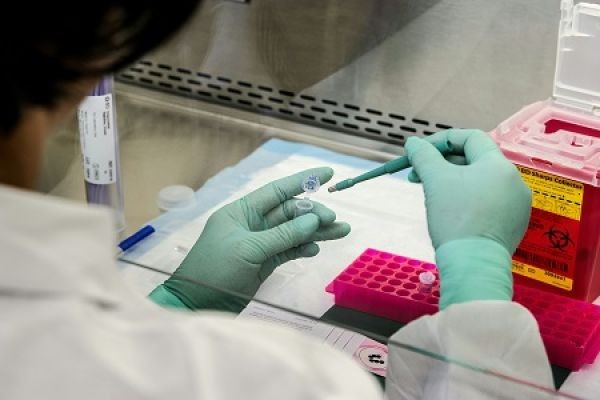
Exosomes have captured the spotlight in biomedicine and are actively being explored for targeted delivery, biomarker discovery, and regenerative medicine research. Their potential seems limitless, fueling a surge of investment and publication. Yet, beneath this wave of enthusiasm lies a persistent and growing undertow: a reproducibility crisis that threatens to derail progress and squander this potential. A troubling number of promising exosome studies fail to translate or be replicated in other labs, not due to flawed hypotheses, but because of a fundamental flaw in the experimental foundation—the use of inconsistent, poorly characterized exosome preparations. This article argues that to move beyond the hype and salvage the promise, the field must confront this crisis head-on by aligning with community-accepted rigor and reporting expectations (e.g., MISEV-guided characterization and batch documentation) and sourcing well-characterized, consistent exosome/EV preparations.
The Problem: Anatomy of a Reproducibility Crisis in Exosome Science
This reproducibility crisis is not an abstract concern but a tangible, costly problem with a clear origin. At its core is the "variable input problem." Much of today's foundational research relies on exosome preparations that are essentially black boxes—their exact size distribution, purity, surface markers, and functional cargo are often unknown or unreported. When one lab's "exosomes" differ fundamentally from another's due to uncontrolled isolation methods or source material variability, comparing results becomes impossible. The consequences are severe: it leads to wasted resources as months of work based on irreproducible materials must be discarded, stalled translation as promising findings cannot be reliably advanced to preclinical development, and a gradual erosion of trust within the scientific community. This crisis stems from a field evolving faster than its quality standards, where the urgency to discover has at times outpaced the discipline to characterize.
The Solution: Research-Grade Exosomes as the New Standard for Rigor
To overcome this crisis, the field must undergo a fundamental paradigm shift—from treating exosomes as a vaguely defined biological byproduct to recognizing them as a biologically derived reagent that must be consistently produced, well-characterized, and transparently documented. This shift is embodied by Research-Grade Exosomes. They are not merely a higher-priced commodity; they represent a higher bar for consistency and documentation that helps solve the variable input problem through four critical pillars:
Pillar 1: Defined Identity (Ending the "Black Box"). Well-characterized exosome/EV preparations reduce ambiguity by providing defined readouts (size/concentration, morphology, marker profile, and key contaminants), enabling more comparable and reproducible experiments. They can be rigorously characterized using Nanoparticle Tracking Analysis (NTA) for size and concentration, Transmission Electron Microscopy (TEM) for morphology, and immunoblotting (and, where appropriate, bead-based or high-sensitivity flow cytometry) to profile EV-enriched markers (e.g., CD9/CD63/CD81) together with selected negative/contaminant markers to assess co-isolated cellular components. This approach provides a better-defined and well-documented identity.
Pillar 2: Standardized Production (Ensuring Consistency). Reproducibility begins with the process. From a defined cellular source—whether it's Human Umbilical Cord MSCs for regenerative studies or SD Rat Bone Marrow MSCs for disease modeling—to a consistent, optimized isolation protocol, every step is controlled. This improves batch-to-batch consistency by controlling critical variables (cell source, culture conditions, harvest window, and isolation workflow) and verifying each batch against predefined acceptance criteria.
Pillar 3: Functional Transparency (Linking Structure to Action). Beyond physical traits, research-grade standards require evidence of biological relevance. This includes fit-for-purpose functional assays aligned to the intended application (e.g., uptake as a supportive readout, and potency-relevant assays when needed). Optional cargo profiling (including RNA/miRNA) can be used for deeper mechanistic studies rather than as a universal release criterion.
Pillar 4: Full Traceability (Building a Chain of Trust). The cornerstone is the comprehensive Certificate of Analysis (CoA). A batch-specific CoA should typically report particle concentration and size distribution, protein concentration, key marker results, and application-relevant safety/contamination metrics (e.g., endotoxin; sterility/bioburden or mycoplasma where applicable), plus the isolation method and storage/handling conditions.
This multi-faceted approach transforms exosomes from a source of experimental noise into a reliable, foundational tool.
Implementation: Putting the Solution into Practice
Embracing research-grade exosomes requires moving from principle to practice. Researchers, as the end-users, hold the key by demanding this higher standard and making informed sourcing decisions. Here is a practical framework for implementation:
Demand the Data as a Non-Negotiable First Step: The initial filter for any supplier should be their willingness and ability to provide a comprehensive, batch-specific Certificate of Analysis (CoA) before purchase. This document is your primary assurance of quality.
Scrutinize the Source and Method: Move past generic claims. A credible provider will be transparent about the exact origin of the exosomes (e.g., specific cell type and donor/lot information and, where applicable, passage number) and the isolation methodology used (e.g., ultracentrifugation, size-exclusion chromatography). Consistency in process is the only path to consistency in product.
Match the Source to Your Biological Question: The source of the exosomes should be strategically selected to enhance the relevance of your research. For instance, studies focused on immunomodulation might logically utilize exosomes derived from Bovine White Blood Cells, while work on metabolic or inflammatory models may benefit from exosomes sourced from adipose-derived MSCs in specific animal models. This alignment adds a crucial layer of biological validity.
Reframe the Investment: View the procurement of research-grade materials not as a simple line-item cost, but as a strategic form of risk mitigation. It is an upfront investment that protects the far greater value of your research time, funding, and credibility. It ensures that a failed experiment is due to a failed hypothesis, not a failed reagent.
Adopting this framework shifts the responsibility for quality upstream in the research chain. By setting a higher bar for starting materials, scientists can drastically reduce downstream variability and build a more robust and credible body of evidence.
Product Reference: Examples of Sourcing by Application
To illustrate how source selection aligns with research goals, consider these specific research-grade examples:
Human Disease Modeling & Regenerative Medicine:
Human Umbilical Cord Mesenchymal Stem Cell Derived Exosomes
Comparative & Veterinary Studies:
Bovine Umbilical Cord Mesenchymal Stem Cell Derived Exosomes
Immunology & Inflammation Research:
Bovine White Blood Cell Derived Exosomes
Microbiome & Gut-Brain Axis Research:
BEVs/OMVs from a defined probiotic strain blend
Conclusion: Building a Credible Future
The path for exosome science to fulfill its transformative potential is now clear. Overcoming the reproducibility crisis is not a peripheral concern but the central challenge that will determine the field's credibility and success. By universally adopting Research-Grade Exosomes as the foundational standard—prioritizing defined identity, standardized production, and full traceability—the scientific community can replace noise with signal and uncertainty with reliability. This commitment moves the field beyond the cycle of hype and disappointment, enabling the construction of a robust, trustworthy knowledge base. It is the essential first step in translating extraordinary promise into tangible, life-changing therapies that can stand the test of rigorous science and real-world application.






