
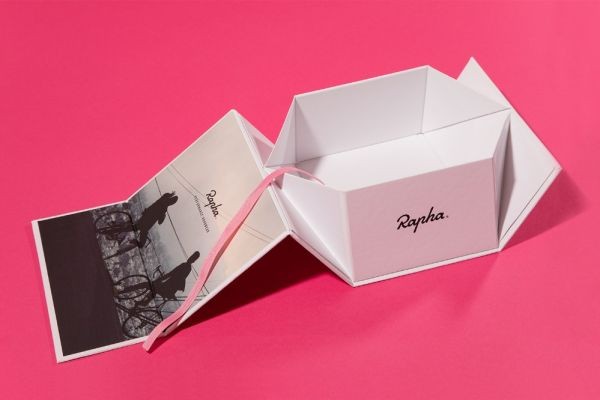
People who own businesses often ask me about how to package things they should order at one time. Should they buy a lot of packaging solutions at once or just get a few at a time? The answer is not the same, for everyone. I want to talk about the important things that people should think about when making this decision.
I have seen businesses succeed by ordering packaging in large quantities, while others have achieved great results with smaller orders. I have also seen companies wish they had made a different decision. The right order quantity depends on your budget, business goals, and demand. When investing in Rigid Boxes, choosing the right quantity can help maximize value and reduce unnecessary costs.
Understanding the Cost Structure of Rigid Boxes
First, let's talk numbers. Everyone knows that bulk orders typically offer better per-unit pricing. That's just economics. When you order thousands of units at once, suppliers can streamline their production, reduce their overhead per box, and pass some of those savings to you.
But here's what many people miss: those savings only matter if you can actually use the product before it becomes obsolete. If you store 5,000 boxes in a warehouse for two years while your design aesthetics evolve or your brand identity shifts, you've essentially bought at a loss. You're paying warehousing costs, occupying valuable space, and potentially dealing with boxes that no longer fit your brand.
Small orders, conversely, come with higher per-unit costs. You're not getting that volume discount. But you're also not locked into inventory that might not serve you six months from now. It's the classic trade-off between immediate cost savings and flexibility.
The Cash Flow Consideration Nobody Talks About
Here's something critical that often gets overlooked: cash flow. Bulk orders require significant upfront capital. If you're a growing business with limited funds, committing thousands of dollars to packaging might not be realistic, even if the per-unit price is attractive.
Small orders, on the other hand, let you spread your spending across multiple purchases. This is especially valuable when you're still testing market demand, experimenting with packaging designs, or scaling gradually. You can adjust your order frequency based on actual sales rather than predictions.
I worked with a specialty coffee brand that initially wanted to order 10,000 custom rigid boxes based on projections. After I suggested starting with 2,000 units, they discovered that their actual sales trajectory was 30% lower than expected. Had they committed to that bulk order, they'd be sitting on thousands of unused boxes today.
When Bulk Orders Actually Make Sense
That said, there are clear scenarios where bulk ordering is the smart play. If you're an established brand with proven, consistent demand, bulk orders make financial sense. The per-unit savings add up significantly when you're turning inventory regularly.
Rigid Boxes in bulk also make sense if you have reliable storage solutions. If you've got climate-controlled warehouse space and the ability to manage large inventory efficiently, the lower cost per unit becomes a genuine business advantage.
Additionally, bulk orders are ideal when you're confident in your brand design and don't anticipate major changes. If your packaging has been tested, validated, and aligned with your long-term brand strategy, committing to volume makes sense. Regal Boxes often work with established brands that know exactly what they need and order accordingly.
Small Orders: The Flexibility Factor
For startups, new product launches, or businesses in transition, small orders offer something equally valuable: control and flexibility. You can test packaging designs with real customers, gather feedback, and adjust before committing to thousands of units.
This approach also makes sense if you're experimenting with different product lines or packaging variations. Maybe you want to test whether your premium line customers prefer a matte finish or glossy coating. With small orders, you can actually run that experiment without financial risk.
Small orders of Rigid Boxes also work well for seasonal businesses or those with fluctuating demand. If you run a company with peak seasons followed by slower periods, ordering smaller quantities aligned with those seasons keeps you agile and prevents wasteful overstock.
The Hidden Costs You Need to Consider
When you are thinking about buying things in bulk or, in amounts do not just think about the price of one thing. You should also think about how much it costs to store the things, how to get them from one place to another if the things are always of the same quality and the cost of money that is being used to buy the things that are just sitting there.
Bulk orders mean higher shipping costs in absolute terms, but lower per-unit shipping. However, you need the warehouse infrastructure to justify it. Small orders ship frequently, which increases your per-unit shipping cost but keeps inventory fresh and reduces storage needs.
There's also the quality consideration. When Regal Boxes produce a large order, they can often maintain more consistent quality since they're running a single production batch. Smaller orders across multiple time periods might have slight variations in color or finish as batches change.
Finding Your Sweet Spot
The best order quantity is usually somewhere, in the middle. A lot of businesses that are getting bigger find that ordering around 3,000 to 5,000 units is just right. This is because it is an order to get a good price but small enough to be flexible and manage money well.
Packaging suppliers typically set minimum order quantities, but experienced providers understand that every business has unique requirements. By working with a trusted manufacturer, you can find flexible solutions that align with your budget, production goals, and packaging needs while ensuring high-quality Rigid Boxes for your products.
Growth Stage Matters
Your business stage should heavily influence this decision. Early-stage businesses should prioritize small orders and learning. You need feedback and flexibility more than you need unit cost savings. As you scale and your demand stabilizes, gradually increase order sizes.
Established businesses with predictable demand can absolutely justify bulk orders. At that point, the per-unit savings on packaging compounds significantly across your annual spending.
The Brand Perspective
There's also a brand perception angle. Frequent small orders mean your packaging stays current with your brand evolution. Large bulk orders lock you into a design for extended periods, which can feel dated if you're operating in a fast-moving industry.
This is where companies like Regal Boxes really show what they can do. They help you think about how things you need to order and how that fits with your brand and where you are in the market.
Practical Recommendations
If you are not sure what to do, start with an order. Get 1,000 to 2,000 units of Regal Boxes. See how fast you use them. Look at how you use Regal Boxes over three months. This way you get to know what is really happening by just guessing. Once you understand how Regal Boxes you use you can make a good decision about ordering more Regal Boxes.
Also try to get to know the people who supply your Regal Boxes. Build a relationship with the packaging suppliers of Regal Boxes. Negotiate flexible terms that reward loyalty even on smaller orders. Many providers offer tiered pricing that improves as your cumulative annual volume increases, even if individual orders aren't massive.
Conclusion
The question of whether to buy in bulk or in amounts does not have an answer that works for everyone. It really depends on how much money you have if you can predict how much of something you will sell, how much space you have to store things, what your company needs to grow and what stage your business is at. Big companies that sell an amount of stuff usually do well when they buy Rigid Boxes in bulk but new companies need to be able to get smaller shipments so they can try things out.
The best thing to do is to start with orders, figure out what you really need, get to know some good companies that make packaging and then increase your orders in a smart way. Whether you end up buying in bulk or sticking with shipments you should make your decision based on what is really going on with your business not just because someone told you to do it that way. That is how you can really get the most out of the money you spend on packaging and help your business grow in a way that's good, for everyone.






