
Introduction
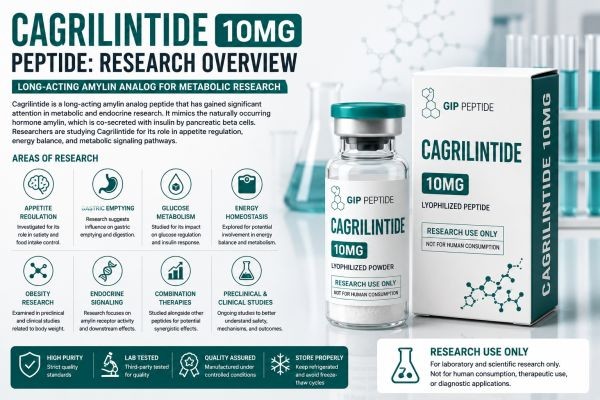
Cagrilintide 10mg is an investigational synthetic peptide that has become an important subject of metabolic research. It is a long-acting amylin analog designed to activate amylin receptor pathways involved in satiety signaling, gastric emptying, and metabolic regulation. Unlike GLP-1 receptor agonists, Cagrilintide primarily targets the amylin receptor system, making it a distinct research compound for studying metabolic physiology.
The 10mg presentation is commonly used in laboratory research requiring standardized quantities of peptide material for metabolic and endocrine investigations. This article provides an educational overview of Cagrilintide 10mg, its scientific background, laboratory applications, handling practices, and quality considerations.
What Is Cagrilintide?
Cagrilintide is a synthetic peptide developed as a long-acting analog of amylin, a naturally occurring peptide hormone that is co-secreted with insulin by pancreatic beta cells. Structural modifications extend its activity compared with native amylin, allowing researchers to investigate prolonged amylin receptor signaling in experimental models.
Researchers continue studying Cagrilintide to better understand the biological role of amylin and its interaction with metabolic signaling pathways.
Why Researchers Study Cagrilintide
Scientific interest in Cagrilintide continues to grow because amylin signaling complements—but is distinct from—GLP-1 biology.
Current research areas include:
-
Amylin receptor pharmacology
-
Metabolic biology
-
Appetite and satiety signaling
-
Gastric emptying research
-
Glucose regulation
-
Endocrine physiology
-
Combination metabolic research
-
Peptide pharmacology
These investigations improve scientific understanding of metabolic pathways and should not be interpreted as evidence of approved therapeutic applications.
Mechanism of Scientific Interest
Cagrilintide is investigated because it activates pathways associated with amylin signaling.
Amylin Receptor Activity
Researchers study amylin receptors to better understand their role in appetite regulation, meal termination, and nutrient-related signaling.
Gastric Physiology
Experimental studies examine how amylin signaling influences gastric emptying and digestive physiology under controlled laboratory conditions.
Combination Research
Cagrilintide is also investigated alongside GLP-1 receptor agonists to evaluate complementary metabolic pathways. Research combinations such as CagriSema continue to be studied in clinical development, although Cagrilintide itself remains investigational.
Laboratory Applications
Cagrilintide 10mg is commonly investigated in laboratory environments involving:
-
Cell culture research
-
Metabolic pathway studies
-
Endocrine research
-
Molecular biology
-
Receptor pharmacology
-
Experimental physiology
-
Peptide chemistry
-
Analytical research
Its activity within the amylin receptor system makes it a valuable investigational tool for studying metabolic regulation.
Laboratory Handling
Cagrilintide 10mg is generally supplied as a sterile lyophilized powder intended exclusively for laboratory research.
Good laboratory practices include:
-
Using sterile laboratory equipment
-
Working under aseptic conditions
-
Following manufacturer handling recommendations
-
Recording preparation dates and batch numbers
-
Clearly labeling research samples
-
Preventing contamination
-
Maintaining complete laboratory documentation
Preparation and handling should always follow institutional laboratory procedures.
Storage Recommendations
Proper storage supports peptide stability throughout laboratory investigations.
Researchers commonly:
-
Store unopened material according to the manufacturer's recommendations.
-
Protect samples from excessive heat, moisture, and direct light.
-
Clearly identify prepared materials.
-
Maintain documented storage conditions.
-
Minimize unnecessary freeze–thaw cycles where appropriate.
Consistent storage practices help support reproducible laboratory studies.
Quality Assurance
Reliable peptide research depends on comprehensive quality control.
Before beginning laboratory investigations, researchers commonly verify:
-
Product identity
-
Batch consistency
-
Purity documentation
-
Physical appearance
-
Certificate of Analysis (COA), when available
-
Storage and shipping records
These quality assurance procedures contribute to reliable scientific results.
Current Research Outlook
Cagrilintide remains an active area of metabolic research because it targets a different biological pathway than GLP-1 receptor agonists. Ongoing studies continue to investigate its role in amylin receptor biology, appetite signaling, and combination metabolic therapies. Additional clinical research is expected to improve understanding of its long-term biological effects and potential research applications.
Conclusion
Cagrilintide 10mg Peptide is an investigational long-acting amylin analog that plays an important role in metabolic and endocrine research. Its distinct mechanism of action has made it a valuable laboratory tool for scientists investigating appetite regulation, gastric physiology, and metabolic signaling.
As research into amylin biology continues to expand, Cagrilintide is expected to remain an important investigational compound for laboratories exploring the complex regulation of energy balance and metabolic function.






