
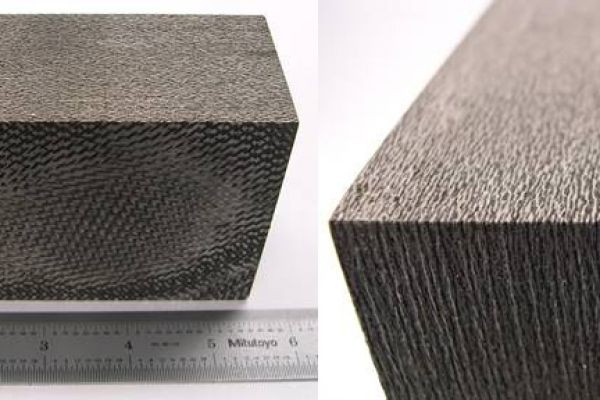
Market Overview:
According to IMARC Group's latest research publication, "Ceramic Matrix Composites Market: Global Industry Trends, Share, Size, Growth, Opportunity and Forecast 2026-2034", The global ceramic matrix composites market size was valued at USD 13.0 Billion in 2025. Looking forward, IMARC Group estimates the market to reach USD 26.2 Billion by 2034, exhibiting a CAGR of 8.14% during 2026-2034.
This detailed analysis primarily encompasses industry size, business trends, market share, key growth factors, and regional forecasts. The report offers a comprehensive overview and integrates research findings, market assessments, and data from different sources. It also includes pivotal market dynamics like drivers and challenges, while also highlighting growth opportunities, financial insights, technological improvements, emerging trends, and innovations. Besides this, the report provides regional market evaluation, along with a competitive landscape analysis.
How Ceramic Matrix Composites Are Redefining Performance at the Limits of Engineering
- Silicon Carbide Reinforced Silicon Carbide (SiC/SiC) composites, commanding a 35.2% share of the composite type segment, are enabling jet engines to operate at temperatures exceeding those tolerable by nickel-based superalloys, directly translating into reduced cooling requirements and improved thermal efficiency across commercial and military aviation.
- The GE LEAP engine, which integrates CMC components, runs hotter with less cooling and burns 15-20% less fuel compared to conventional designs, while the GE9X engine with five CMC parts is set to be the most fuel-efficient engine ever built for a wide-body commercial aircraft.
- In April 2025, Firefly Aerospace received a contract from the U.S. Air Force Research Laboratory to develop a CMC rocket engine nozzle extension, with the new material projected to reduce nozzle mass by over 50%, enhancing payload capacity and lowering production costs compared to traditional metal-based extensions.
- North America dominates the global market with a 42.8% share, underpinned by the U.S. Department of Defense, NASA, and major aerospace manufacturers directing sustained funding into CMC integration across turbine engines, hypersonic vehicles, and thermal protection systems.
- In February 2025, SRI developed scalable, infiltration-free carbon/carbon ceramic matrix composites under two U.S. Department of Energy projects, manufacturing CMCs in just 3 to 5 days with less than 5% shrinkage, under 10% porosity, and at half the cost of traditional composite manufacturing.
Download a sample PDF of this report: https://www.imarcgroup.com/ceramic-matrix-composites-market/requestsample
Key Trends in the Ceramic Matrix Composites Market
- SiC/SiC Composites Anchoring Aerospace Propulsion Innovation: Silicon carbide reinforced silicon carbide composites continue to set the benchmark for high-temperature performance in jet engine and gas turbine applications. Their unique combination of high-temperature resistance, mechanical strength, and thermal stability makes them ideal for turbine shrouds, combustor liners, and nozzle assemblies. Continuous fiber variants, which hold a commanding 69.4% share of the fiber type segment, further amplify performance by providing improved structural integrity, damage tolerance, and directional load-carrying capacity that is critical for aerospace propulsion systems operating under cyclic thermomechanical stress.
- Hypersonic and Defense Programs Creating Urgent Demand: The proliferation of hypersonic vehicle programs across the United States, Europe, and Asia Pacific is generating exceptional demand for CMCs capable of withstanding temperatures between 1,600 and 2,800 degrees Celsius at the nose cone and leading edges of Mach 5+ vehicles. Research and development into ultra-high temperature CMCs (UHTCMC) is actively targeting service temperatures as high as 3,500 degrees Celsius. Radar-transparent CMC radomes and thermal protection systems developed by firms such as FOX Composites are scheduled for hypersonic flight testing in 2026, signaling the rapid translation of laboratory advances into operational deployment.
- Clean Energy Applications Opening a New Growth Frontier: The global shift toward decarbonization is drawing CMC technology into renewable energy infrastructure at an accelerating pace. Concentrated solar power systems, high-efficiency combined cycle turbines, and emerging nuclear energy applications all require thermally resilient materials that CMCs are uniquely positioned to deliver. India's Solar Energy Corporation (SECI) announced plans in July 2024 to launch a 500-megawatt concentrated solar thermal tender, the country's largest such project, targeting regions including Andhra Pradesh, Gujarat, and Rajasthan, all of which represent high-value downstream application environments for advanced thermal materials including CMCs.
- Manufacturing Innovation Compressing Costs and Timelines: Traditional CMC manufacturing has historically been constrained by multi-cycle densification processes requiring months of production time. New approaches are fundamentally changing this equation. In February 2025, Tethon 3D acquired Technology Assessment and Transfer Inc. (TA&T), expanding its ceramic additive manufacturing capabilities and portfolio across aerospace, defense, and biomedical applications. Meanwhile, Arceon's melt infiltration process completes densification in a single one-week cycle at 1 to 3% porosity, compared to three to five cycles over two months for chemical vapor infiltration, directly improving scalability and cost competitiveness for commercial applications.
- SiC Fiber Reinforcement Solidifying Its Dominant Position: SiC fiber commands a 43.1% share of the fiber material segment owing to its high mechanical strength, thermal stability, and outstanding resistance to corrosion and oxidation. Its high modulus and thermal conductivity make it exceptionally suited for structural applications in turbine components, nuclear reactors, and high-efficiency industrial systems. As defense, aerospace, and clean energy sectors intensify innovation cycles, the applications for SiC fiber continue to diversify and expand, reinforcing its centrality to the broader ceramic matrix composites ecosystem.
We explore the factors propelling the ceramic matrix composites market growth, including technological advancements, consumer behaviors, and regulatory changes.
Growth Factors in the Ceramic Matrix Composites Market
- Aerospace Industry's Relentless Push for Fuel Efficiency: Airlines and aircraft manufacturers face intensifying regulatory pressure to reduce carbon emissions, with the United States targeting greenhouse gas reductions of 61 to 66% below 2005 levels by 2035. CMC adoption in turbine and exhaust components directly supports these objectives by enabling engines to operate at higher temperatures with less cooling, reducing fuel burn and maintenance intervals simultaneously. The substitution of heavier conventional alloys with CMCs in critical engine components is becoming standard practice among leading original equipment manufacturers, creating sustained and growing demand across the commercial aviation supply chain.
- Defense Modernization Programs Driving Strategic Material Investment: Governments across North America, Europe, and Asia Pacific are channeling substantial resources into next-generation defense capabilities, with CMCs identified as enabling materials for hypersonic missiles, advanced aircraft, and armor systems requiring superior thermal shock resistance and favorable strength-to-weight ratios. The U.S. Department of Defense and NASA have been major contributors to CMC development, funding research and qualification activities that accelerate both military and commercial applications. In March 2025, GE Aerospace announced over USD 1 billion in U.S. plant renovations including investment at its Asheville, North Carolina facility, a key CMC manufacturing hub, signaling long-term commitment to domestic production capacity.
- Nanotechnology and Advanced Processing Unlocking New Material Properties: The application of nanoscience to CMC development is enabling composite formulations with enhanced electrical conductivity and mechanical performance that were previously unattainable. Investment in additive manufacturing and automated fiber placement for CMC components is reducing reliance on skilled manual labor while improving dimensional precision and repeatability. The University of Bayreuth's FlexFiber project, running through 2026 and funded by the German Research Foundation, is advancing oxide CMC production using short fibers in a framework specifically designed to unlock scalable manufacturing for next-generation applications.
- Concentrated Solar and Power Generation Demand Sustaining Long-Term Growth: High-efficiency gas turbines operating at elevated temperatures for power generation increasingly incorporate CMC components to achieve performance targets and emission reduction goals. The transition to renewable energy infrastructure, particularly concentrated solar power installations utilizing CMC receiver systems, is expanding the addressable market for advanced composites well beyond traditional aerospace boundaries. SRI's collaboration with the U.S. Department of Energy's Solar Energy Technology Office to develop a CMC-based corrosion-resistant solar receiver capable of operating above 700 degrees Celsius represents a direct bridge between materials innovation and clean energy commercialization.
- eVTOL and Commercial Space Programs Expanding Application Horizons: The emergence of electric vertical takeoff and landing aircraft and the commercial space sector's rapid growth are creating new demand vectors for CMC applications outside traditional aerospace and defense. Reusable launch vehicles require robust CMC thermal protection systems capable of withstanding repeated high-heat reentry cycles, while eVTOL developers are evaluating lightweight CMC components for thermal management in battery enclosures and structural applications. These sectors are at relatively early stages of CMC adoption, representing significant upside for manufacturers positioned to qualify materials to the exacting standards of next-generation aviation and space systems.
Leading Companies Operating in the Global Ceramic Matrix Composites Industry:
- 3M Company
- Applied Thin Films Inc.
- Axiom Materials Inc.
- CeramTec GmbH
- COI Ceramics Inc.
- CoorsTek Inc.
- Lancer Systems LP
- SGL Carbon SE
- Specialty Materials Inc. (Global Materials LLC)
- Starfire Systems Inc.
- Ultramet
Ceramic Matrix Composites Market Report Segmentation:
Breakup By Composite Type:
- Silicon Carbide Reinforced Silicon Carbide (SIC/SIC)
- Carbon Reinforced Carbon (C/C)
- Oxide-Oxide (Ox/Ox)
- Others
Silicon carbide reinforced silicon carbide (SiC/SiC) accounts for the majority of shares on account of its exceptional high-temperature resistance, mechanical strength, and thermal stability, making it the material of choice for aerospace engines, turbine systems, and energy applications demanding both lightweight properties and extreme durability.
Breakup By Fiber Type:
- Short Fiber
- Continuous Fiber
Continuous fiber dominates the market due to its superior structural integrity, damage tolerance, and directional load-carrying capacity, making it essential for high-stress, high-temperature applications including aerospace propulsion systems, gas turbines, and automotive engine components where consistent mechanical response and fracture resistance are critical.
Breakup By Fiber Material:
- Alumina Fiber
- Refractory Ceramic Fiber (RCF)
- SiC Fiber
- Others
SiC fiber leads the market owing to its high mechanical strength, thermal stability, outstanding resistance to corrosion and oxidation, and superior performance in next-generation propulsion systems, nuclear reactors, and high-efficiency industrial applications where both stiffness and heat dissipation are simultaneously required.
Breakup By Application:
- Aerospace and Defense
- Automotive
- Energy and Power
- Electricals and Electronics
- Others
Aerospace and defense account for the majority of shares on account of the critical demand for composites capable of withstanding extreme temperatures, mechanical loads, and corrosive conditions in turbine blades, combustor liners, exhaust nozzles, thermal protection systems, hypersonic missile components, and defense armor applications.
Breakup By Region:
- North America (United States, Canada)
- Asia Pacific (China, Japan, India, South Korea, Australia, Indonesia, Others)
- Europe (Germany, France, United Kingdom, Italy, Spain, Russia, Others)
- Latin America (Brazil, Mexico, Others)
- Middle East and Africa
North America enjoys the leading position owing to a high concentration of aerospace manufacturers, defense contractors, and space exploration organizations, combined with substantial U.S. Department of Defense and NASA investment in CMC research and integration across turbine engines, hypersonic vehicles, and thermal protection systems.
Recent News and Developments in Ceramic Matrix Composites Market
- April 2025: Firefly Aerospace received a contract from the U.S. Air Force Research Laboratory for the development of a ceramic matrix composite rocket engine nozzle extension, with the material targeting a nozzle mass reduction of over 50%, enhancing payload capacity and lowering production costs compared to traditional metal-based designs.
- February 2025: Tethon 3D acquired Technology Assessment and Transfer Inc. (TA&T), enhancing its ceramic manufacturing capabilities across aerospace, defense, and biomedical sectors, expanding its CMC and additive manufacturing portfolio to strengthen its global market presence.
- February 2025: SRI developed scalable, infiltration-free carbon/carbon ceramic matrix composites under two U.S. Department of Energy projects, achieving CMC manufacturing in 3 to 5 days with less than 5% shrinkage, under 10% porosity, and at half the cost of conventional composites.
- March 2025: GE Aerospace announced over USD 1 billion in U.S. plant renovations, including investment at its Asheville, North Carolina facility, a key manufacturing hub for CMC components used in commercial and military jet engines.
- July 2024: India's Solar Energy Corporation (SECI) announced plans to launch a 500-megawatt concentrated solar thermal tender, the country's largest such project, identifying high-solar-radiation regions including Andhra Pradesh, Gujarat, and Rajasthan as candidate sites, driving downstream demand for thermally resilient materials including CMCs.
Note: If you require specific details, data, or insights that are not currently included in the scope of this report, we are happy to accommodate your request. As part of our customization service, we will gather and provide the additional information you need, tailored to your specific requirements. Please let us know your exact needs, and we will ensure the report is updated accordingly to meet your expectations.
About Us:
IMARC Group is a global management consulting firm that helps the world's most ambitious changemakers to create a lasting impact. The company provides a comprehensive suite of market entry and expansion services. IMARC offerings include thorough market assessment, feasibility studies, company incorporation assistance, factory setup support, regulatory approvals and licensing navigation, branding, marketing and sales strategies, competitive landscape and benchmarking analyses, pricing and cost research, and procurement research.
Contact Us:
IMARC Group
134 N 4th St. Brooklyn, NY 11249, USA
Email: sales@imarcgroup.com
Tel No: (D) +91 120 433 0800
United States: +1-201-971-6302






