
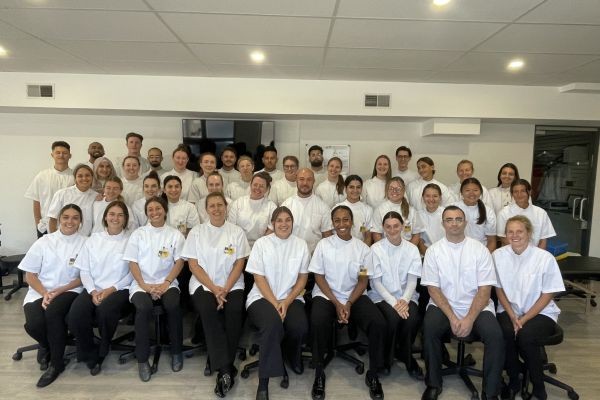
Osteopathy is one of the fastest-growing areas of manual healthcare in Canada. As more people seek hands-on, preventative approaches to health, demand for qualified osteopathic manual practitioners continues to rise — and with it, interest in training for this rewarding career. If you're researching an osteopathy school in Ontario or Alberta, this guide explains what quality programs involve, what to look for, and how to choose the right path for you.
What Is Manual Osteopathy?
Manual osteopathy is a hands-on healthcare discipline that focuses on the body's structure — muscles, joints, and connective tissue — and how it moves as an integrated whole. Rather than relying on medication, an osteopathic manual practitioner uses their hands to assess and treat structural dysfunction, supporting the body's natural ability to heal. It's a career that suits people who are curious about anatomy, enjoy problem-solving, and want to work closely with patients.
It's worth clarifying one point early: in Canada, osteopathy is practised as a manual therapy, and quality training leads to a diploma as an osteopathic manual practitioner — not a physician's medical degree. That's a different profession from the "Doctor of Osteopathic Medicine (DO)" pathway found in the United States.
Why Study Osteopathy in Ontario or Alberta?
Ontario and Alberta are two of Canada's strongest markets for osteopathic care, home to established clinics, a growing client base, and recognized training options. Choosing a school in one of these provinces means you can train close to where you intend to practise, build local professional connections, and complete the hands-on clinical experience that competent osteopathy demands. Whether you're drawn to an osteopathy school in Alberta or Ontario, studying in-province gives you a real advantage when launching your career.
What to Look for in the Best Osteopathy School in Ontario
Not all programs are created equal. When comparing options for osteopath education in Ontario, use these criteria to identify a serious, career-ready school:
- Accreditation and a certification pathway. Look for programs accredited by a recognized body such as Osteopathy Canada (OSTCAN), which prepares graduates to write the OSTCAN Certification Examination (OCE). Certification leads to insurance recognition and qualifies graduates to practise.
- Substantial hands-on clinical training. The best schools put students in a supervised teaching clinic with real patients — not just a classroom.
- A principles-based curriculum. Training that teaches clinical reasoning and biomechanics (the "why" behind techniques) produces more capable practitioners than one built on memorized protocols.
- Experienced faculty. Working osteopaths and instructors with advanced clinical and academic credentials.
- Flexible entry pathways. Good schools welcome both health-background applicants and career changers.
When people search for the best osteopathy school in Ontario, these are the factors that genuinely separate a strong program from a weak one.
Inside a Quality Osteopathy Program: Courses and Hours
A comprehensive Manual Osteopathy Program in Ontario is demanding — because the work itself carries real clinical responsibility. Strong osteopathic programs in Ontario blend deep theory with extensive supervised practice.
As a representative example, the osteopathy program curriculum at the Canadian Academy of Osteopathy includes:
- Over 4,200 total curriculum hours covering osteopathic principles, functional anatomy and physiology, and manual technique
- More than 1,500 hours of hands-on training, including 1,000 hours of supervised clinical experience
- Program-length options — a four-year graduate-level path, with a three-year option available at the Hamilton campus
- Multiple entry routes — direct entry for applicants with a Kinesiology, RMT, health science, or health-care background, plus preparatory pathways for university and college graduates and adult learners
These are the kinds of osteopath courses in Ontario that prepare graduates to confidently treat complex patient issues after graduation — and the depth of clinical hours is one of the clearest markers of a quality program.
Studying Osteopathy in Hamilton, Ontario
For many students, location is a deciding factor. An osteopathy school in Hamilton offers access to a major healthcare hub within easy reach of the wider Greater Toronto and Hamilton Area. The osteopathy school in Hamilton run by the Canadian Academy of Osteopathy, for instance, offers both the three-year and four-year program options along with an on-site teaching clinic — giving Hamilton-area students a strong local base to train and eventually practise.
Earning Your Diploma in Osteopathy in Ontario
The standard entry-to-practice credential in Canada is a diploma in osteopathic manual practice, sometimes referred to as a Diploma in Manual Osteopathy. Earning a Diploma in Osteopathy in Ontario through an accredited program is what qualifies you to sit your certification exam, gain insurance recognition, and begin treating patients. When comparing osteopath programs in Ontario, always confirm that the diploma leads to a recognized certification pathway rather than being a stand-alone certificate with no professional standing.
Osteopathy Training in Alberta
Alberta students have strong options too. A quality osteopathy school in Alberta — such as the Canadian Academy of Osteopathy's Calgary campus — delivers the same rigorous, hands-on training available in Ontario, so you can build your career in Calgary and the surrounding region. As with any program, prioritize accreditation, supervised clinical hours, and a principles-based curriculum.
Is Osteopathy the Right Career for You?
A career in osteopathy suits people who want hands-on, one-on-one patient care, are fascinated by how the body works, and value preventative, non-invasive approaches to health. If that sounds like you, the path forward is straightforward: research accredited schools, confirm the prerequisites, and reach out to admissions with your questions. To understand the full journey, this overview of how to become an osteopath in Canada is a helpful starting point.
Choosing where to train is one of the most important decisions you'll make as a future practitioner. Take the time to compare programs carefully — on accreditation, clinical depth, faculty, and location — and you'll be well positioned to build a rewarding career in manual osteopathy.






