
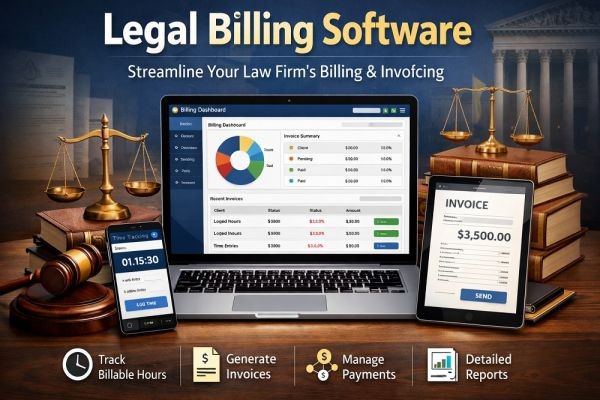
Growth is an exciting milestone for any law firm—but it also brings operational pressure. As client volumes increase, matters become more complex, and teams expand, billing processes that once “worked well enough” can quickly become bottlenecks. Choosing the right Legal billing software is not just a technology decision; it's a strategic investment in your firm's future.
This guide explores how growing firms can evaluate and select scalable legal billing software that supports long-term success without disrupting daily operations.
Why Scalability Matters in Legal Billing Software
Many firms start with basic invoicing tools or spreadsheets. These may suffice for a small practice, but they rarely scale. As firms grow, they face challenges such as:
-
Managing higher invoice volumes
-
Supporting multiple billing models (hourly, flat fee, contingent)
-
Ensuring compliance with client billing guidelines
-
Integrating billing with accounting and practice management systems
Scalable Legal billing software is designed to grow with your firm—handling increased data, users, and complexity without sacrificing performance or accuracy.
Key Features to Look for in Scalable Legal Billing Software
1. Flexible Billing Structures
Growing firms often diversify their client base. Look for software that supports:
-
Multiple fee arrangements
-
Custom billing rules by client or matter
-
LEDES and other e-billing formats
Real-world example: A mid-sized litigation firm expanding into corporate advisory work may need both hourly billing and flat-fee invoicing. Scalable software allows these models to coexist seamlessly.
2. Automation That Reduces Administrative Load
As invoice volume grows, manual processes become risky and ineffective. Strong legal billing software should automate:
-
Time capture and expense tracking
-
Invoice generation and approvals
-
Payment reminders and trust accounting workflows
Automation not only saves time but also reduces billing errors—one of the most common sources of client dissatisfaction.
3. Integration with Existing Legal Tech
Scalability isn't just about size—it's about ecosystem compatibility. Your legal billing software should integrate smoothly with:
-
Practice management systems
-
Accounting software
-
Document management tools
This ensures data consistency and eliminates duplicate entry. According to guidance frequently shared by the American Bar Association , firms that integrate billing with broader practice systems see higher financial transparency and stronger client trust.
Security, Compliance, and Client Trust
As firms grow, so does their responsibility to protect sensitive financial and client data. Scalable Legal billing software should include:
-
Role-based user permissions
-
Audit trails and reporting
-
Compliance with trust accounting and jurisdictional requirements
Clients—especially corporate clients—expect accurate, transparent, and compliant billing. Software that supports these expectations enhances your firm's credibility and professionalism.
Evaluating Software for Long-Term Growth
Ask the Right Questions Before You Commit
When evaluating legal billing software, consider:
-
How many users and matters can the system support without performance issues?
-
Does pricing scale predictably as the firm grows?
-
Is onboarding and training available for new team members?
-
Does the vendor have a track record with growing or mid-sized firms?
Actionable tip: Ask vendors for examples of firms that started small and scaled successfully on their platform. This demonstrates real-world viability—not just feature promises.
Cloud-Based vs. On-Premise Solutions
Most growing firms benefit from cloud-based legal billing software due to:
-
Easier scalability
-
Lower upfront infrastructure costs
-
Automatic updates and security patches
Cloud solutions also support remote and hybrid work environments, which are increasingly common in modern law firms.
The Cost of Choosing the Wrong System
Switching billing systems later can be disruptive and costly. Data migration, retraining staff, and adjusting workflows can stall momentum. Choosing scalable Legal billing software early helps firms avoid these growing pains and focus on client service instead of internal fixes.
Final Thoughts: Think Beyond Today's Needs
The best legal billing software doesn't just solve today's problems—it anticipates tomorrow's growth. By prioritizing scalability, automation, integration, and compliance, growing firms can build billing operations that support profitability, transparency, and client trust.
Investing in the right Legal billing software is an investment in your firm's long-term stability and reputation. Choose wisely, and your billing system will grow with you—rather than hold you back.






