
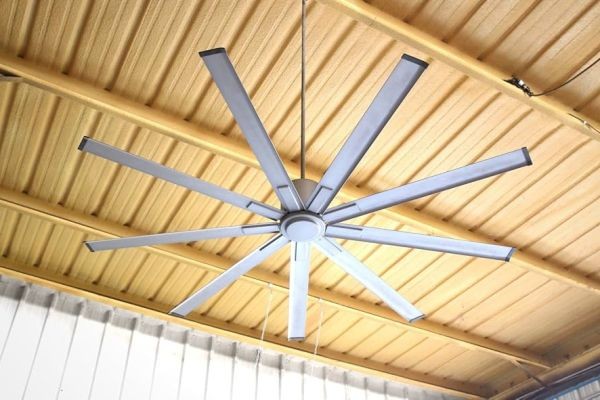
Warehouses are large, high-ceiling environments where maintaining proper airflow can be challenging and expensive. Without adequate circulation, heat stratification, humidity buildup, and stagnant air can reduce worker comfort, impact inventory quality, and increase HVAC costs. That’s why many facility managers turn to big ceiling fans, commonly known as HVLS (High-Volume, Low-Speed) fans, to improve airflow efficiently.
In this guide, we’ll break down how to choose the right big ceiling fan for your warehouse, including size selection, CFM ratings, installation considerations, and cost factors.
What Are HVLS Fans?
HVLS (High-Volume, Low-Speed) fans are large-diameter ceiling fans designed to move massive amounts of air at low rotational speeds. Unlike small high-speed fans that create localized airflow, HVLS fans generate a steady, gentle breeze that circulates air across wide areas—often covering up to 20,000 square feet or more.
These fans are ideal for:
-
Distribution centers
-
Manufacturing plants
-
Logistics hubs
-
Storage facilities
-
Agricultural warehouses
1. Choosing the Right Fan Size
Fan diameter is one of the most important decisions when selecting a warehouse ceiling fan.
Common HVLS Fan Sizes:
-
8–12 feet – Smaller warehouses or targeted zones
-
14–16 feet – Medium-sized warehouses
-
18–24 feet – Large, open industrial spaces
How to Decide:
-
Measure total square footage.
-
Consider ceiling height (ideal: 20 feet or higher).
-
Account for obstructions like racking systems and lighting.
Rule of Thumb:
The higher the ceiling, the larger the fan diameter required to effectively circulate air down to worker level.
2. Understanding CFM (Cubic Feet per Minute)
CFM measures how much air a fan moves per minute. For warehouses, higher CFM ratings mean better airflow coverage.
What to Look For:
-
Small industrial fans: 10,000–30,000 CFM
-
HVLS warehouse fans: 100,000–300,000+ CFM
Rather than focusing only on maximum CFM, evaluate:
-
Airflow coverage area
-
Air velocity at floor level
-
Energy consumption per CFM
A properly selected HVLS fan improves air mixing and reduces temperature differences between ceiling and floor.
3. Ceiling Height & Installation Requirements
Installation plays a critical role in performance and safety.
Recommended Ceiling Height:
-
Minimum: 15 feet
-
Ideal: 20–40 feet
Installation Considerations:
-
Structural support strength
-
Mounting type (I-beam, bar joist, solid beam)
-
Clearance from sprinklers and lights
-
Distance between multiple fans (avoid airflow interference)
Professional installation is strongly recommended to ensure:
-
Code compliance
-
Proper balancing
-
Electrical safety
Improper installation can reduce airflow efficiency and increase vibration or maintenance issues.
4. Energy Efficiency & Operating Costs
One of the biggest advantages of big ceiling fans for warehouse is energy savings.
How They Save Money:
-
Reduce HVAC load
-
Eliminate heat stratification
-
Support evaporative cooling in summer
-
Improve heating efficiency in winter
HVLS fans typically consume 1–2 horsepower, making them far more efficient than running multiple small fans or increasing air conditioning output.
Many facilities report:
-
20–30% reduction in HVAC energy costs
-
Faster ROI within 1–3 years
5. Cost Guide: What to Expect
Warehouse ceiling fan costs vary based on size, motor type, brand, and installation complexity.
Estimated Costs:
-
Fan Unit: $2,000 – $7,000+
-
Installation: $500 – $2,000 per fan
-
Electrical Upgrades (if needed): Additional cost
Larger 18–24 ft HVLS fans with premium motors and smart controls may cost more but offer greater coverage and energy efficiency.
When budgeting, consider:
-
Warranty length
-
Maintenance requirements
-
Replacement parts availability
-
Smart control systems
6. Smart Controls & Automation
Modern warehouse fans often include:
-
Variable speed controls
-
Temperature sensors
-
Integration with building management systems (BMS)
-
Seasonal auto-adjust settings
These features optimize airflow automatically and further reduce operational costs.
7. Maintenance & Longevity
HVLS fans are designed for long-term industrial use. However, routine inspection is essential.
Maintenance Checklist:
-
Tighten mounting hardware
-
Inspect motor and wiring
-
Clean blades periodically
-
Check balance and vibration levels
High-quality fans can last 10–20 years with proper care.
Final Thoughts
Choosing the right big ceiling fan for your warehouse isn’t just about buying the largest model available. It requires careful evaluation of:
-
Ceiling height
-
Warehouse size
-
CFM requirements
-
Installation structure
-
Energy efficiency goals
-
Budget and ROI expectations
A properly selected and installed HVLS fan improves worker comfort, enhances air quality, reduces energy costs, and supports long-term operational efficiency.
If you’re planning a warehouse upgrade, investing in the right big ceiling fan can deliver both immediate airflow improvement and long-term financial benefits.






