
Welcome to College Football 27, where Dynasty Mode has evolved from a simple coach simulator into a hyper-detailed program management puzzle. Success now requires balancing on-field tactics with front-office economics. If you want to take your school to the national championship, you can no longer just rely on dynamic stick-skills on Saturdays; you have to outwork everyone in the front office from Monday to Friday.
This blueprint will guide you through mastering the fundamental pillars of College Football 27 Dynasty Mode, turning your program into a sustainable powerhouse.
1. Master the Dynasty Blueprint and Budget
The single biggest addition to CFB 27 is the Dynasty Blueprint, an annual resource management system. Every offseason, your school receives a budget of Dynasty Points. These points do not roll over—it is a "use-it-or-lose-it" economy, meaning you need to maximize your spending every single cycle.
You must allocate these points across three competing buckets:
-
Coaching and Support Staff: Hiring elite or premium-tier coordinators and analysts unlocks game-planning boosts and reduces NIL demands.
-
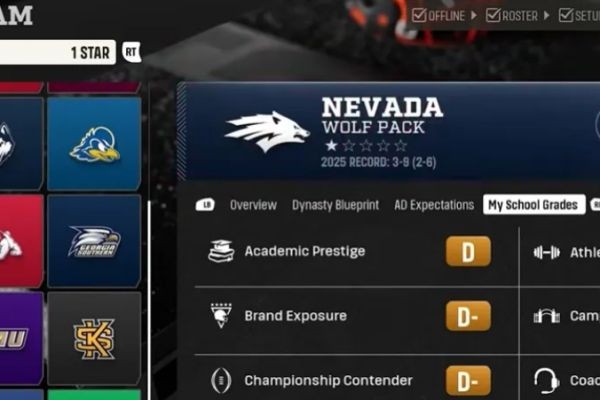
Facilities: Upgrading your stadium, training rooms, and campus amenities increases your long-term "My School" grades to natively attract top-tier recruits.
-
NIL Fund: Liquid capital used to close the deal on high-profile recruits and keep your current stars from transferring.
2. Create the Right Coach Archetype
When building your coach, your chosen archetype dictates your resource efficiency. For beginners, CFB 27 introduces powerful new specializations alongside traditional styles to help give your program a distinct identity:
-
The Rainmaker (Highly Recommended for Beginners): Focuses entirely on the front office. Abilities like Budget Booster increase your annual Dynasty Points, while Dealmaker maximizes the influence of your NIL money during tight recruiting battles.
-
The Visionary: Focuses on player development. Abilities like Practice Makes Perfect drastically accelerate how quickly your roster progresses in overall rating (OVR) week-to-week.
-
Recruiter / Motivator / Tactician: The classic foundational skill trees. If you start at a small school, leaning into Recruiter remains vital for expanding your natural pipeline footprint.
3. Satisfy Your Athletic Director
You no longer have complete freedom to ignore team objectives. Every school provides three distinct AD Expectations upon hiring.
-
Varying Goals: A powerhouse like the Oregon Ducks might expect immediate national championship contention, while a rebuild like UMass or UTEP will focus on win thresholds or beating key rivals.
-
Job Security: Failing these expectations will directly damage your job security, leading to a swift firing from the rebuilt, hyper-reactive coaching carousel. Keep your boss happy, or you will be looking for a new job faster than you think.
4. Elite Recruiting Mechanics
Recruiting requires a strict strategy to ensure you do not waste your limited weekly hours. A typical successful cycle follows a strict order of operations: First, scout and target players in Week 0. Starting in Week 1, offer scholarships and "send the house". Once they reach their Top 5, pitch hard sells, and finally, stack compliments during on-campus visits.
To get an edge on the competition, use these veteran strategies:
-
The "No Offer" Filter: In Week 1 and 2, filter the prospect list by 4-star and 5-star recruits and sort by "Offers". Target highly-rated players who have been ignored by big programs and swoop in before the Power 4 schools notice them.
-
Read Playing Time Dealbreakers: Use the scouting menu to filter recruits by their playing time grades. A recruit with an "A+" playing time requirement often indicates they possess a higher base OVR right out of high school, meaning they are ready to contribute immediately.
-
Stack Complimentary Visits: When recruits reach their Top 5, schedule their campus visits. In CFB 27, scheduling players of complementary positions (like a Quarterback and a Wide Receiver) during the same weekend grants a group synergy boost to your influence. Warning: Booking two players at the same position who are fighting for the same spot creates a negative penalty.
-
Hard Sell Early: Once you unlock a recruit's three green checkmark interests, immediately initiate a Hard Sell. Do not wait until the final week; keeping the pressure on prevents late-stage verbal flips.
5. Roster Management and Offseason Survival
-
The 85-Man Hard Cap: You cannot cut incoming freshmen. If you over-sign a massive class of 35 recruits, you will be forced to cut active, developed upperclassmen to hit the mandatory 85-player roster limit. Aim for 15 to 20 high school signees so you leave room for the Transfer Portal.
-
The Offseason NIL Retention Window: The transfer portal is brutal. During the offseason, your existing stars will be targeted by wealthier programs. You must allocate a portion of your NIL budget to "Roster NIL Management" to lower their risk of leaving and keep your core intact.
-
Position Conversions: Maximize your athletes. If you run short on depth, physical Wide Receivers often possess high hidden blocking stats and can be converted into lethal, vertical-threat Tight Ends.
By mastering the budget, picking the right coach skills, and staying smart on the recruiting trail, you will build a legacy that lasts for decades. Good luck out there, Coach!






