
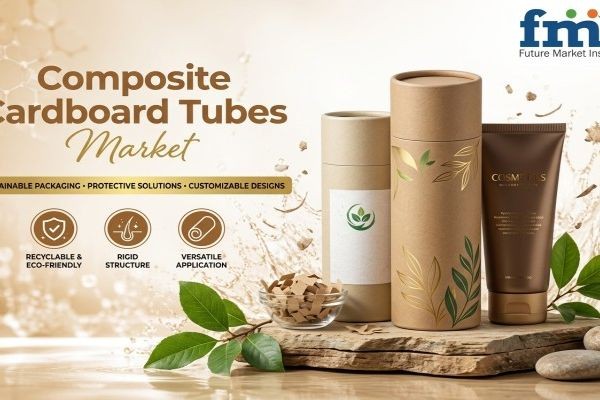
The global composite cardboard tubes market is experiencing consistent growth as manufacturers across industries increasingly shift toward sustainable, lightweight, and cost-effective packaging solutions. Growing emphasis on environmental responsibility, efficient product protection, and optimized supply chains is accelerating the adoption of composite cardboard tubes worldwide.
The Composite Cardboard Tubes Market was valued at USD 1.9 billion in 2025 and is anticipated to reach USD 2.0 billion in 2026. Over the forecast period, the market is projected to expand to USD 3.6 billion by 2036, registering a CAGR of 6.0%.
As companies focus on reducing packaging waste, enhancing operational efficiency, and meeting evolving regulatory requirements, composite cardboard tubes are emerging as a preferred packaging format across food, consumer goods, industrial, and healthcare sectors.
Get detailed market forecasts, competitive benchmarking, and pricing trends:
https://www.futuremarketinsights.com/reports/sample/rep-gb-4810
Quick Market Highlights
- Market Value (2025): USD 1.9 Billion
- Market Value (2026): USD 2.0 Billion
- Projected Market Value (2036): USD 3.6 Billion
- CAGR (2026 to 2036): 6.0%
- Fastest-Growing Markets: Germany (6.9%), USA (6.5%), South Korea (6.4%)
- Leading Material Segment: Paperboard (61.0% market share in 2026)
- Dominant End-Use Industry: Food & Beverages (51.0% market share in 2026)
Evolving Pricing Dynamics and Material Trends
The pricing landscape within the composite cardboard tubes industry continues to evolve as manufacturers seek the right balance between sustainability objectives and cost management. Procurement teams are increasingly assessing packaging solutions based on:
- Total lifecycle cost efficiency
- Material recyclability and environmental performance
- Supply chain stability and sourcing reliability
- Customization and branding capabilities
- Compliance with regulatory standards
Paperboard-based composite tubes continue to dominate market demand due to their affordability, sustainability advantages, and versatility across a wide range of applications.
Manufacturing Expansion Strengthening Market Growth
Investments in regional manufacturing facilities are playing a vital role in supporting market expansion. Companies are increasing production capabilities to improve local supply availability, reduce transportation costs, and enhance responsiveness to customer demand.
Key industry developments include:
- Expansion of regional production networks
- Growth of localized sourcing strategies
- Increased adoption of environmentally responsible materials
- Modernization of manufacturing operations to improve efficiency
Organizations with diversified manufacturing footprints and resilient sourcing networks are gaining a competitive advantage in an increasingly dynamic marketplace.
Regional Growth and Competitive Advantages
Global markets continue to establish unique strengths that support industry growth:
- Germany benefits from a strong industrial ecosystem and supportive sustainability regulations.
- The United States is witnessing rising demand supported by packaging infrastructure investments and expanding consumer markets.
- South Korea continues to advance through manufacturing innovation and packaging technology development.
- The United Kingdom and Japan are experiencing increased adoption driven by stringent quality standards and compliance requirements.
Emerging industry trends include:
- Greater investment in sustainable packaging technologies
- Rising demand for customized packaging formats
- Increasing emphasis on certifications and regulatory compliance
- Expansion of global and multi-regional distribution capabilities
Expanding Demand Across End-Use Industries
Composite cardboard tubes are gaining widespread acceptance across diverse industries due to their durability, lightweight structure, and sustainability benefits.
Major application sectors include:
Food & Beverages
- Packaging for snacks, tea, coffee, powdered products, and dry foods
Cosmetics & Personal Care
- Premium packaging solutions that support brand differentiation and sustainability goals
Pharmaceuticals
- Protective packaging solutions that meet regulatory and product safety requirements
Industrial Applications
- Packaging for chemicals, adhesives, specialty materials, and industrial products
The food and beverage sector remains the leading consumer of composite cardboard tubes, driven by growing demand for recyclable, convenient, and lightweight packaging solutions.
Procurement Priorities Continue to Evolve
Key purchasers in the market include:
- Packaging converters and manufacturers
- Food and beverage producers
- Consumer goods companies
- Industrial product manufacturers
- Retail and distribution packaging suppliers
Primary procurement considerations include:
- Certified sustainable materials
- Consistent product quality
- Reliable supplier partnerships
- Competitive total ownership costs
- Customization and branding flexibility
Sustainability and Regulatory Compliance Driving Adoption
Environmental regulations and corporate sustainability commitments continue to influence purchasing behavior across global markets. Manufacturers are increasingly focused on:
- Recyclable and renewable packaging materials
- Sustainable sourcing practices
- Compliance with food-contact and safety regulations
- Lower environmental footprints
- Circular economy initiatives
These trends are creating significant opportunities for advanced composite cardboard tube manufacturers that can deliver both performance and sustainability.
Focus on Cost Optimization and Operational Performance
Businesses are increasingly selecting packaging solutions that provide long-term operational value through:
- Reduced transportation costs enabled by lightweight packaging
- Enhanced product protection during shipping and handling
- Lower material consumption
- Improved sustainability performance metrics
- Greater storage and logistics efficiency
Manufacturers capable of delivering value-added services, technical expertise, and innovative packaging solutions are strengthening their market position and customer relationships.
Competitive Landscape
Leading market participants, including Sonoco Products Company, Smurfit Kappa Group, Mondi Group, Visican Ltd., Ace Paper Tube Corp., Chicago Paper Tube & Can Company, Marshall Paper Tube Co., Pacific Paper Tube, VPK Group, and Darpac Ltd., continue to compete through:
- Sustainable packaging innovation
- Product portfolio expansion
- Manufacturing efficiency and scalability
- Geographic market expansion
- Strong distribution networks and customer partnerships
As sustainability becomes a core packaging priority across industries, the composite cardboard tubes market is expected to witness continued investment in innovative materials, production capabilities, and differentiated packaging solutions, supporting long-term industry growth through 2036.
About Future Market Insights (FMI)
Future Market Insights, Inc. (FMI) is an ESOMAR-certified, ISO 9001:2015 market research and consulting organization, trusted by Fortune 500 clients and global enterprises. With operations in the U.S., UK, India, and Dubai, FMI provides data-backed insights and strategic intelligence across 30+ industries and 1200 markets worldwide.






