
Introduction
The construction chemicals market shifts are changing the competitive and operational landscape of the construction materials industry. Construction chemicals are increasingly important for improving concrete performance, protecting structures, controlling moisture, enhancing adhesion, repairing deterioration, and extending the service life of buildings and infrastructure.
The industry is moving beyond conventional products toward solutions that offer greater durability, faster installation, improved environmental performance, and specialized functionality. At the same time, changing construction methods, infrastructure modernization, labor shortages, and evolving customer expectations are influencing product development.
These shifts are creating both challenges and opportunities for manufacturers, distributors, contractors, and other participants throughout the value chain.
Shift Toward Sustainable Formulations
One of the most significant changes is the growing emphasis on sustainability.
Construction companies are increasingly interested in materials that can reduce environmental impact while maintaining reliable performance. Manufacturers are responding by developing lower-emission formulations, resource-efficient products, and solutions designed to increase building longevity.
Sustainability is also becoming connected to durability. A construction chemical that extends the service life of a structure can reduce the need for repairs, replacement materials, and repeated construction activity.
Shift From Basic Products to High-Performance Solutions
The industry is gradually moving toward specialized, performance-driven products.
Customers increasingly expect construction chemicals to provide specific benefits such as improved strength, moisture resistance, rapid curing, chemical resistance, or enhanced adhesion.
This is encouraging manufacturers to invest in advanced formulations rather than relying exclusively on conventional products.
High-performance solutions can also help contractors address demanding construction environments more efficiently.
Growing Importance of Waterproofing
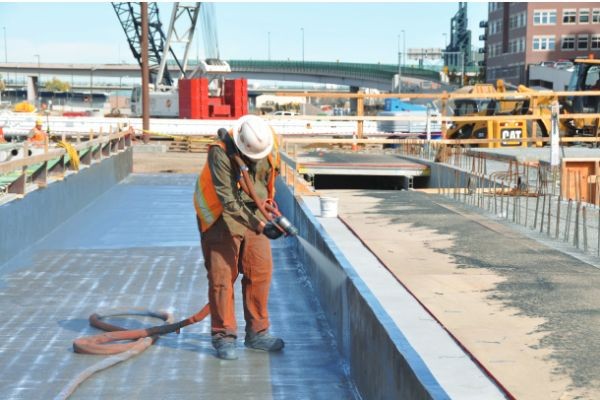
Waterproofing is becoming an increasingly important application area.
Moisture infiltration can damage concrete, finishes, foundations, basements, roofs, and other structural components. As buildings and infrastructure face challenging weather conditions, reliable moisture protection is gaining greater attention.
Manufacturers are developing advanced membranes, coatings, cementitious systems, sealants, and integrated waterproofing solutions.
The emphasis is shifting from repairing water damage to preventing it through proactive protection.
Shift Toward Infrastructure Rehabilitation
Construction chemical demand is increasingly influenced by the need to maintain existing infrastructure.
Aging bridges, roads, tunnels, water facilities, industrial structures, and commercial buildings require repair and protection.
This is creating opportunities for repair mortars, grouts, corrosion-control materials, protective coatings, waterproofing systems, and bonding agents.
For manufacturers, the rehabilitation segment offers a way to diversify beyond dependence on new construction.
Faster Construction Cycles
Construction schedules are becoming increasingly focused on productivity.
Contractors want products that can reduce curing times and accelerate project completion.
Rapid-setting repair materials, fast-curing coatings, quick-bonding adhesives, and high-efficiency admixtures can help reduce downtime.
This shift is encouraging manufacturers to prioritize application speed alongside durability and technical performance.
Shift Toward Easy Application
Labor availability is influencing product design.
Specialized construction chemicals can require trained workers and precise application procedures. When skilled labor is limited, complex products may become less attractive.
Manufacturers are responding with formulations that simplify mixing, application, and curing.
Easy-to-use products can help contractors improve productivity and reduce the risk of application errors.
Digitalization of Construction Chemical Services
Digital tools are changing how construction chemical companies engage with customers.
Online product catalogs, digital technical documentation, application guides, training platforms, and ordering systems can improve accessibility.
Contractors can obtain product information more quickly and compare solutions according to technical requirements.
Manufacturers can also use digital systems to improve inventory management, demand planning, and customer service.
Increasing Product Customization
Construction projects often have unique requirements.
A product suitable for a standard building application may not perform optimally in extreme climates, industrial facilities, infrastructure projects, or specialized rehabilitation work.
This is encouraging manufacturers to provide customized formulations and application-specific solutions.
Customization can strengthen customer relationships while creating opportunities in specialized market segments.
Shift Toward Lifecycle Value
Customers are increasingly considering total ownership costs rather than simply initial purchase prices.
A higher-priced product may provide better economic value if it extends service life, reduces maintenance, or shortens construction time.
This is encouraging manufacturers to communicate lifecycle benefits more clearly.
The ability to demonstrate measurable savings can make premium construction chemicals more attractive to contractors and developers.
Climate Resilience Becomes More Important
Changing environmental conditions are influencing material selection.
Construction projects may face greater exposure to moisture, temperature fluctuations, heavy rainfall, flooding, and other demanding conditions.
This is supporting demand for waterproofing, protective coatings, durable concrete solutions, sealants, and repair systems.
Manufacturers are increasingly focusing on products that can maintain performance under challenging environmental conditions.
Shift Toward Low-Emission Products
Environmental and indoor-air-quality considerations are influencing product development.
This is particularly important for adhesives, flooring systems, sealants, coatings, and other products used in enclosed environments.
Manufacturers are working to reduce emissions while preserving adhesion, durability, curing performance, and ease of application.
Low-emission solutions may become increasingly important as sustainability expectations develop.
New Opportunities From Modular Construction
Modular and prefabricated construction is changing traditional building processes.
Factory-produced components may require specialized bonding agents, adhesives, coatings, and sealants.
These products need to support controlled manufacturing conditions and efficient installation.
Manufacturers that adapt their portfolios to prefabrication can access new applications and customer groups.
Changing Raw Material Strategies
Raw material sourcing is also undergoing a shift.
Supply-chain disruptions and price volatility have encouraged manufacturers to diversify suppliers and explore alternative ingredients.
Regional sourcing and localized production can reduce dependence on long-distance transportation.
Companies are also evaluating formulations that maintain performance while reducing exposure to volatile input costs.
Increasing Focus on Repair-Friendly Solutions
Repair and maintenance projects often require materials that can work with existing substrates.
Products must accommodate aging concrete, damaged surfaces, moisture exposure, and varying site conditions.
This is increasing demand for specialized repair mortars, grouts, bonding systems, and protective coatings.
The shift toward repair-friendly construction chemicals supports the broader movement toward extending asset life.
Changing Competitive Priorities
Competition is increasingly based on more than product price.
Manufacturers are differentiating themselves through technical performance, sustainability, product availability, technical support, application simplicity, and innovation.
Strong relationships with contractors, engineers, consultants, and distributors are becoming increasingly valuable.
Companies that combine product quality with dependable service can build stronger customer loyalty.
Regulatory Influence on Product Development
Regulatory requirements are also influencing market direction.
Environmental, chemical safety, labeling, emissions, and performance requirements can affect product formulations and commercialization.
Manufacturers must monitor regulatory developments and adapt quickly.
Companies with strong compliance capabilities may have an advantage when entering new regions or launching innovative products.
Conclusion
The construction chemicals market shifts demonstrate a broader transformation toward high-performance, sustainable, durable, and application-efficient solutions. Waterproofing, infrastructure rehabilitation, rapid curing, easy application, digital services, customization, and climate resilience are becoming increasingly important.
At the same time, manufacturers are reassessing raw material sourcing, product portfolios, distribution models, and competitive strategies.
The future industry will favor companies capable of responding quickly to changing construction requirements while maintaining performance, affordability, sustainability, reliability, and technical support. These shifts are transforming construction chemicals from conventional supporting materials into increasingly strategic components of modern building and infrastructure projects.






