
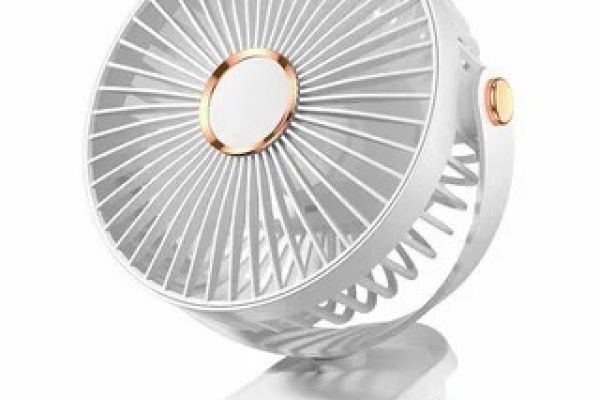
According to the latest analysis by Future Market Insights (FMI), the global cooling fans market is evolving from a component-based supply industry into a strategic thermal management solutions category. Valued at USD 11.86 billion in 2026 and projected to reach USD 33.06 billion by 2036, the market is being reshaped by accelerating demand from hyperscale data centers, electric vehicles, consumer electronics, and industrial automation systems.
As thermal loads increase across next-generation electronics and mobility platforms, cooling fan manufacturers are increasingly focused on energy efficiency, miniaturization, intelligent control systems, and application-specific performance optimization.
Quick Stats Snapshot
• Market size (2026): USD 11.86 billion
• Forecast (2036): USD 33.06 billion
• CAGR (2026-2036): 10.8%
• Top growth markets: EU (11.0%), South Korea (10.9%)
• Leading fan type: Axial fans (57.3% share by 2026)
• Largest application segment: Consumer electronics (34.6% share)
• Dominant sales channel: Direct sales (49.8% share)
Get detailed market forecasts, competitive benchmarking, and pricing trends: https://www.futuremarketinsights.com/reports/sample/rep-gb-16328
Market Size and Growth Outlook
The cooling fans market is projected to expand at a CAGR of 10.8% between 2026 and 2036, reflecting strong and sustained demand for advanced thermal management systems across electronics, automotive, telecom/datacom, and industrial applications.
Growth is increasingly tied to rising thermal complexity in compact electronic systems, hyperscale computing environments, and electric vehicle platforms. Manufacturers are shifting beyond commodity airflow products toward high-efficiency, application-optimized cooling technologies capable of delivering superior airflow, energy savings, and reliability.
Growth Drivers: Data Centers, Electrification, and Energy Efficiency
1. Data Center and High-Performance Computing Expansion
Rapid expansion of hyperscale and edge data centers is driving demand for high-performance cooling fans that provide optimized airflow in dense server environments. AI workloads, cloud computing, and 5G infrastructure are further intensifying thermal management requirements.
2. Electric Vehicle Adoption and Automotive Electrification
The rise of EVs is generating new opportunities for cooling fans in battery thermal management, motor cooling, and power electronics systems. Automotive manufacturers increasingly require lightweight, durable, and energy-efficient fan solutions capable of operating under demanding temperature conditions.
3. Transition Toward Energy-Efficient Fan Technologies
Energy efficiency regulations and sustainability targets are accelerating the shift from conventional AC fans toward DC and brushless technologies. These advanced systems offer lower power consumption, variable speed control, quieter operation, and longer operational life.
Key Challenges: Noise Constraints and Competitive Pressure
Despite strong growth prospects, the market faces several operational and competitive challenges:
• Noise sensitivity in consumer and workspace environments requires advanced aerodynamic optimization
• Continuous miniaturization creates engineering complexity for compact devices
• OEM-driven procurement increases pricing pressure and supplier competition
• Established supplier relationships create high switching costs for new entrants
Manufacturers must balance performance, efficiency, and acoustic optimization while maintaining cost competitiveness.
Emerging Opportunities: Smart Cooling and EV Thermal Management
Opportunities are increasingly concentrated around intelligent and energy-efficient thermal management systems:
• Smart cooling fans with integrated controls and predictive performance monitoring
• EV battery and power electronics cooling applications
• Energy-efficient EC and brushless fan technologies
• Advanced thermal solutions for AI servers and hyperscale data centers
Companies capable of delivering scalable, high-efficiency cooling systems tailored to specific applications are expected to gain competitive advantage.
Speak to Analyst: Customize insights for your business strategy: https://www.futuremarketinsights.com/customization-available/rep-gb-16328
Segmentation Insights: Thermal Efficiency Drives Product Adoption
By Type of Fans:
Axial fans dominate with a 57.3% market share in 2026, supported by their extensive use across electronics cooling, automotive systems, and server rack thermal management applications.
By Application:
Consumer electronics account for 34.6% of the market, driven by demand from laptops, gaming systems, smartphones, and AI-capable devices. Telecom/datacom is emerging as the fastest-growing application category.
By Sales Channel:
Direct sales hold a 49.8% share, reflecting strong OEM procurement relationships across electronics, automotive, and industrial manufacturing sectors.
By Technology:
AC fans continue to lead adoption, though DC and brushless fan technologies are rapidly gaining market share due to superior energy efficiency and performance flexibility.
Regional Analysis: Asia and Europe Lead Innovation and Adoption
South Korea (10.9% CAGR)
Semiconductor manufacturing, consumer electronics production, and aggressive data center expansion are driving strong demand for precision cooling systems.
Japan (10.6% CAGR)
Japan's advanced industrial fan manufacturing ecosystem and growing automotive electrification continue to support market leadership in thermal management technologies.
United States (10.5% CAGR)
Hyperscale data center construction, EV manufacturing growth, and defense electronics applications sustain strong cooling fan demand.
European Union (11.0% CAGR)
Strict Ecodesign regulations and leadership in automotive electrification are accelerating adoption of energy-efficient cooling systems across industrial and automotive applications.
United Kingdom (10.2% CAGR)
Industrial automation, data center investments, and sustainability regulations continue to support market expansion.
Competitive Landscape: OEM Relationships and Thermal Expertise Define Leadership
The cooling fans market is highly competitive, with companies differentiated by thermal engineering capabilities, manufacturing scale, and long-term OEM partnerships.
• Delta Group leads with a 23.1% market share, supported by strong thermal management solutions across data center and industrial applications
• Nidec Corporation leverages advanced motor technology and diversified cooling portfolios across automotive and industrial markets
• ebm-papst Group maintains leadership in energy-efficient EC fan technologies and HVAC applications
• MinebeaMitsumi Inc. and SUNON Group continue expanding compact fan innovations for electronics and IT cooling systems
Competition is increasingly centered around energy efficiency, smart thermal controls, and specialized cooling solutions for EVs and AI infrastructure.
Strategic Implications for Industry Leaders
For manufacturers, suppliers, and investors, the market presents several critical strategic priorities:
• Expand investment in brushless and EC fan technologies
• Strengthen OEM relationships in automotive and hyperscale data center sectors
• Focus on noise reduction and aerodynamic optimization
• Develop intelligent thermal management systems with integrated controls
• Align product development with energy efficiency regulations and sustainability goals
Companies capable of combining advanced thermal engineering with scalable manufacturing and application-specific customization will strengthen long-term positioning.
Future Outlook: From Airflow Components to Intelligent Cooling Infrastructure
Looking ahead, the cooling fans market is expected to evolve into a core enabling technology for digital infrastructure, electric mobility, and high-performance electronics.
Key trends shaping the future include:
• Expansion of AI-driven hyperscale data centers
• Increased adoption of EV thermal management systems
• Growth of energy-efficient DC and brushless technologies
• Smart fan integration with predictive thermal monitoring systems
• Greater demand for compact, low-noise, high-performance cooling solutions
As electronics become more powerful and thermally demanding, cooling fans will increasingly serve as mission-critical infrastructure components rather than commodity hardware.
Get the Complete Story-Read More About Our Latest Report! https://www.futuremarketinsights.com/reports/cooling-fans-market
Executive Takeaways
• Cooling fans are evolving into strategic thermal management technologies
• Data center expansion and EV adoption are major growth accelerators
• Axial fans remain the dominant product category
• Consumer electronics continue to lead application demand
• Europe and East Asia are shaping innovation and adoption trends
• Long-term growth depends on energy efficiency, miniaturization, and intelligent cooling integration
In a market increasingly defined by performance optimization and thermal efficiency, companies that combine engineering innovation with scalable manufacturing capabilities will lead the next phase of growth in cooling technologies.
Why FMI: https://www.futuremarketinsights.com/why-fmi
No comments found






