
Decentralized finance, or DeFi, continues to redefine the financial landscape by enabling secure, transparent, and permissionless financial services without intermediaries. As we step into 2026, the evolution of DeFi development is marked by sophisticated protocols, enhanced user experiences, and advanced interoperability between blockchain networks. Businesses and individual investors are increasingly adopting DeFi solutions to reduce dependency on centralized financial institutions while gaining access to global liquidity and investment opportunities. Decentralized finance development services have become crucial for enterprises looking to integrate blockchain solutions, ensuring scalability, security, and compliance with emerging regulations. This blog explores the essential features of DeFi applications in 2026, the underlying technology stack, and a detailed breakdown of development costs to guide businesses in making informed decisions.\
What is DeFi Development?
DeFi development refers to the process of designing, building, and deploying decentralized financial applications on blockchain networks. Unlike traditional finance, DeFi eliminates intermediaries such as banks and brokers, enabling peer-to-peer transactions with full transparency. Developers leverage smart contracts, decentralized exchanges, lending protocols, and other blockchain-based tools to create applications that are autonomous, secure, and verifiable. DeFi development also involves integrating advanced features such as cross-chain interoperability, liquidity aggregation, and automated yield optimization to provide users with seamless financial experiences. Businesses seeking decentralized finance development services benefit from platforms that offer global access, reduced operational costs, and real-time financial solutions without compromising security or regulatory compliance.
Essential Features of DeFi Applications in 2026
1. Smart Contract Automation
Smart contracts are self-executing agreements that operate without human intervention. In 2026, advanced DeFi platforms utilize highly optimized smart contracts that are audited for security vulnerabilities. These contracts enable functions like lending, borrowing, staking, and yield farming, ensuring transparency and accuracy in financial operations. Additionally, automated smart contracts reduce operational costs by eliminating intermediaries while providing real-time settlement of transactions, a critical component for scalable decentralized finance development services.
2. Cross-Chain Compatibility
Interoperability between different blockchain networks has become a priority for DeFi projects. Cross-chain compatibility allows assets and data to flow seamlessly across multiple blockchains, increasing liquidity and investment options for users. This feature ensures that users are not confined to a single ecosystem, expanding DeFi adoption and utility. Decentralized finance development services now focus on implementing protocols like Polkadot, Cosmos, and Layer-2 solutions to achieve robust cross-chain functionality.
3. Advanced Security Protocols
Security remains a top concern for DeFi applications. Modern platforms implement multi-layered security measures, including encryption, multi-signature wallets, and continuous smart contract audits. Advanced threat detection systems monitor suspicious activity in real time, minimizing risks associated with hacks and exploits. By incorporating these features, decentralized finance development services provide users with confidence in handling significant financial assets securely.
4. Liquidity Aggregation and Optimization
Liquidity is the backbone of DeFi ecosystems. Innovative applications in 2026 use liquidity aggregation protocols to pool assets from multiple decentralized exchanges (DEXs), offering users optimal rates for trades, loans, and yield farming. Automated market makers (AMMs) and algorithmic liquidity solutions further enhance efficiency, reducing slippage and maximizing returns. This feature is essential for DeFi platforms aiming to attract high-value investors and maintain consistent market performance.
5. User-Friendly Interface and Analytics
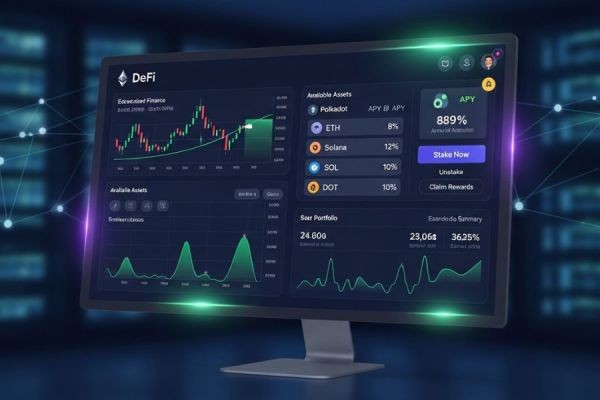
The user experience in DeFi has shifted towards simplicity without compromising on functionality. Platforms now include intuitive dashboards, real-time analytics, and portfolio management tools, allowing users to track investments and risks effectively. By prioritizing accessibility and transparency, decentralized finance development services ensure broader adoption among retail and institutional investors alike.
Technology Stack for DeFi Development in 2026
1. Blockchain Networks
The foundation of any DeFi application lies in its blockchain infrastructure. Ethereum continues to be a preferred choice due to its mature ecosystem and robust smart contract capabilities. However, emerging blockchains such as Solana, Avalanche, and Binance Smart Chain provide higher throughput and lower transaction costs. Selecting the right network depends on factors like scalability requirements, transaction speed, and community support.
2. Smart Contract Languages and Frameworks
Solidity and Rust remain the leading programming languages for DeFi development. Solidity is widely used for Ethereum-based applications, while Rust is gaining traction for networks like Solana and Polkadot. Developers also rely on frameworks such as Truffle, Hardhat, and Anchor to streamline contract deployment, testing, and maintenance, ensuring secure and reliable execution of DeFi protocols.
3. Oracles and Data Feeds
Accurate external data is essential for functions such as price feeds, interest rates, and risk assessment in DeFi applications. Oracles like Chainlink and Band Protocol act as trusted intermediaries, providing real-world data to smart contracts. By integrating reliable oracles, decentralized finance development services ensure data integrity, enhancing platform trustworthiness and decision-making accuracy.
4. Decentralized Storage Solutions
Decentralized storage networks, including IPFS and Arweave, are critical for storing user data, transaction history, and smart contract metadata securely. These solutions ensure immutability, resilience, and privacy, supporting a fully decentralized architecture. Incorporating decentralized storage also aligns with regulatory standards for data protection and auditability.
5. Layer-2 Scaling Solutions
To address congestion and high fees on primary blockchains, Layer-2 solutions such as Optimistic Rollups, zk-Rollups, and sidechains have become essential. They facilitate faster transactions, lower costs, and maintain security by settling final states on the main chain. These technologies are indispensable for DeFi platforms targeting mass adoption and high-frequency trading.
Cost Breakdown of DeFi Development in 2026
1. Development and Design Costs
The initial phase involves UI/UX design, smart contract development, and blockchain integration. Costs range from $50,000 to $150,000, depending on project complexity, features, and the experience level of developers. Businesses often invest in comprehensive audits and testing, which adds to the initial expenses but ensures long-term stability and security.
2. Security Audits
Security audits are crucial to prevent vulnerabilities that can lead to significant financial losses. Third-party audit costs vary from $10,000 to $50,000 based on contract complexity and the reputation of the auditing firm. Investing in rigorous audits is non-negotiable for decentralized finance development services, as it directly impacts user trust and platform credibility.
3. Smart Contract Deployment Fees
Deploying contracts on blockchain networks incurs gas fees, which fluctuate depending on network congestion and protocol choice. For instance, Ethereum may cost $5,000 to $20,000 for a complex set of contracts, whereas Layer-2 solutions offer substantially lower deployment fees. Proper planning and cost optimization strategies are essential for budget management.
4. Maintenance and Upgrades
Continuous maintenance ensures that the platform remains compatible with evolving protocols and security standards. Annual maintenance costs can range from $20,000 to $50,000, covering bug fixes, software updates, and feature enhancements. Regular updates help decentralized finance development services maintain a competitive edge and meet user expectations consistently.
5. Marketing and Community Building
Marketing and community engagement are vital for user acquisition and retention. Costs for promotion, partnerships, and community incentives vary widely, starting from $15,000 annually. Strong community support enhances platform credibility, encourages liquidity provision, and fosters organic growth.
Case Study: Successful DeFi Platform Implementation
A mid-sized fintech company aimed to launch a lending and staking platform with cross-chain support for Ethereum and Solana users.
Implementation: The development team integrated Solidity-based smart contracts, Chainlink oracles for real-time data, and Layer-2 solutions to reduce transaction fees. Liquidity aggregation protocols were employed to optimize user returns, while an intuitive dashboard allowed seamless portfolio tracking.
Results: Within six months, the platform attracted over 50,000 active users and facilitated transactions worth $75 million. Security audits prevented any major vulnerabilities, and cross-chain functionality increased liquidity by 40%. The success of this platform demonstrates the practical value of decentralized finance development services, highlighting the importance of combining cutting-edge technology with user-centric design.
Conclusion
DeFi development in 2026 represents a sophisticated, secure, and user-centric approach to financial technology. With essential features like automated smart contracts, cross-chain compatibility, advanced security protocols, liquidity optimization, and intuitive interfaces, DeFi platforms are positioned to revolutionize the financial sector. The technology stack encompassing robust blockchain networks, smart contract frameworks, oracles, decentralized storage, and Layer-2 solutions ensures scalability and efficiency. Understanding the cost breakdown, including development, audits, deployment, maintenance, and marketing, allows businesses to plan effectively and maximize ROI. By leveraging decentralized finance development services, enterprises can create reliable, innovative, and future-ready DeFi platforms, solidifying their position in the evolving financial ecosystem.






