
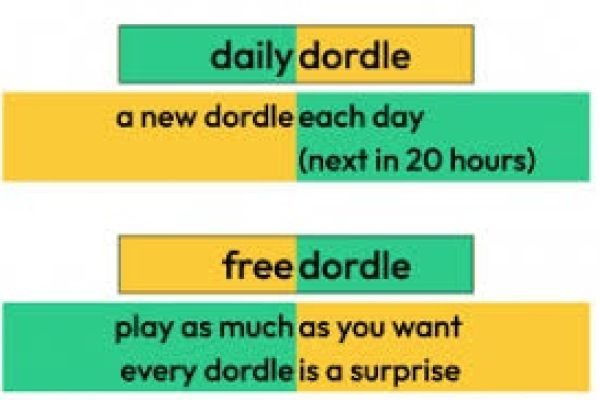
Most word games ask a simple question: Can you find the word?
Dordle asks a better one: Can you think about two problems at the same time without losing control?
That small change turns a familiar daily puzzle into a surprisingly intense mental exercise.
One Guess, Two Consequences
In Dordle, every word you enter counts for two hidden answers. There’s no switching boards, no focusing on one solution at a time. A guess that looks brilliant on the left grid might completely backfire on the right.
This forces players into a constant evaluation loop:
-
Does this guess give me information on both sides?
-
Am I helping one word too much?
-
Am I painting myself into a corner?
The game quietly trains you to weigh trade-offs — something most casual games never attempt.
The Tension of Limited Choices
With a limited number of guesses, Dordle creates tension not through timers or flashy effects, but through decision pressure. Every move feels important. Every mistake narrows your options.
That pressure makes the final guesses especially satisfying. When both words fall into place on the same turn, it feels earned — not lucky.
Why Dordle Sticks With You
Dordle has a way of lingering in your head even after you close the page. Players often replay their decisions mentally:
-
“I should’ve tested that vowel earlier.”
-
“That guess was too focused on one side.”
-
“Next time, I’ll play it differently.”
This post-game reflection is a sign of strong design. The game encourages learning without ever explicitly teaching.
Minimal Design, Maximum Focus
There are no distractions in Dordle. No achievements popping up. No sound effects begging for attention. Just grids, letters, and logic.
That simplicity keeps the focus where it belongs — on thinking.
Final Verdict
Dordle isn’t loud, flashy, or addictive in an obvious way. Instead, it’s quietly demanding. It rewards careful planning, flexibility, and the ability to adapt when things don’t go as expected.
For players who enjoy puzzles that respect their intelligence, Dordle is more than a daily game — it’s a daily challenge worth accepting.






