
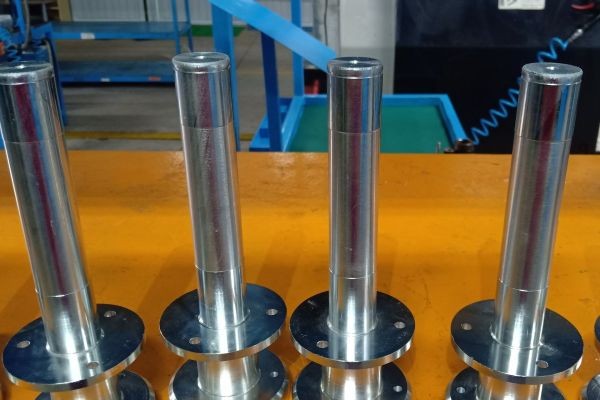
High-volume manufacturing relies on consistency, efficiency, and precision to maintain competitive advantage. CNC machines deliver speed and accuracy, but their full potential is realized only when components are properly secured during machining. This is why jigs and fixtures play a critical role in high-volume production environments, providing stability, repeatable positioning, and reliable alignment. Well-engineered workholding solutions prevent movement, reduce vibration, and allow CNC tools to operate at maximum efficiency without compromising part integrity or dimensional accuracy.
As production demands grow, manufacturers face increasing pressure to maintain quality while reducing downtime. Complex part geometries, lightweight materials, and multi-axis machining require adaptable and durable support systems. Custom jig and fixture design devices provide the necessary flexibility and precision to handle these challenges. Yicenprecision focuses on developing robust workholding systems that enhance productivity, improve accuracy, and reduce operational inefficiencies for high-volume manufacturing applications.
The Importance of Robust Workholding in CNC Production
Stability and Repeatability for Large Batches
Maintaining stability across multiple machining cycles is essential in high-volume production. Each shift in a workpiece can lead to cumulative errors that affect the entire batch. Advanced jigs and fixtures tooling use strategically placed locating points and rigid supports to ensure every component sits consistently in the correct orientation. This repeatable positioning reduces deviations and improves dimensional control, ensuring that production parts meet tight tolerance requirements even under continuous operation.
Minimizing Vibration and Tool Wear
Vibration during machining can affect surface finish and tool life. Durable workholding solutions absorb and reduce vibration by distributing clamping forces evenly across the workpiece. Properly designed fixture bases resist deflection, while reinforced supports maintain rigidity during high-speed cutting. This controlled environment protects delicate parts, reduces tool wear, and improves overall production quality, which is especially important in high-volume manufacturing where downtime and defects can be costly.
Key Principles of Effective Jig and Fixture Design
Precision Locating Systems
The core of any durable workholding system is its locating strategy. Reference points, datum surfaces, and alignment pins are carefully engineered to position parts accurately for every machining cycle. Over-constraining components can introduce stress, while under-constraining may allow movement. Modern jig and fixture design devices strike a balance by securing the part firmly without distortion. Accurate locating ensures that CNC operations are repeatable, reduces setup time, and minimizes errors in large-scale production.
Efficient Clamping Mechanisms
Clamping systems must secure parts while preventing damage. Mechanical, pneumatic, and hydraulic clamps can be integrated into fixtures depending on production requirements. Innovative clamping designs offer consistent force distribution and allow quick part loading and unloading. Efficient jigs and fixtures tooling improve operator productivity, reduce setup errors, and support higher throughput by maintaining a stable and secure machining environment for every cycle.
Boosting Manufacturing Productivity
Faster Changeovers and Reduced Downtime
Time spent adjusting setups directly impacts production efficiency. Custom workholding solutions simplify loading processes, allowing operators to place parts quickly and accurately. Faster changeovers reduce machine idle time and improve throughput. In high-volume manufacturing, this efficiency translates into higher daily output and consistent part quality across all production runs.
Seamless Integration with Automated Systems
Automation is increasingly important in large-scale production. Workholding systems must integrate seamlessly with robotic loaders and automated inspection equipment. Advanced jig and fixture design devices often include modular components, alignment guides, and quick-release mechanisms that enhance compatibility with automated workflows. Efficient integration minimizes human intervention, supports lights-out manufacturing, and increases overall production consistency.
Handling Complex and Multi-Axis Machining
Multi-Axis Machining Support
Modern CNC operations frequently involve multi-axis cutting, requiring workholding systems that allow unobstructed tool access from different angles. Durable jigs and fixtures are engineered with clearance zones, adjustable supports, and elevated bases to accommodate complex toolpaths. Maintaining a single reference orientation reduces the need for multiple setups and minimizes cumulative alignment errors, which is crucial for high-precision components produced at volume.
Accommodating Irregular and Lightweight Parts
Many high-volume manufacturing components have asymmetrical shapes, thin walls, or intricate features. Standard fixtures may not provide adequate support for such designs. Custom jig and fixture tooling is developed to match the unique contours of each part while distributing forces evenly. This approach prevents deformation and ensures consistent machining quality, even when working with challenging geometries in large-scale production environments.
Material Selection and Structural Considerations
Choosing Durable Materials
Fixture materials impact long-term performance and stability. Steel offers strength and wear resistance for heavy-duty production, while aluminum provides a lightweight alternative for easier handling without compromising rigidity. In certain cases, composites are used to reduce vibration or resist corrosion. Material selection considers machining forces, production volume, and environmental factors to ensure durability and reliability for high-volume operations.
Managing Thermal Expansion and Wear
High-speed machining generates heat that can affect both the fixture and the workpiece. Thermal expansion must be addressed in the design phase to maintain accurate alignment. Engineers incorporate allowances and select materials with stable thermal properties. Hardened inserts and surface treatments extend the fixture’s service life, ensuring reliable performance throughout long production runs and minimizing downtime due to maintenance or recalibration.
Practical Implementation for High-Volume Success
Planning and Development Steps
-
Analyze part geometry and cutting forces before designing the fixture
-
Identify locating points to ensure repeatable alignment
-
Integrate modular elements for flexibility with multiple part designs
-
Test prototypes under real production conditions before full deployment
These steps reduce errors, streamline setup, and ensure optimal performance in large-scale CNC operations.
Continuous Evaluation and Optimization
-
Inspect locating and clamping features for wear regularly
-
Adjust fixtures to accommodate material or process changes
-
Incorporate automation and sensors where feasible to monitor performance
-
Refine designs based on production data and operator feedback
Ongoing evaluation ensures fixtures remain reliable, precise, and efficient across extended production cycles.
Long-Term Benefits of Durable Workholding Solutions
Consistent Quality Across Large Batches
Accurate and repeatable positioning simplifies quality control in high-volume manufacturing. Durable jigs and fixtures support uniform alignment, making inspection faster and more consistent. Some systems integrate measurement features, allowing verification without removing parts from the fixture. This streamlines processes, reduces handling, and maintains consistent production quality across all batches.
Cost Efficiency and Operational Advantage
Custom-engineered workholding systems require initial investment but deliver long-term savings. Reduced scrap, faster setups, and minimized downtime contribute to measurable operational cost reductions. Advanced jigs and fixtures tooling improves machining efficiency and throughput while maintaining quality standards. Manufacturers gain a competitive advantage by optimizing resources and enhancing production reliability.
Yicenprecision’s Expertise in High-Volume Workholding
Engineering Excellence and Practical Insight
Yicenprecision combines design expertise with hands-on production experience to create reliable jig and fixture solutions. Collaboration between engineers and CNC operators ensures that each fixture meets real-world production requirements. This integrated approach results in durable, high-performance systems designed for maximum efficiency in high-volume manufacturing.
Commitment to Innovation and Adaptability
Production environments evolve rapidly, requiring workholding solutions to adapt. Yicenprecision invests in continuous innovation, refining jig and fixture designs based on emerging technologies and client feedback. Modular and flexible systems allow manufacturers to adjust setups efficiently for new part variations, supporting long-term operational growth and productivity.
Conclusion
Durable workholding solutions are essential for achieving efficiency and precision in high-volume CNC manufacturing. From accurate locating systems to balanced clamping mechanisms, advanced jigs and fixtures provide a stable foundation for consistent machining. Custom-designed fixtures reduce setup time, integrate seamlessly with automated systems, and support complex multi-axis operations. By investing in engineered workholding systems, manufacturers enhance productivity, maintain consistent quality, and achieve long-term operational success. Yicenprecision delivers innovative, robust, and reliable jigs and fixtures that empower manufacturers to meet high-volume production demands with confidence and precision.






