
In modern networking, understanding the structure behind communication systems is essential. One of the most commonly asked questions is: What Is Ethernet [https://www.extnoc.com/learn/networking/what-is-ethernet/] and how does it function at a deeper architectural level? Ethernet is not just a cable-based connection—it is a comprehensive framework that defines how devices communicate within a network. Its architecture and components work together to ensure efficient, reliable, and secure data transmission across various environments.
What Is Ethernet?
Ethernet is a networking standard used to connect devices in a Local Area Network (LAN). It defines the protocols, hardware components, and communication rules that allow devices to exchange data seamlessly. Ethernet operates primarily through wired connections, ensuring stable performance and minimal interference.
Over time, Ethernet has evolved to support higher speeds and more complex network designs. However, its core architecture remains focused on efficient data delivery and scalability.
Ethernet Network Architecture
Ethernet networks are typically designed using structured topologies that determine how devices are interconnected. The most commonly used topology is the star topology, where all devices are connected to a central switch. This design offers several advantages, including simplified management and improved performance.
In a star topology, each device communicates with the switch rather than directly with other devices. The switch acts as an intermediary, ensuring that data is sent only to the intended recipient. This reduces unnecessary traffic and enhances overall network efficiency.
In larger networks, multiple switches can be interconnected to form a hierarchical structure. This allows networks to scale while maintaining performance and reliability.
Key Components of Ethernet
Ethernet networks rely on several essential components, each playing a critical role in communication.
Network Interface Card (NIC)
The Network Interface Card is the hardware component that allows a device to connect to an Ethernet network. It provides a unique MAC address, which identifies the device on the network. The NIC converts data from the device into signals that can be transmitted over the network and vice versa.
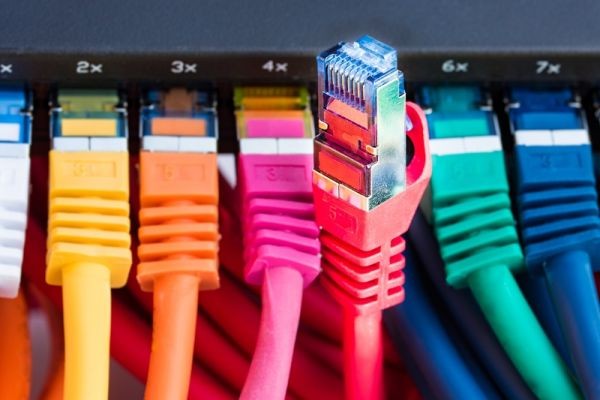
Ethernet Cables
Cables serve as the physical medium for data transmission. Common types include Cat5e, Cat6, and Cat7 cables, each offering different levels of performance. These cables carry electrical signals between devices, ensuring fast and reliable communication.
Switches
Switches are central devices in Ethernet networks that manage data traffic. When a device sends data, the switch examines the destination MAC address and forwards the data to the appropriate port. This targeted approach reduces congestion and improves efficiency.
Routers
Routers connect different networks and enable communication between them. While switches operate within a single network, routers allow devices to access external networks such as the internet.
Hubs (Legacy Devices)
In earlier Ethernet networks, hubs were used to connect devices. However, hubs broadcast data to all connected devices, leading to inefficiencies. Modern networks have largely replaced hubs with switches.
Data Transmission Process
The communication process in Ethernet involves several steps. When a device sends data, it is divided into frames. Each frame contains important information, including the source and destination MAC addresses.
The data is transmitted through the cable to a switch, which analyzes the destination address and forwards the frame to the correct device. The receiving device then processes the frame and extracts the original data.
This process happens in milliseconds, allowing real-time communication between devices.
Role of MAC Addressing
MAC addressing is a fundamental aspect of Ethernet communication. Each device has a unique MAC address, which ensures accurate data delivery. Switches use these addresses to maintain a table of connected devices, enabling efficient data routing.
This system eliminates the need for broadcasting data to all devices, reducing network congestion and improving performance.
Full-Duplex Communication
Modern Ethernet networks use full-duplex communication, allowing devices to send and receive data simultaneously. This eliminates collisions and significantly improves network efficiency compared to older half-duplex systems.
Scalability and Flexibility
One of the key strengths of Ethernet architecture is its scalability. Networks can be expanded by adding more devices, switches, or routers without disrupting existing operations. This makes Ethernet suitable for both small and large-scale environments.
Security Considerations
Ethernet networks offer a higher level of security compared to wireless networks. Physical access is required to connect to the network, reducing the risk of unauthorized access. Additional security measures, such as firewalls and encryption, can further enhance protection.
Conclusion
Ethernet architecture is a well-structured system that ensures efficient communication between devices. Understanding What Is Ethernet and its components provides valuable insights into how networks operate. Its scalability, reliability, and performance make it a cornerstone of modern networking.






