
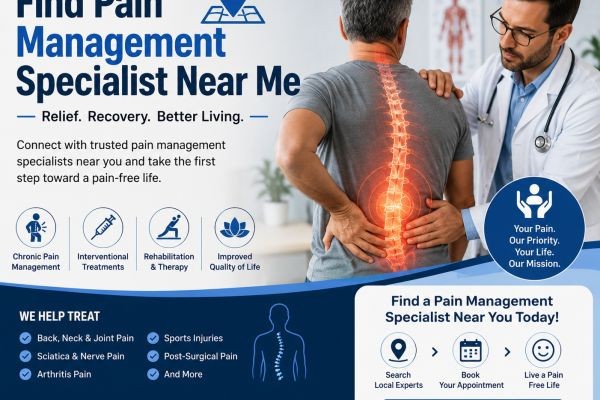
Living with ongoing pain can affect your work, sleep, mobility, and everyday activities. If pain continues despite basic treatments, searching for a pain management specialist near me can be a useful next step. Pain management specialists are medical professionals who focus on evaluating and treating ongoing or chronic pain, including conditions such as back pain and nerve-related pain.
What Is a Pain Management Specialist?
A pain management specialist evaluates the possible causes of pain and develops a treatment plan based on the patient's condition. Specialists may have backgrounds in areas such as anesthesiology, neurology, or physical medicine and rehabilitation, followed by specialized training in pain medicine.
Depending on the diagnosis, treatment may include medications, physical therapy, rehabilitation, injections, nerve blocks, or other appropriate approaches. The goal is to help patients manage pain while improving function and quality of life.
When Should You Consider a Pain Specialist?
You may consider discussing persistent pain with a healthcare professional when symptoms continue to interfere with normal activities or do not improve with initial treatment.
Pain management specialists commonly evaluate conditions such as:
- Chronic back and neck pain
- Sciatica
- Nerve-related pain
- Arthritis-related pain
- Spinal conditions
- Joint and musculoskeletal pain
- Accident-related pain
- Sports injuries
- Post-surgical pain
The appropriate treatment depends on the underlying cause, severity, and individual health circumstances.
How to Find a Pain Management Specialist Near Me
When searching online for a pain management specialist near me, consider several factors instead of choosing a provider based solely on search rankings.
Check Qualifications
Look for a properly licensed medical professional with appropriate training and experience in pain medicine. New York State recommends checking whether a physician is licensed and registered when selecting a doctor.
Consider Experience
Ask whether the specialist regularly treats your particular type of pain. A provider experienced with spinal pain may have a different focus from one who primarily treats other chronic pain conditions.
Review Treatment Options
Pain management can involve multiple approaches. Depending on the condition, specialists may use medications, physical therapy, injections, nerve blocks, or other interventions.
Check Insurance and Location
Before making an appointment, verify whether the provider accepts your insurance plan and ask about potential out-of-pocket costs. Choosing a conveniently located office may also make regular appointments easier.
Read Patient Reviews Carefully
Online reviews can provide insight into communication, scheduling, and patient experiences. However, reviews should be considered alongside professional qualifications, experience, and the specific services offered.
Pain Management After an Accident
Car accidents, workplace injuries, and falls can sometimes lead to persistent neck, back, or nerve-related pain. A pain management specialist may be part of a broader healthcare team when symptoms continue after an injury.
If pain follows an accident, an appropriate medical evaluation can help determine its possible cause and whether additional diagnostic testing or specialist care is appropriate.
Why a Personalized Treatment Plan Matters
Pain can have different causes, and the same treatment may not work for every patient. A pain specialist can evaluate symptoms, medical history, physical findings, and available diagnostic information before recommending treatment.
New York health guidance notes that referral to a pain specialist may be helpful when pain treatment presents significant challenges.
Find the Right Pain Management Care
If you're searching for a pain management specialist near me, take time to compare qualified providers based on credentials, experience, treatment options, insurance, location, and patient communication.
Finding the right specialist can help you better understand persistent pain and explore appropriate treatment options. Always discuss your symptoms with a qualified healthcare professional and seek urgent medical attention for severe or potentially life-threatening symptoms.






