
A house fire can be one of the most stressful experiences a homeowner can face. Even after the flames are out, the damage may not be over. Smoke, soot, water, odors, and damaged materials can continue to affect the property.
Many homeowners are unsure about what to do next. Should they start cleaning immediately? What happens to furniture and personal belongings? How long will the restoration take?
Understanding the basic fire damage cleanup process can make the situation easier to manage. Professional cleanup focuses on making the property safe, removing damage, cleaning affected areas, and preparing the home for repairs.
What Happens After a House Fire?
Once the fire has been extinguished, safety should be the first priority. Homeowners should not assume that a property is safe to enter simply because the flames are gone.
A fire can weaken walls, ceilings, floors, and other structural components. Electrical systems may also be damaged. There may also be hidden hot spots, broken glass, smoke, and other hazards.
Wait until the property has been cleared for entry by the appropriate authorities or professionals. Once it is safe, the next step is to assess the damage and determine what needs to be cleaned, repaired, or replaced.
Fire Damage Is More Than Burned Materials
It is easy to focus on the areas where the flames caused visible damage. However, a fire can affect much more than the materials that were directly burned.
Smoke can travel through rooms, hallways, vents, and other parts of a home. Soot can settle on walls, ceilings, furniture, appliances, and personal belongings.
Water used to extinguish the fire can also cause additional problems. Flooring, drywall, furniture, and other materials may absorb moisture.
This means that a complete cleanup may need to address fire, smoke, soot, and water damage rather than just the burned area.
Smoke and Soot Cleanup
Smoke and soot can leave behind strong odors and dark residue. If these materials are not properly removed, the smell may remain in the property long after the fire.
Different types of smoke can affect materials differently. Some surfaces may be cleaned, while heavily damaged materials may need to be removed.
Furniture, curtains, carpets, walls, cabinets, and personal belongings may all require different cleaning methods.
Trying to clean everything with ordinary household products may not always produce the desired results. In some cases, improper cleaning can spread soot or cause additional damage to surfaces.
Water Damage After a Fire
Firefighting efforts can leave a property with significant amounts of water. This creates another problem that homeowners need to consider during recovery.
Water can soak into carpets, flooring, drywall, furniture, and other materials. If moisture remains trapped, it can lead to additional damage and unpleasant odors.
The affected areas may need water extraction and professional drying before other restoration work can continue.
Addressing water damage early can help reduce the chance of further problems during the recovery process.
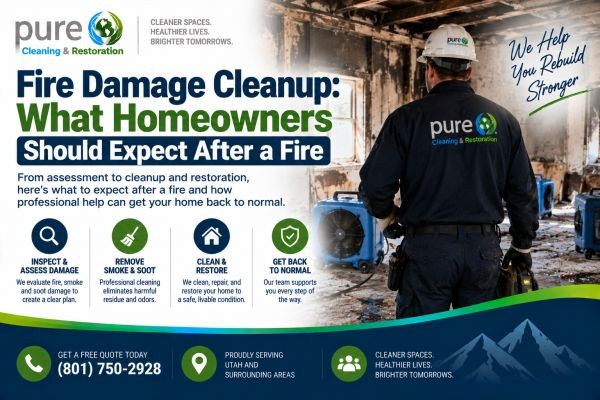
What Does Professional Fire Damage Cleanup Include?
Every fire is different, so the cleanup process depends on the size of the fire and the condition of the property.
However, professional restoration may include several important steps.
1. Property Inspection
The first step is to inspect the property and determine the extent of the damage. This includes looking at areas affected by flames, smoke, soot, and water.
2. Damage Assessment
The restoration team determines which materials may be cleaned and restored and which materials may need to be removed.
3. Smoke and Soot Removal
Affected surfaces and belongings are cleaned using methods appropriate for their material and condition.






