
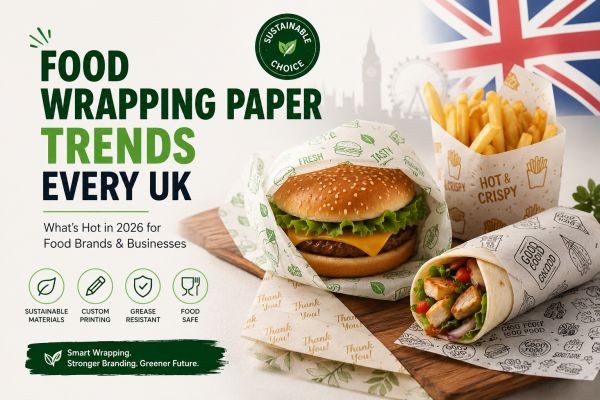
Something’s changed in the way UK food businesses approach packaging, and looks alone don’t explain it anymore. Food wrapping paper now plays a real part in how customers form an opinion of a brand before they’ve even tried the food.
Why Generic Paper Isn't Cutting It Anymore
Plenty of kitchens still default to whatever’s cheapest, and for a long time that worked fine. It’s not working as well anymore, and most businesses haven’t caught up to why.
Weak, thin paper to wrap food lets oil bleed through almost instantly, leaving stained hands and a soggy mess by the time the customer opens their order.
That first impression matters more than kitchens tend to assume. A leaking wrap doesn’t just look bad — it quietly tells customers the rest of the operation might cut corners too.
There’s also a growing expectation around what packaging says about a business. Diners increasingly notice what their food arrives in, especially with delivery orders, where the wrapping is the first thing they see.
What's Actually Changing in Kitchens Right Now
A few clear shifts are showing up across UK food service, and they’re worth knowing about before your next bulk order.
- Heavier, more durable stock: Businesses are moving away from flimsy paper towards genuinely grease-resistant sheets that survive a full shift
- Product-specific paper: Generic wrap is being replaced with purpose-built options like burger wrapping paper, sized and coated for that exact use case
- Compliance-first sourcing: Buyers are asking about PFAS status and certification before price, not after
None of these trends is cosmetic. Each one reflects a business trying to avoid a specific, recurring problem that generic paper doesn’t solve.
Matching Paper to the Product Actually Matters
Treating every item the same way is where a lot of kitchens go wrong, using one paper type across a menu that really needs several.
- Burgers and hot handhelds: Need burger wrapping paper with strong grease resistance and enough structure to hold shape while still hot
- Sandwiches and cold items: Suited to lighter sandwich wrap paper, sized for a quick, clean wrap rather than heavy-duty protection
- Pastries and baked goods: Benefit from a lighter grease barrier that doesn’t affect texture during short-term contact
- Delivery orders: Often need a slightly heavier stock to survive extra handling time before reaching the customer
Getting this matching right isn’t about spending more — it’s about spending correctly on the right product for each item leaving the kitchen.
Compliance Is Now Shaping Purchasing Decisions
Regulation around food contact materials keeps tightening, and buyers are building this into supplier decisions much earlier than they used to.
Every product we manufacture at Deli Paper is:
- 100% PFAS-free paper options
- FSC-certified Kraft paper materials
- Food-safe manufacturing processes
- Recyclable paper solutions
- Reduced reliance on plastic-based materials
- Support for UK Extended Producer Responsibility (EPR) initiatives
- Helps businesses prepare for UK Plastic Packaging Tax requirements
Branding Is Moving From Optional to Expected
Plain, unbranded paper is quickly becoming the exception rather than the norm, particularly among businesses competing on delivery platforms.
Custom printing on food wrapping paper puts a logo directly into a customer’s hands, whether they’re eating in or unwrapping a delivery at home.
Plain paper is quickly becoming a missed opportunity rather than a neutral choice. More brands now treat every wrap as a chance to be seen.
- Logo visibility: Custom printed paper puts branding directly into customers’ hands at the counter or during delivery unboxing
- Digital integration: QR codes and social handles are appearing on sheets, turning wrapping into a marketing channel rather than just packaging
- Low barrier to entry: Custom food wrapping paper runs now start from manageable minimum order volumes, making branding realistic for smaller businesses, too
This trend reflects a wider shift — packaging is no longer an afterthought tacked on at the end of the ordering process, but a deliberate part of brand strategy from day one.
Conclusion
Food wrapping is no longer background packaging; it’s become part of how UK businesses present themselves, stay compliant, and build recognition with every order. Deli Paper supplies food wrapping paper, including burger wrapping paper and sandwich wrap paper, built to the specifications this shift actually demands. Reviewing what’s currently wrapping your food is a small step that’s worth taking before your next order goes out.






