
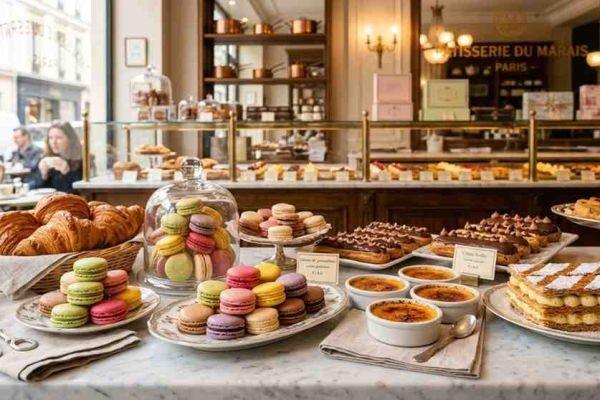
A perfect macaron looks simple. Two crisp shells, a smooth filling, a row of bright colors in a glass case. Yet behind that small cookie sits centuries of accident, rivalry, royal drama, and obsessive technique. Most pastry chefs let you believe it all comes down to talent. The truth is more interesting, and far more useful if you bake, sell, or simply love French sweets.
This guide is for home bakers, café owners, and curious dessert lovers who want the real story. We pull back the curtain on how iconic French desserts were born, the quiet techniques chefs rarely explain, and the science that decides success or failure.
Here's what you'll walk away knowing:
- The surprising origins of macarons, croissants, éclairs, crème brûlée, and mille-feuille
- The hidden techniques chefs use but rarely teach
- The science that makes or breaks French baking
- How presentation and packaging raise perceived value
- Practical tips for running a modern pastry business
The Real History Behind Iconic French Desserts
French desserts feel timeless, as if they always existed in elegant patisserie windows. In reality, most arrived through trial, error, immigration, and a fair amount of luck. Knowing the backstory changes how you taste them.
Here's what this means: the "French" classics are often borrowed, reinvented, and perfected over generations. That history is the first secret chefs rarely mention.
Macarons Were Not Born in France
The macaron we know, two shells with a creamy filling, is surprisingly modern. The earlier macaron was a single almond meringue cookie, and its roots trace to Italy. Many food historians credit Italian bakers who brought almond confections to France in the 1500s, often linked to Catherine de' Medici's court.
The famous double-decker version, the macaron parisien, came much later. Pierre Desfontaines of the Ladurée family is widely credited with sandwiching two shells with ganache in the early 20th century. So the "classic" French macaron is barely over a hundred years old.
Quick takeaway: tradition in pastry is often newer than it looks.
The Croissant Came From Austria
The croissant is the symbol of a French morning, yet its ancestor is the Austrian kipferl. The crescent shape arrived in France in the 1800s, and French bakers transformed it using laminated dough, layering butter between thin sheets of dough.
That French upgrade is what created the flaky, airy croissant. The shape is Austrian. The technique is French.
Éclairs, Crème Brûlée, and Mille-Feuille
Three more classics carry their own quiet histories.
- Éclairs: Built from pâte à choux, the same dough used for cream puffs. The name means "flash of lightning," possibly because they are eaten quickly. They gained popularity in the 19th century, often tied to chef Antonin Carême.
- Crème brûlée: France, England, and Spain all claim a version. The French name means "burnt cream," and similar custards appear in cookbooks across Europe for centuries. Ownership is genuinely shared.
- Mille-feuille: The name means "thousand sheets." It uses puff pastry, and a true version has three pastry layers and two cream layers, producing hundreds of fine flakes when baked correctly.
The lesson is consistent. French desserts are a blend of borrowed ideas raised to a higher standard through method.
Secret Techniques Pastry Chefs Rarely Explain
Talent gets the credit. Technique does the work. When you watch a skilled pastry chef, the hardest parts are often invisible, hidden in timing, temperature, and tiny habits.
These are the quiet methods that separate a bakery-quality result from a home guess.
Macaronage: The Make-or-Break Step
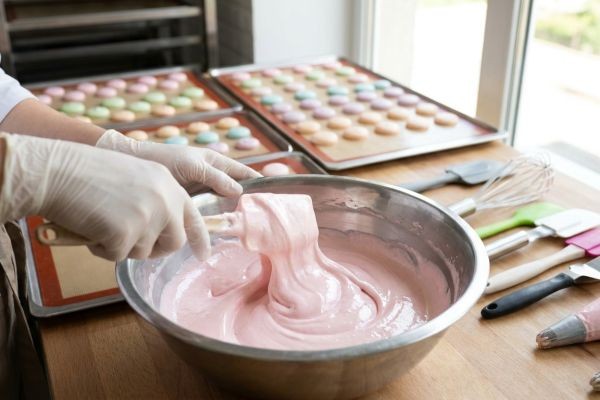
The single biggest reason macarons fail is macaronage, the folding of almond flour and meringue. Fold too little and the batter is stiff, giving cracked, bumpy shells. Fold too much and the batter runs flat with no "feet," the ruffled edge at the base.
Chefs look for a specific flow: the batter should fall off the spatula in a thick ribbon and slowly settle back into itself. That visual cue matters more than any exact stir count.
Lamination and Temperature Control
Croissants and mille-feuille rely on lamination, building alternating layers of dough and butter. The secret is keeping the butter cold and pliable, never melted, never cracking.
- Work in a cool kitchen whenever possible.
- Rest the dough between folds so the gluten relaxes.
- Keep butter at the same firmness as the dough around it.
If the butter melts into the dough, you lose the layers, and the pastry bakes dense instead of flaky.
The Habits Chefs Build Without Thinking
Many "secrets" are simply professional habits.
- Weighing everything in grams for consistency, not cups.
- Aging egg whites for some meringue recipes to improve structure.
- Resting batters and doughs to control texture.
- Tapping trays to release air bubbles before baking.
Checkpoint: most pastry mastery is repeatable process, not magic. That is good news, because process can be learned.
The Science of French Baking
French pastry is closer to chemistry than to casual cooking. Small changes in heat, moisture, and timing create big changes in the final bite. Understanding the science helps you fix problems instead of guessing.
Here's the core idea: every classic technique exists to control one of three things, air, fat, or moisture.
Why Eggs, Sugar, and Heat Matter So Much
Eggs provide structure and lift. Sugar adds sweetness, but also controls texture and browning. Heat triggers the reactions that turn raw batter into finished pastry.
The browning on a croissant or crème brûlée top comes largely from the Maillard reaction and caramelization, where sugars and proteins react under heat to create color and deep flavor. That golden surface is not just pretty, it is flavor being created in real time.
Humidity Is the Silent Enemy
Humidity is the hidden reason a recipe works one day and fails the next. Macarons are especially sensitive.
- High humidity keeps shells from forming a dry "skin," leading to cracks.
- Damp meringue can collapse and lose volume.
- Puff pastry can turn soggy before it ever crisps.
Many chefs let piped macarons rest until the surface is dry to the touch before baking. This single step prevents a long list of failures.
A Quick Science Cheat Sheet
|
Dessert |
Key Technique |
Main Science at Work |
Most Common Failure |
|
Macaron |
Macaronage + resting |
Meringue structure, moisture control |
Cracked shells, no feet |
|
Croissant |
Lamination |
Steam lift, cold fat layers |
Dense, leaking butter |
|
Éclair |
Pâte à choux |
Steam expansion |
Flat, soggy shells |
|
Crème brûlée |
Slow custard bake |
Egg protein coagulation |
Curdled or grainy texture |
|
Mille-feuille |
Puff pastry layering |
Steam and fat separation |
Uneven, collapsing layers |
Use this table as a diagnostic tool. When something goes wrong, start with the science column to find the cause.
How Presentation and Packaging Elevate French Desserts
French pastry has always been about the eyes first. A row of pastel macarons or a glossy éclair sells itself before anyone tastes it. Presentation is part of the craft, not a finishing afterthought.
This is where many talented bakers leave money and reputation on the table. The dessert is excellent, but the way it reaches the customer is plain.
Color, Symmetry, and the Display Case
Classic French presentation follows a few quiet rules.
- Symmetry signals skill and care, especially with macarons and mille-feuille.
- Color contrast makes a case look fresh and intentional.
- Spacing between pieces reads as quality, while crowding reads as cheap.
A clean, balanced display tells customers the work inside is just as precise.
Packaging That Protects and Impresses
Delicate desserts travel badly without the right protection. Macarons crack, éclairs smear, and mille-feuille crumbles. Smart packaging solves both protection and presentation at once.
Thoughtful Macaron Packaging with snug inserts and a clear window keeps each shell in place while showing off the colors. The box becomes part of the gift, not just a container. For a product built on visual appeal, the packaging extends that appeal all the way to the customer's kitchen table.
Checkpoint: when the box looks as considered as the dessert, perceived value rises before the first bite.
Tips for Modern Pastry Businesses
Running a pastry brand today means competing on taste, visuals, and experience all at once. The good news is that small, consistent choices often beat big budgets.
These are practical moves for cafés, home bakeries, and growing patisserie brands.
Build a Signature and Stay Consistent
Customers remember a recognizable style. The fastest-growing pastry brands lean into one strong identity.
- Pick one or two signature items and perfect them.
- Choose a consistent color palette for products and branding.
- Keep photos, packaging, and storefront in the same visual language.
Consistency is what turns a single great product into a brand people recommend.
Source Smart and Control Costs
Margins in pastry are tight, so sourcing matters. As order volume grows, buying supplies and packaging in bulk lowers cost per unit.
Many growing brands move to Custom Packaging Boxes Wholesale once demand is steady, since larger orders cut the price per box while keeping a branded, professional look. Pair that with reliable ingredient suppliers and you protect both quality and profit.
Common pitfall: ordering large quantities before demand is proven. Start with smaller runs, confirm what sells, then scale your bulk orders.
Use Online Visibility to Your Advantage
A strong dessert photographs well, and that is free marketing. According to research from MGH, roughly 30% of millennial diners said they avoid restaurants with a weak social media presence. For pastry, where looks drive cravings, this matters even more.
- Shoot products in natural daylight against clean backgrounds.
- Show texture, layers, and color up close.
- Post consistently so your feed becomes a working storefront.
Mini summary: define a signature look, source smart as you grow, and let strong visuals do your advertising.
Common Mistakes and How to Fix Them
Even good bakers repeat the same avoidable errors. Naming them makes them easy to correct.
- Skipping the rest time on macarons, which causes cracks. Fix: let shells dry until matte before baking.
- Warm butter in lamination, which kills the layers. Fix: chill dough often and work quickly.
- Opening the oven early on choux, which deflates éclairs. Fix: wait until they are set and golden.
- Ignoring humidity, which ruins consistency. Fix: track conditions and adjust resting time.
- Plain packaging, which wastes a branding chance. Fix: invest in protective, branded boxes.
Each fix is simple, and together they raise both quality and reputation.
Frequently Asked Questions
Are French desserts actually French in origin?
Not always. Macarons trace to Italy, and croissants descend from the Austrian kipferl. France's real contribution is refining technique, especially lamination and meringue work, to a world-class level.
Why are macarons so hard to make?
They depend on precise macaronage, careful meringue, resting time, and humidity control. A small error in any step shows up as cracks, hollow shells, or missing feet.
What is the difference between crème brûlée and regular custard?
Crème brûlée is a baked custard finished with a hard, torched sugar top. The contrast between the crisp caramel layer and the soft custard beneath is its defining feature.
How do bakeries keep macarons from breaking during delivery?
They use protective packaging with fitted inserts that hold each shell in place. This prevents shifting and cracking while keeping the colors visible.
Is the science of baking really that important for home bakers?
Yes. Understanding how eggs, sugar, heat, and humidity behave lets you fix failures instead of guessing. Most pastry problems trace back to one of those four factors.
How can a small pastry business compete with larger brands?
By building a strong signature style, keeping branding consistent, sourcing smartly as it grows, and using high-quality photos to attract customers online.
When should a pastry brand start ordering packaging in bulk?
Once demand is steady and your bestsellers are clear. Buying in volume lowers cost per unit, so scale your orders after you confirm what consistently sells.
Conclusion and Next Steps
The hidden story behind French desserts is that they are less about mystery and more about method. Their histories are borrowed and reinvented, their techniques are learnable, and their success rests on science you can actually control. Presentation and packaging then carry that craft all the way to the customer. Master these layers, and you understand what most chefs leave unsaid.
Here are three steps to start today:
- Pick one classic and study its history, technique, and science before you bake it again.
- Fix one common mistake from the list above in your next batch.
- Upgrade one touchpoint, whether that's your resting routine, your display, or your packaging.
Which French dessert will you finally master first?






