
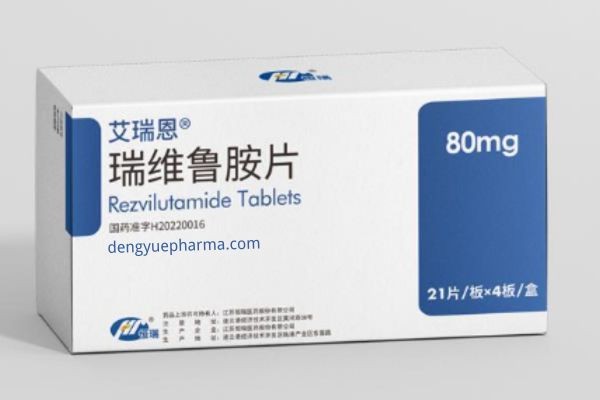
Prostate cancer is one of the most common malignant tumors of the male reproductive system. Among them, metastatic hormone-sensitive prostate cancer (mHSPC) is characterized by rapid disease progression and high treatment complexity, making it a long-standing focus and challenge in clinical practice. As a novel androgen receptor inhibitor independently developed in China, Reviluamide Tablets (Brand Name: AiRuiEn) offer new therapeutic hope for this patient population through a precise mechanism of action, proven clinical efficacy, and manageable safety profile. This drug represents a major breakthrough in the field of targeted therapy for prostate cancer. DengyuePharma provides the following detailed introduction.
Basic Drug Overview: The Core Positioning of Reviluamide Tablets
Reviluamide Tablets are prescription western medicines included in China’s National Medical Insurance Category B. The current market price is approximately RMB 5,520.00, which helps reduce the financial burden on patients to a certain extent.
The primary therapeutic target of Reviluamide is the androgen receptor (AR). By precisely blocking androgen binding to the receptor, inhibiting AR nuclear translocation and downstream signaling pathways, Reviluamide effectively suppresses the proliferation, invasion, and metastasis of prostate cancer cells. This mechanism delays tumor progression at its source and helps extend patient survival.
Compared with traditional therapies, Reviluamide demonstrates higher receptor affinity and specificity, enabling effective antitumor activity while minimizing effects on normal tissues. This results in a lower incidence of adverse reactions and significantly improves treatment tolerability and quality of life. As an oral formulation, Reviluamide is convenient to administer and does not require special dosing conditions, further enhancing patient adherence.
Clinical Application: Indications and Standardized Use
(1) Primary Indication
Reviluamide Tablets are mainly indicated for patients with high-volume metastatic hormone-sensitive prostate cancer (mHSPC). These patients typically present with extensive tumor burden and distant metastases, and conventional endocrine therapies often yield limited efficacy. The introduction of Reviluamide provides a more effective treatment option and significantly improves survival outcomes for this population.
(2) Recommended Dosage and Administration
The recommended dose of Reviluamide Tablets is 240 mg once daily (three tablets of 80 mg each), administered orally. Tablets should be swallowed whole and must not be chewed, split, or crushed. Administration is not affected by food intake and can be taken either with or without meals. Patients are advised to take the medication at the same time each day to maintain stable plasma drug concentrations and achieve optimal therapeutic effects.
Importantly, Reviluamide should be used in combination with androgen deprivation therapy (ADT). Patients should receive a gonadotropin-releasing hormone analogue (GnRHa) concurrently or have previously undergone bilateral orchiectomy. The synergistic effect of combined therapy further enhances treatment efficacy.
(3) Missed Doses and Dose Adjustments
If a dose is missed, patients should take the prescribed dose as soon as possible on the same day. If an entire day is missed, the next dose should be taken as scheduled without doubling the dose. Patients must not increase the dose to compensate for missed doses.
In cases of Grade ≥3 toxicity or intolerable adverse reactions, treatment should be temporarily discontinued until symptoms improve to Grade ≤1 or baseline levels. Re-treatment may then be initiated at the same dose or, if necessary, at a reduced dose (160 mg or 80 mg), strictly according to medical guidance. Dose adjustments should not be made without physician supervision.
Safe Use Guidance: Adverse Reactions and Precautions
(1) Common Adverse Reactions
The incidence and severity of adverse reactions associated with Reviluamide are generally manageable. Safety data are primarily derived from an international, multicenter, randomized, open-label, active-controlled Phase III clinical trial (the CHART study).
In this study, the median exposure duration was 28.9 months in the Reviluamide group (N=323) and 12.9 months in the control group (bicalutamide, N=324). In the Reviluamide group, 51.4% of patients experienced Grade ≥3 adverse events and 27.9% reported serious adverse events, slightly higher than in the control group, but overall tolerability was favorable.
Common adverse reactions with an incidence ≥10% in the Reviluamide group included:
-
General disorders and administration site conditions: pain, peripheral edema, fatigue
-
Vascular and lymphatic disorders: hypertension, hot flushes
-
Musculoskeletal and connective tissue disorders: musculoskeletal pain, arthralgia, back pain
-
Renal and urinary disorders: hematuria, urinary frequency, dysuria
-
Others: weight gain, upper respiratory tract infection, urinary tract infection, constipation, abdominal pain, rash, cough, arrhythmia, insomnia, etc.
Common laboratory abnormalities (incidence ≥10%) included anemia, hypertriglyceridemia, elevated AST, elevated ALT, hypercholesterolemia, hyperglycemia, hyperuricemia, hypokalemia, hypoalbuminemia, and ECG abnormalities.
(2) Management of Adverse Reactions
Supportive care measures may help alleviate common adverse reactions and improve treatment comfort:
-
Fatigue: maintain regular sleep patterns, engage in light physical activity (e.g., walking), ensure adequate nutrition, and avoid overexertion
-
Hypertension: monitor blood pressure regularly, take antihypertensive medications as prescribed, follow a low-salt diet, and avoid emotional stress
-
Hot flushes: wear loose, breathable clothing, avoid hot environments, and practice deep breathing or relaxation techniques
-
Musculoskeletal pain: use analgesics as prescribed, apply heat therapy or massage, and avoid strenuous exercise
-
Abnormal liver function: monitor liver function regularly, avoid alcohol consumption, and refrain from using other hepatotoxic medications
Clinical Efficacy and Future Perspectives
The clinical efficacy of Reviluamide Tablets has been validated by multiple studies. The CHART study, as the pivotal Phase III trial, demonstrated clear therapeutic advantages in patients with high-volume mHSPC. Compared with traditional bicalutamide therapy, Reviluamide combined with ADT significantly prolonged progression-free survival and overall survival, reduced the risk of disease progression, and improved patient quality of life.
As an independently developed targeted therapy in China, the approval of Reviluamide has broken the monopoly of imported drugs in this therapeutic area. With clinical data more closely aligned with Chinese patient populations, a controllable safety profile, and convenient oral administration, Reviluamide has become a preferred treatment option for patients with high-volume mHSPC. Ongoing clinical research may further expand its indications and bring hope to a broader population of prostate cancer patients.
Conclusion
Reviluamide Tablets are a precision-targeted therapy for high-volume metastatic hormone-sensitive prostate cancer. With a clearly defined mechanism of action, proven clinical efficacy, manageable adverse reactions, and convenient administration, this drug offers a novel therapeutic option for patients. In clinical practice, treatment should strictly follow medical guidance, with standardized dosing, close monitoring of adverse reactions, and appropriate supportive care. Attention should also be paid to potential drug interactions and medical insurance reimbursement policies to ensure safe, effective, and cost-efficient treatment.
Looking ahead, as medical research continues to advance, Reviluamide Tablets are expected to play an increasingly important role in prostate cancer management, contributing to improved treatment standards and better health outcomes for patients.






