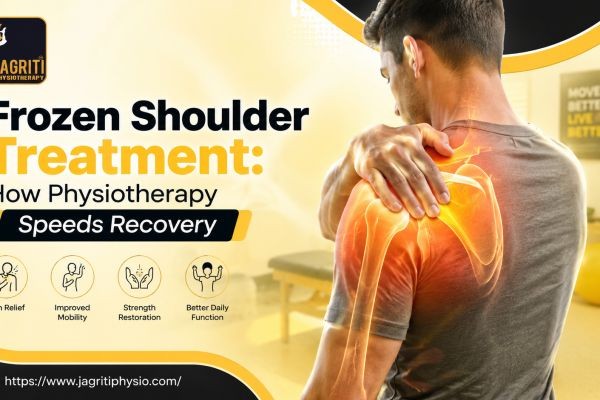
If you've ever felt a sharp pain in your shoulder and found it difficult to lift your arm, reach behind your back, or even get dressed, you might be dealing with a condition called frozen shoulder.
Frozen shoulder, also known as adhesive capsulitis, develops gradually and can make even simple daily activities challenging. Many people think the pain will go away on its own, but without proper treatment, recovery can take months—or even years.
The good news is that physiotherapy can play a major role in reducing pain, improving shoulder movement, and helping you recover faster.
In this article, we'll explain what frozen shoulder is, why it happens, and how physiotherapy can help.
What Is Frozen Shoulder?
Frozen shoulder is a condition in which the shoulder joint becomes stiff, painful, and difficult to move. The capsule surrounding the shoulder joint thickens and tightens, making movement restricted.
Unlike a muscle injury, frozen shoulder affects the joint itself, which is why the stiffness can become severe if left untreated.
Common Symptoms of Frozen Shoulder
Symptoms usually develop slowly and become worse over time.
Common signs include:
- Pain in one shoulder
- Difficulty lifting your arm
- Pain while reaching overhead
- Trouble reaching behind your back
- Shoulder stiffness
- Pain that worsens at night
- Difficulty getting dressed
- Trouble combing your hair
- Reduced range of motion
If these symptoms continue for several weeks, it's a good idea to seek professional advice.
What Causes Frozen Shoulder?
The exact cause isn't always clear, but several factors can increase the risk.
Diabetes
People with diabetes are more likely to develop frozen shoulder than others.
Shoulder Injury
An injury or surgery that limits shoulder movement for a long period can increase the risk.
Long Periods of Immobilization
Keeping the arm in a sling or avoiding movement after an injury may lead to stiffness.
Age
Frozen shoulder is more common in adults between 40 and 60 years old.
Other Medical Conditions
Some conditions, such as thyroid disorders, Parkinson's disease, and stroke, may also increase the risk.
The Three Stages of Frozen Shoulder
Understanding the stages helps explain why recovery takes time.
Stage 1: Freezing Stage
- Shoulder pain gradually increases.
- Movement becomes more difficult.
- Pain is often worse at night.
- This stage may last several weeks to months.
Stage 2: Frozen Stage
- Pain may reduce slightly.
- Stiffness becomes more severe.
- Daily activities become difficult.
- Shoulder movement remains very limited.
Stage 3: Thawing Stage
- Shoulder movement slowly improves.
- Stiffness gradually decreases.
- Pain continues to reduce.
- Recovery becomes noticeable over time.
How Is Frozen Shoulder Diagnosed?
A healthcare professional usually diagnoses frozen shoulder through:
- Medical history
- Physical examination
- Range of motion assessment
In some cases, imaging tests such as X-rays or MRI scans may be recommended to rule out other shoulder conditions.
How Physiotherapy Helps Treat Frozen Shoulder
Physiotherapy is one of the most effective non-surgical treatments for frozen shoulder. The goal is to reduce pain, improve flexibility, and gradually restore shoulder movement.
1. Pain Management
Physiotherapists may use gentle techniques to reduce discomfort and make movement easier.
2. Stretching Exercises
Carefully guided stretching helps improve flexibility without causing unnecessary strain.
3. Joint Mobilization
Manual therapy techniques can help improve shoulder joint movement and reduce stiffness.
4. Strengthening Exercises
As movement improves, strengthening exercises help rebuild the muscles that support the shoulder.
5. Posture Correction
Poor posture can increase stress on the shoulder. Physiotherapists provide guidance to improve posture during daily activities.
6. Home Exercise Program
Recovery depends on consistency. A physiotherapist will usually recommend simple exercises that can be safely performed at home between sessions.
Can Frozen Shoulder Heal Without Physiotherapy?
Some people eventually recover without formal treatment, but this process can take one to three years, and stiffness may persist for longer in some cases.
Physiotherapy cannot always eliminate the condition overnight, but it often helps by:
- Improving shoulder movement earlier
- Reducing pain
- Making daily activities easier
- Preventing excessive stiffness
- Supporting a smoother recovery
Starting treatment early often leads to better results.
Simple Exercises Often Recommended
A physiotherapist may suggest gentle exercises such as:
- Pendulum swings
- Finger wall walks
- Towel stretches
- Cross-body shoulder stretch
- Passive shoulder elevation
These exercises should be performed correctly and within a comfortable range. Forcing painful movements can make symptoms worse.
Tips to Support Recovery
Along with physiotherapy, you can support healing by:
- Staying as active as your pain allows
- Following your exercise routine regularly
- Avoiding sudden jerky movements
- Maintaining good posture
- Applying heat before stretching if recommended
- Being patient, as recovery takes time
Consistency is more important than doing intense exercises.
When Should You See a Physiotherapist?
Consider seeking professional advice if:
- Shoulder pain lasts more than two weeks.
- You cannot lift your arm normally.
- Shoulder stiffness is increasing.
- Pain affects your sleep.
- Everyday tasks become difficult.
- Home remedies are not helping.
Early assessment can help identify the condition before stiffness becomes severe.
Final Thoughts
Frozen shoulder can make even simple activities like dressing, driving, or reaching for a shelf uncomfortable. Although recovery often takes time, physiotherapy is one of the most effective ways to reduce pain, improve shoulder mobility, and restore normal function.
If you're experiencing persistent shoulder pain or stiffness, consulting a qualified physiotherapist can help determine the cause and guide your recovery. Clinics such as Jagriti Physiotherapy focus on personalized rehabilitation plans that support gradual, safe, and long-term improvement rather than simply






