
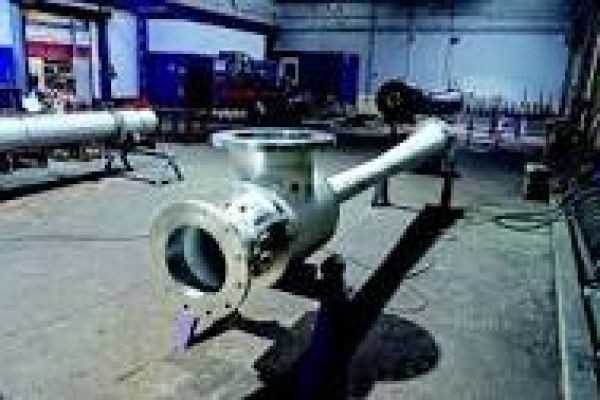
The gas jet compressor market has grown significantly in recent years due to industrial expansion, energy transition initiatives, and technological advancements. Also known as ejector compressors, these systems are valued for their simplicity, safety, and minimal maintenance requirements. However, several challenges continue to limit broader adoption and constrain market growth. Understanding these gas jet compressor market challenges is critical for manufacturers, investors, and industrial operators to develop strategies that mitigate risks, optimize performance, and capitalize on emerging opportunities.
High Capital Costs and Investment Barriers
One of the foremost challenges is the high initial capital expenditure. While gas jet compressors have fewer moving parts and lower maintenance costs compared to mechanical compressors, precision-engineered nozzles, high-performance materials, and modular system designs increase upfront investment.
For small- and mid-scale industrial operators, this high cost can delay adoption, especially in emerging markets with limited budgets. Even larger facilities may require detailed financial analysis to justify procurement, impacting sales cycles and slowing market expansion. Manufacturers must address this challenge through cost optimization, financing solutions, and clear demonstration of long-term ROI.
Technical Complexity and Expertise Requirements
Though mechanically simple, gas jet compressors demand specialized engineering knowledge for optimal operation. Correct nozzle sizing, system integration, and flow optimization are crucial for efficiency and reliability.
Many industrial facilities, particularly in developing regions, lack in-house technical expertise to evaluate, install, and maintain ejector systems effectively. This knowledge gap creates hesitation among operators, leading them to prefer conventional mechanical compressors despite the long-term advantages of gas jet technology.
Operational Limitations and Application Constraints
Gas jet compressors have operational limitations that can restrict adoption. Their efficiency decreases at very high-pressure differentials, limiting use in certain chemical processing, hydrogen, or gas transport applications.
Additionally, they may not handle viscous, particulate-laden, or highly corrosive gases effectively. These constraints make mechanical or hybrid compressors more suitable in specific scenarios, creating competitive challenges for gas jet systems.
Competition from Alternative Compression Technologies
The presence of mechanical and hybrid compressors intensifies market competition. Mechanical compressors often provide higher efficiency in high-pressure applications, while hybrid systems offer flexible operational modes.
Industrial operators may favor these alternatives due to familiarity, perceived reliability, or better integration with existing plant systems. The competitive landscape necessitates continuous innovation and differentiation for gas jet compressor manufacturers.
Supply Chain Vulnerabilities
Gas jet compressors rely on specialized materials, including corrosion-resistant alloys and precision-engineered components. Supply chain disruptions, delays in procurement, and fluctuations in raw material prices can delay production and increase costs.
Emerging markets are particularly affected due to limited local manufacturing capabilities, making dependence on imports a potential barrier. Supply chain challenges can impact pricing, project timelines, and customer confidence, slowing adoption rates.
Regulatory and Compliance Challenges
While regulatory pressures often drive adoption, navigating diverse safety, quality, and emission standards across regions is challenging. Industrial facilities must ensure that gas jet compressors meet local regulations while maintaining performance and cost-effectiveness.
Multi-jurisdictional operations face additional complexity due to varying codes, emission limits, and certification requirements. Delays in approvals or additional compliance costs can hinder rapid deployment and discourage operators from adopting new systems.
Market Fragmentation and Limited Awareness
The market is highly fragmented, with multiple global and regional players offering varied technical capabilities. While competition encourages innovation, it also creates uncertainty for potential buyers.
Operators may struggle to assess supplier reliability, compare performance, or estimate total lifecycle costs. Limited brand recognition for regional manufacturers can further reduce adoption, particularly in new or emerging markets. Awareness campaigns and demonstrations of operational efficiency are critical to overcoming this challenge.
Perceived Reliability Risks
Even though gas jet compressors have minimal moving parts, some industrial operators perceive operational risks related to system alignment, nozzle performance, or integration with existing infrastructure.
Industries with high-risk processes, such as petrochemicals, hydrogen, or flammable gas handling, often prefer established mechanical compressors due to perceived reliability, even if ejector-based systems offer operational advantages. Overcoming these perceptions requires demonstrations of system reliability, performance guarantees, and technical support.
Lack of Standardization and Benchmarking
A significant challenge is the absence of standardized performance metrics and industry benchmarks for gas jet compressors. Without standardized efficiency ratings, pressure recovery metrics, or lifecycle cost analysis, operators face difficulty comparing systems and evaluating long-term value.
The lack of benchmarks slows procurement decisions and can delay adoption in both mature and emerging markets. Standardization efforts and certification programs are needed to improve market confidence.
Economic Volatility and Investment Cycles
Fluctuations in global economic conditions, energy prices, and geopolitical instability can affect industrial investment decisions. Capital-intensive projects may be delayed or downsized during economic downturns, reducing demand for gas jet compressors in the short term.
Energy price volatility can shift project priorities, particularly in oil, gas, and renewable energy sectors. These economic uncertainties pose a challenge for market growth and planning.
Conclusion
The gas jet compressor market faces multiple challenges that limit adoption and industrial expansion. High capital costs, technical expertise requirements, operational limitations, competition from alternative technologies, supply chain vulnerabilities, regulatory complexity, market fragmentation, perceived reliability risks, lack of standardization, and economic volatility are all significant obstacles.
Addressing these challenges requires a multi-pronged strategy, including innovation in design and materials, digital integration for predictive maintenance, lifecycle service offerings, strategic partnerships, regional market adaptation, and awareness campaigns to demonstrate value and reliability. Companies that proactively tackle these challenges can strengthen their competitive position, drive market adoption, and capitalize on growth opportunities in industrial and clean energy applications.






