
Specialty material additives have quietly become some of the most consequential inputs in modern manufacturing, and few illustrate this better than the glass powder segment. The Glass Powder Additives Market is projected to grow from US$ 152.41 million in 2025 to US$ 186.46 million by 2034, registering a steady CAGR of 2.55% over the forecast period 2026–2034. While the growth rate may appear measured, the underlying demand signals are remarkably durable, driven by construction activity, electronics miniaturisation, and the accelerating push for sustainable packaging worldwide.
What Is the Glass Powder Additives Market?
Glass powder additives are finely milled glass-derived materials incorporated into a range of industrial products to enhance properties such as durability, thermal resistance, surface hardness, and optical clarity. They are used across construction materials, electronic components, and speciality packaging, often in combination with metal oxides, nanoparticles, or rare earth metals to achieve targeted performance outcomes.
Request a Sample Copy of the Report: https://www.theinsightpartners.com/sample/TIPRE00018866
What Is Driving Demand for Glass Powder Additives?
Construction remains the single largest pull factor for this market. As urbanisation accelerates across Asia-Pacific, the Middle East, and parts of Africa, demand for high-performance cement, concrete, and coatings has grown sharply. Glass powder additives, particularly those containing metal oxides, contribute to the pozzolanic reactivity of cementitious blends, improving compressive strength while reducing the clinker content that makes ordinary cement so carbon-intensive. That dual benefit, better performance and a reduced environmental footprint, has made these additives attractive to contractors and specification engineers navigating tightening green building standards.
Electronics is another sector where glass powder additives have established a critical role. The relentless drive toward device miniaturisation requires dielectric materials that are thermally stable, dimensionally precise, and electrically insulating at the micro-scale. Nanoparticle-based glass powder additives meet those requirements with a consistency that coarser materials simply cannot match. Demand from semiconductor packaging, printed circuit board substrates, and display technologies has strengthened steadily, and as 5G infrastructure rolls out further, the requirement for high-frequency-compatible dielectric materials will only intensify.
Packaging is a third pillar of growth, though one often overlooked. Glass powder additives contribute to the barrier properties and surface aesthetics of speciality packaging materials, particularly in premium food, beverage, and pharmaceutical segments where product integrity and shelf presentation are non-negotiable. Beyond functionality, glass-based additives support recycled content integration, which aligns with the European Union's packaging and packaging waste regulations and comparable mandates elsewhere. That regulatory context is nudging brand owners toward materials that tick both performance and sustainability boxes simultaneously.
Rare earth metal additives represent a particularly dynamic segment within the broader market. These compounds impart unique optical, magnetic, and luminescent properties that are difficult or impossible to replicate with conventional materials. Their use in speciality glass for optical instruments, solar energy applications, and high-end electronics has been growing, even as supply chain considerations around rare earth sourcing remain a persistent point of attention for procurement teams globally.
Segmentation Overview
By Product Type: Metal oxide additives dominate current demand owing to their cost-effectiveness and broad compatibility across construction and electronics applications. Nanoparticles are the fastest-growing sub-segment, valued for their superior surface area-to-volume ratio and precision performance in electronics and advanced coatings. Rare earth metals occupy a premium niche, commanding higher margins in optical and photovoltaic applications where their distinctive properties cannot be substituted.
By Application: Construction represents the largest end-use segment, underpinned by ongoing infrastructure investment across emerging markets. Electronics follows closely, driven by consumer device production and 5G network deployment. Packaging is growing at a healthy pace on the back of sustainability regulations and premiumisation trends. Other applications, including automotive glass, solar panels, and laboratory equipment, collectively round out demand.
Key Market Players
- Ardagh Group
- DuPont
- Gillinder Glass
- Lynas Corporation Limited
- Metall Rare Earth Limited
- Namibia Rare Earths Inc
- Nanobase Technology
- Potters Industries LLC
- SCHOTT
- The Anchor Hocking Company
- Torrecid Group
Sustainability and Innovation Trends
The glass powder additives sector is seeing meaningful investment in bio-inspired and waste-derived formulations. Recycled glass powder, sourced from post-consumer bottles and flat glass offcuts, is gaining acceptance in construction applications where performance thresholds allow. This circular approach addresses raw material cost pressures while supporting corporate sustainability targets. On the innovation side, surface-functionalised nanoparticle additives are enabling new composite materials with programmed mechanical and optical behaviour, opening possibilities in smart glass and wearable device substrates that were not commercially viable just a few years ago.
Buy Premium Report: https://www.theinsightpartners.com/buy/TIPRE00018866
Regional Outlook
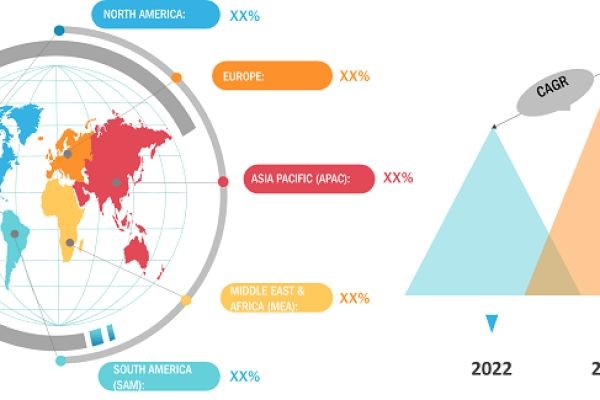
Asia-Pacific holds the largest share of the glass powder additives market and is expected to maintain that position throughout the forecast period. China, India, and Southeast Asian economies are simultaneously driving construction volume and scaling up electronics manufacturing, creating concurrent demand streams that few other regions can match. Europe is the second-largest market, with Germany, France, and the Netherlands acting as hubs for high-specification glass additive consumption in automotive, photovoltaics, and packaging. North America benefits from steady electronics production and a well-established construction aftermarket, while the Middle East and Africa are emerging as growth zones tied to large-scale infrastructure programmes. Latin America remains a smaller but gradually expanding market, led by Brazil and Mexico.
Related Reports:
About The Insight Partners
The Insight Partners is among the leading market research and consulting firms in the world. We take pride in delivering exclusive reports along with sophisticated strategic and tactical insights into the industry. Reports are generated through a combination of primary and secondary research, solely aimed at giving our clientele a knowledge-based insight into the market and domain. This is done to assist clients in making wiser business decisions. A holistic perspective in every study undertaken forms an integral part of our research methodology and makes the report unique and reliable.
Contact Us:
If you have any queries about this report or if you would like further information, please contact us:
Phone: +1-646-491-9876
E-mail: sales@theinsightpartners.com
Also Available in: Korean | German | Japanese | French | Chinese | Italian | Spanish






