
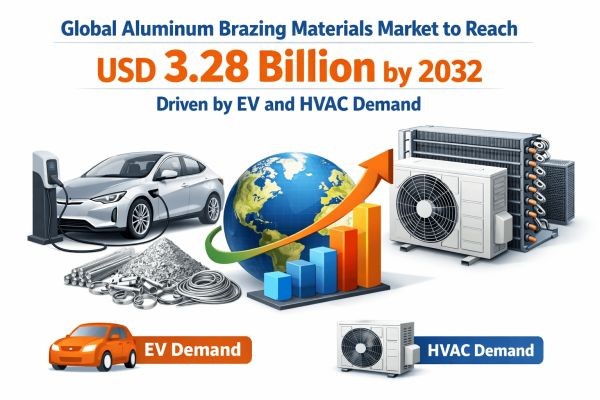
Aluminum brazing materials, primarily aluminum-silicon based filler metals, are essential for joining aluminum components in applications requiring strong, leak-tight, and corrosion-resistant bonds without melting the base metal. This process is fundamental across industries where lightweight, durable assemblies are paramount, such as in heat exchangers for automotive and HVAC systems. The materials are supplied in various forms including wire, rod, strip, and preforms, each tailored to specific manufacturing processes and joint designs. Their ability to create reliable joints in complex geometries makes them indispensable in modern industrial fabrication.
Get Full Report Here: https://www.24chemicalresearch.com/reports/306935/aluminum-brazing-materials-market
Market Dynamics:
The market's trajectory is shaped by a complex interplay of powerful growth drivers, significant restraints that are being actively addressed, and vast, untapped opportunities.
Powerful Market Drivers Propelling Expansion
- Automotive Lightweighting and Electrification: The automotive industry's relentless pursuit of fuel efficiency and reduced emissions is a primary growth vector. The transition to aluminum components in radiators, condensers, and charge air coolers drives demand for high-performance brazing materials. Furthermore, the explosive growth of electric vehicles creates new applications in battery cooling plates and power electronics thermal management systems, where aluminum's excellent thermal conductivity is critical. This sector's evolution from mechanical to thermal management focus significantly expands the addressable market for advanced brazing solutions.
- HVAC&R Industry Expansion and Energy Efficiency Regulations: Global demand for energy-efficient heating, ventilation, air conditioning, and refrigeration systems continues to surge. Stricter energy efficiency standards worldwide mandate the use of advanced heat exchangers that rely on aluminum brazing for optimal performance. The replacement market for older, less efficient systems, coupled with new construction in emerging economies, provides sustained demand. The materials' ability to create complex, compact heat exchanger designs directly supports the industry's efficiency goals.
- Aerospace and Advanced Manufacturing Demands: The aerospace sector's insatiable need for lightweight, high-strength components makes aluminum brazing materials crucial for manufacturing heat exchangers, avionics cooling systems, and structural assemblies. The precision and reliability required in aerospace applications drive innovation in filler metal compositions and brazing processes. This high-value sector often serves as a testing ground for technologies that eventually filter down to other industries, accelerating overall market advancement.
Download FREE Sample Report: https://www.24chemicalresearch.com/download-sample/306935/aluminum-brazing-materials-market
Significant Market Restraints Challenging Adoption
Despite its promise, the market faces hurdles that must be overcome to achieve universal adoption.
- Technical Complexity and Process Control Requirements: Aluminum brazing demands precise control over temperature, atmosphere, and time to achieve consistent, high-quality joints. The tenacious oxide layer on aluminum surfaces necessitates specialized fluxes or controlled atmospheres, adding complexity to the process. Variations in base material composition and surface conditions can lead to defects, requiring significant expertise and quality control measures that increase operational costs and create barriers for new entrants.
- Regulatory and Environmental Pressures: Stringent environmental regulations, particularly REACH in Europe and similar standards globally, restrict the use of certain traditional flux components due to their environmental and health impacts. The development and certification of alternative, compliant materials require substantial investment and time. Furthermore, workplace safety regulations governing fume extraction and handling of brazing materials add to operational complexity and cost, particularly for smaller manufacturers.
Critical Market Challenges Requiring Innovation
The transition from laboratory success to industrial-scale manufacturing presents its own set of challenges. Maintaining consistent material properties across large production batches is difficult, with variations in alloy composition and physical form potentially affecting brazing performance. The development of flux formulations that balance effectiveness with environmental compliance remains an ongoing technical challenge. Additionally, the need for specialized equipment, such as controlled atmosphere furnaces, represents a significant capital investment that can deter smaller manufacturers from adopting aluminum brazing technologies.
Furthermore, the market contends with the need for continuous workforce training and skill development. As brazing processes become more sophisticated, the industry faces a shortage of qualified technicians and engineers capable of optimizing and troubleshooting these complex joining operations. This skills gap can slow technology adoption and innovation, particularly in regions with developing manufacturing sectors.
Vast Market Opportunities on the Horizon
- Electric Vehicle Thermal Management Systems: The rapid growth of the electric vehicle market presents unprecedented opportunities. EVs require sophisticated thermal management for batteries, power electronics, and cabins, all utilizing aluminum heat exchangers joined by brazing. This application space demands new material formulations capable of withstanding unique thermal cycles and compatibility requirements, driving innovation and creating premium market segments.
- Advanced Flux and Process Developments: Innovation in flux-free brazing techniques and environmentally friendly flux formulations opens new application areas, particularly in medical devices and food processing equipment where residue concerns are critical. The development of brazing materials for advanced aluminum alloys and composites expands the technology's reach into new industrial sectors. These advancements also address regulatory concerns while improving process efficiency and joint reliability.
- Global Infrastructure and Industrialization Trends: Ongoing industrialization in emerging economies, coupled with global infrastructure development, drives demand for HVAC systems, industrial refrigeration, and power generation equipment—all significant consumers of aluminum brazing materials. The modernization of existing industrial facilities and the construction of new manufacturing plants create sustained demand for brazing materials and expertise across diverse geographic markets.
In-Depth Segment Analysis: Where is the Growth Concentrated?
By Type:
The market is segmented into Wire, Rod, Strip, Preforms, and others. Wire currently leads the market, favored for its versatility in automated brazing systems and ease of application in various joint configurations. The continuous form factor allows for efficient feeding in high-volume production environments, making it particularly popular in automotive and HVAC manufacturing. Preforms are gaining traction for complex assemblies where precise material placement is critical, though they command a premium price point.
By Application:
Application segments include Heat Exchangers, Automotive Components, Electrical Applications, and others. The Heat Exchangers segment dominates, driven by ubiquitous use in HVAC, refrigeration, and automotive systems. However, the Electrical Applications segment is expected to exhibit the highest growth rate, particularly for power electronics cooling in renewable energy systems and electric vehicles. The versatility of aluminum brazing in creating complex cooling channels and heat sinks positions it well for this expanding market.
By End-User Industry:
The end-user landscape includes Automotive, HVAC&R, Aerospace, Electrical & Electronics, and others. The Automotive industry accounts for the major share, leveraging brazing materials for thermal management systems in both conventional and electric vehicles. The Electrical & Electronics sector is rapidly emerging as a key growth area, reflecting the critical need for thermal management in power-dense electronic systems and the ongoing electrification of various industries.
Download FREE SampleReport: https://www.24chemicalresearch.com/download-sample/306935/aluminum-brazing-materials-market
Competitive Landscape:
The global aluminum brazing materials market is consolidated and characterized by intense competition among established global players. The top three companies—Lucas-Milhaupt (U.S.), Materion (U.S.), and Prince & Izant (U.S.)—collectively command approximately 50% of the market share as of 2024. Their dominance is underpinned by extensive product portfolios, strong technical expertise, and global distribution networks that serve major industrial customers across multiple sectors.
List of Key Aluminum Brazing Materials Companies Profiled:
- Lucas-Milhaupt (U.S.)
- Materion (U.S.)
- Prince & Izant (U.S.)
- Harris Products Group (U.S.)
- Nihon Superior (Japan)
- SunKwang AMPA (South Korea)
- Aimtek (U.S.)
- Zhejiang Asia General (China)
- VBC Group (U.K.)
- Indian Solder and Braze Alloys (India)
- Sentes-BIR (Turkey)
- Stella Welding Alloys (Italy)
The competitive strategy focuses on continuous product development to improve performance and environmental compliance, coupled with technical support services that help customers optimize their brazing processes. Strategic partnerships with end-users for co-development of application-specific solutions are increasingly common, as are acquisitions to expand geographic reach and technological capabilities.
Regional Analysis: A Global Footprint with Distinct Leaders
- Asia Pacific: Is the dominant region, holding a 48% share of the global market. This leadership is fueled by massive manufacturing capacity, particularly in China, and strong demand from automotive and HVAC industries. The region's role as the world's manufacturing hub, combined with rapid industrialization and urbanization, drives consistent demand for aluminum brazing materials across multiple applications.
- North America and Europe: Together, they form a mature yet innovative market bloc, accounting for 42% of the market. These regions are characterized by advanced manufacturing capabilities, stringent quality requirements, and leadership in high-value applications such as aerospace and electric vehicles. Continuous innovation in material formulations and processes maintains their competitive position despite higher manufacturing costs.
- Rest of World: These regions represent emerging markets with significant growth potential. Increasing industrialization, infrastructure development, and the expansion of manufacturing capabilities create new opportunities for aluminum brazing materials. While currently smaller in scale, these markets benefit from technology transfer and investment from global players seeking to establish local presence.
Get Full Report Here: https://www.24chemicalresearch.com/reports/306935/aluminum-brazing-materials-market
Download FREE Sample Report: https://www.24chemicalresearch.com/download-sample/306935/aluminum-brazing-materials-market
About 24chemicalresearch
Founded in 2015, 24chemicalresearch has rapidly established itself as a leader in chemical market intelligence, serving clients including over 30 Fortune 500 companies. We provide data-driven insights through rigorous research methodologies, addressing key industry factors such as government policy, emerging technologies, and competitive landscapes.
- Plant-level capacity tracking
- Real-time price monitoring
- Techno-economic feasibility studies
International: +1(332) 2424 294 | Asia: +91 9169162030
Website: https://www.24chemicalresearch.com/






